Dolphins recorded using sea shells to catch fish for first time
Marine researchers in Hervey Bay have captured the first evidence of East Coast dolphins using empty shells as hunting tools, and passing the trick down to their calves
Researchers studying local dolphin populations in Queensland’s Great Sandy Marine Park have documented a remarkable foraging tactic known as “shelling,” providing the first published record of this rare tool-use behaviour.
Shelling occurs when a dolphin chases a fish into a large, empty sea snail shell, carries the shell to the surface, and shakes it upside down to tip the trapped meal directly into its mouth.
While local tour operators in Hervey Bay reported seeing the behaviour as early as 2013, limited research in the region meant it had not scientifically been recorded. Before this discovery, the only published evidence of shelling came from a distinct dolphin population over 3,000 kilometres away in Shark Bay, Western Australia.
“We were on a research boat off Hervey Bay when we spotted a dolphin raising something large out of the water,” said Dr Alexis Levengood, an animal behaviourist and the study’s lead author. “I started screaming because I know what shelling looks like.”
The discovery goes beyond documenting a clever trick. In October 2025, the team captured groundbreaking footage that offers the first potential evidence of maternal social transmission for shelling, where a calf learns the technique by observing its mother.
Previously, scientists believed dolphins acquired shelling primarily through vertical or horizontal peer learning – watching friends in their social network rather than direct maternal instruction.
“Our footage challenges the belief that dolphins learn this tool strictly from their peers,” Dr Levengood explained. “These findings highlight just how smart, clever, and innovative dolphins are.”

In other news



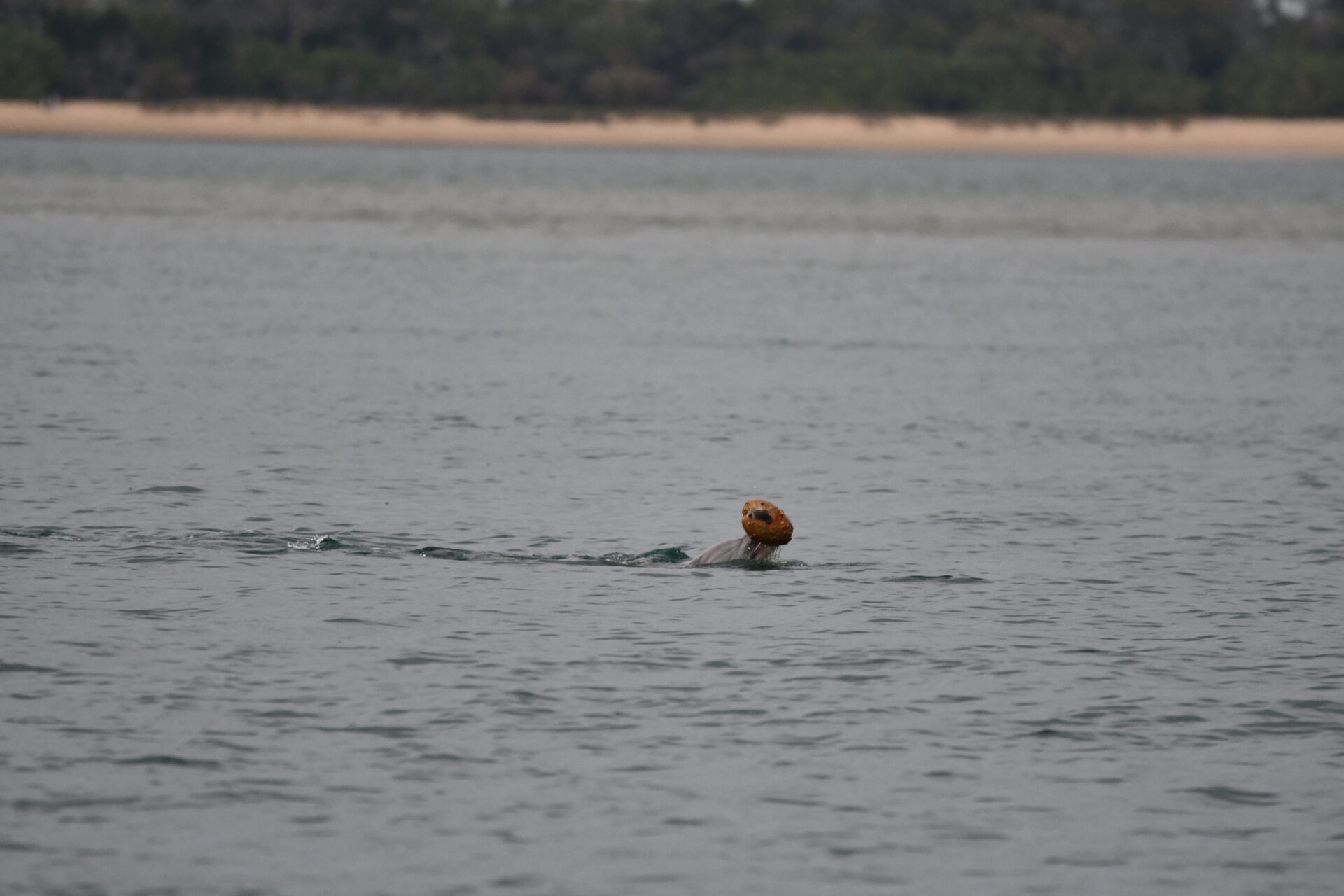
Dolphins are renowned for using tools to adapt to their environments. In Western Australia, dolphins famously wear bowl-shaped basket sponges over their rostrums (beaks) as protective armour, allowing them to forage safely through rubble-littered sea floors without injury from sharp coral and rocks.
The Queensland discovery suggests that complex tool-use behaviours may be occurring in other unstudied dolphin populations worldwide.
Dr Levengood noted that further research is essential to understand the full scope of shelling, its evolutionary links, and how these culture-like behaviours are passed down through marine mammal generations.


"*" indicates required fields
Printed editions
Current issue
Back issues



Enjoy so much more from Oceanographic Magazine by becoming a subscriber.
A range of subscription options are available.
