Polar bears devastating Arctic seabird colonies as sea ice vanishes
With limited hunting grounds due to melting sea ice, polar bears have taken to raiding seabird nests, at a time when bird colonies are facing coastal erosion, dwindling cod stocks and rising sea levels
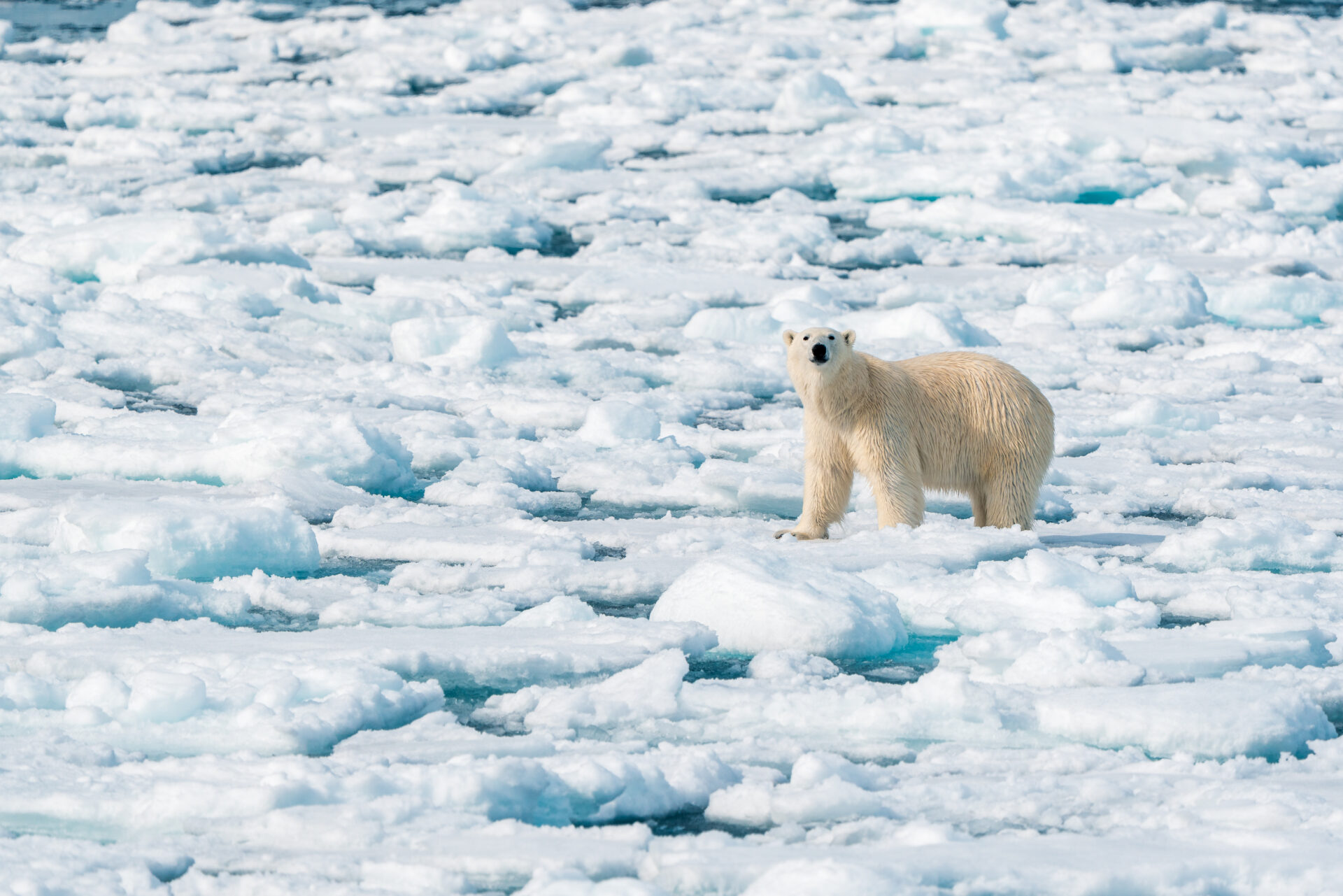
Scientists have documented a worrying new pattern in the Arctic: polar bears, increasingly stranded on land by vanishing sea ice, are raiding seabird nesting grounds on a scale never before seen in Alaska.
A study led by the Wildlife Conservation Society (WCS) and Cooper Island Arctic Research, published in Polar Research, links the behaviour directly to the collapse of the bears’ traditional hunting grounds.
The research draws on decades of seabird monitoring data from Cooper Island – one of the longest unbroken records of its kind anywhere in the Arctic – to track how bear behaviour has shifted as sea ice retreats earlier and further each summer. With seals harder to reach, bears are spending far more time ashore, and many have turned to eggs and chicks as an alternative food source.
The most striking incident came in July 2024, when a lone bear spent almost a full day moving methodically through a common eider colony on Spy Island, destroying nearly nine in ten nests before it left. Researchers describe it as the largest single act of nest destruction by a polar bear ever recorded in the state.
Cooper Island itself tells a similar story. Bear incursions there increased markedly after sea ice hit record lows in 2007, and the animals have since worked out how to break into nest boxes that were specifically designed to keep them out. In 2024 and 2025, bear predation wiped out the island’s entire black guillemot breeding season.
“For decades these barrier islands served as places where seabirds could nest with relatively little pressure from large land predators,” said Kayla Shively, Conservation Ecologist with WCS’s Arctic Beringia Programme and lead author of the study. “What we’re seeing now is that as polar bears spend more time on shore, those relationships are changing. It’s another reminder that climate change isn’t affecting one species at a time – it is reshaping the connections between species across the Arctic.”

In other news


The timing of the raids is also changing. Bears are arriving at colonies earlier in the season than before, exposing eggs, hatchlings and nesting adults to a longer window of risk. For black guillemots, already struggling as warmer waters reduce stocks of Arctic cod – their main prey – bear predation is now compounding an existing decline. Common eiders face a similar squeeze, with rising sea levels and coastal erosion already eating into their nesting habitat.
“When a top predator like the polar bear changes how and where it hunts, it’s telling us something fundamental about the ecosystem,” said Dr Martin Robards, Regional Director of WCS’s Arctic Beringia Programme and study co-author. “These aren’t isolated events. They’re visible signs that one of the world’s most intact ecosystems is being destabilised by the loss of sea ice, with consequences that ripple through wildlife communities in ways we’re only beginning to understand.”
The findings would have been far harder to interpret without the sustained fieldwork carried out on Cooper Island since the 1970s, researchers say. Without it, individual incidents like Spy Island might have looked like anomalies rather than part of a wider trend now emerging across the region – evidence of a more systemic “New Arctic” being reshaped as species adapt to a world with less ice.
The study’s authors argue that cutting emissions, protecting undisturbed habitat, and continuing long-term ecological monitoring will all be critical to giving Arctic wildlife a chance to adapt, and, if warming can eventually be brought under control, to recover.


"*" indicates required fields
Printed editions
Current issue
Back issues



Enjoy so much more from Oceanographic Magazine by becoming a subscriber.
A range of subscription options are available.
