'Drastic change' to Antarctic penguins’ breeding season, as climate warms
Some penguin species are breeding up to three weeks earlier, the fastest changes in this kind of behaviour on record. Researchers warn the slower-to-adapt species risk being the ‘losers’ of climate change – and that this loss could cause ecosystem collapse.
Antarctic penguins have adapted their breeding season in record speed to the warming climate, new research suggests.
The decade-long study, led by Penguin Watch at the University of Oxford and Oxford Brookes University, analysed the timings of penguin breeding between 2012 and 2022.
They observed three different species, Adélie (Pygoscelis adeliae), Chinstrap (P. antarcticus) and Gentoo (P. papua), and found that all three species had radically moved their breeding season forward.
Gentoo penguins showed the greatest change, with their breeding period falling an average of 13 days earlier per decade (up to 24 days in some colonies). This represents the fastest change in phenology recorded in any bird – and possibly any vertebrate – to date.
Adélie and Chinstrap penguins were slightly slower to adapt, but still brought their breeding season forward by an average of 10 days.
Lead author Dr Ignacio Juarez Martínez said the differing results between the Antarctic penguins species indicates that there will likely be ‘winners and losers of climate change’.
The warming conditions on the Antarctic Peninsula favour generalist penguin species like Gentoos, at the expense of those that rely on arctic krill, like the Chinstrap or Adélies.
Penguins play a crucial role in the Antarctic food chain. They bring nutrients from deep water up to the surface, which is vital to algae being able to complete their photosynthesis
Scientists are worried that losing penguin biodiversity increases the risk of broad ecosystem collapse in the region.

In other news

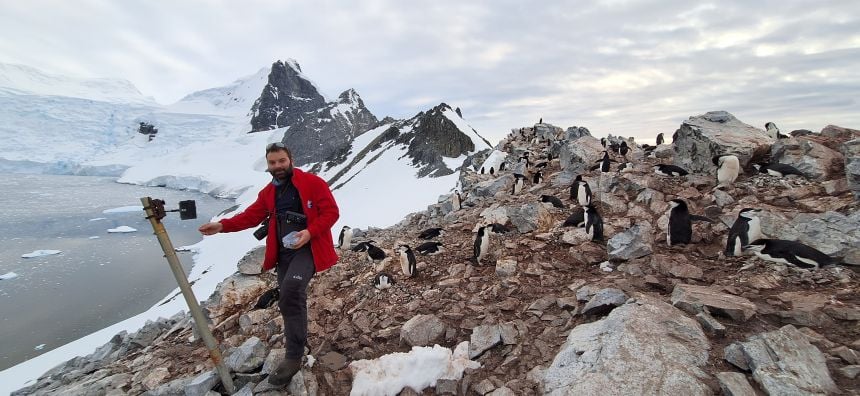
These radical changes in breeding behaviour are happening in tandem with changes to the Antarctic environment, including warming temperatures and decreasing sea ice.
Researchers observed the penguins using 77 time-lapse cameras overlooking 37 colonies in Antarctica and some sub-Antarctic islands. Every time a picture was taken, the temperature was also recorded.
The data revealed that colony locations are warming up four times faster (0.3ºC/year) than the Antarctic average (0.07ºC/year), making them one of the fastest-warming habitats on Earth.
Statistical models point to this temperature change being the dominant driver in breeding shifts, but it has not been ascertained whether it is an adaptive response or not; other ecological factors, like availability of prey, could be involved.
Co-author of the paper, Dr Fiona Jones, said: “As penguins are considered ‘a bellwether of climate change’, the results of this study have implications for species across the planet.”
“Further monitoring is needed to understand whether this record advance in the breeding seasons of these penguin species is impacting their breeding success,” she added.


"*" indicates required fields
Printed editions
Current issue
Back issues
Enjoy so much more from Oceanographic Magazine by becoming a subscriber.
A range of subscription options are available.
