Environmental groups take France to court over seabird bycatch
The three organisations allege France is failing to monitor and regulate the deaths of tens of thousands of seabirds which die in fishing nets every year.
Three environmental groups have taken France to its highest administrative court, alleging the country is illegally allowing tens of thousands of seabirds to die in fishing nets and on hooks each year, pushing multiple species toward extinction.
ClientEarth, Sea Shepherd France and Défense des Milieux Aquatiques filed their complaint before the Conseil d’État on 21 April 2026, demanding that French authorities properly enforce existing EU laws on sustainable fishing and biodiversity protection.
The groups said France has failed to collect adequate data and implement measures to reduce incidental seabird deaths, in breach of the Birds and Habitats Directives, the Technical Measures Regulation, and other European legislation.
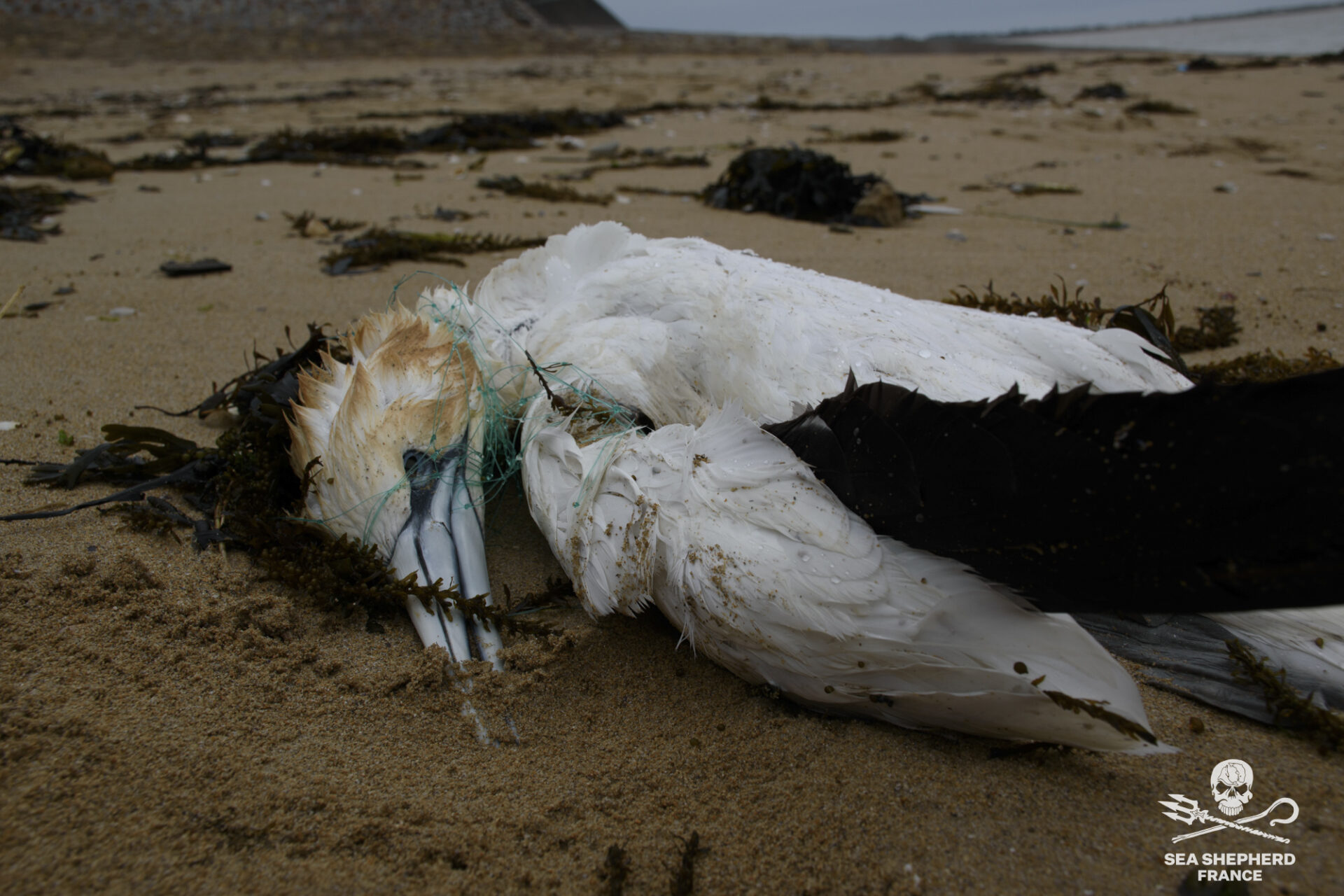
Every year, seabirds become hooked or entangled in longlines, gillnets and pelagic trawls targeting commercial species such as hake, sea bass and tuna. Scientific extrapolations suggest France may record the highest seabird bycatch figures in Europe, with an estimated 34,600 birds killed annually.
Because most drown without ever washing ashore, the crisis has remained largely hidden from public view.
The species most severely affected include the Balearic shearwater, listed as critically endangered on the IUCN Red List, the common guillemot, listed as endangered, and the Northern gannet, listed as near threatened.
The guillemot’s situation is particularly acute: it raises only one chick per year, meaning large-scale deaths cannot be offset by reproduction in the way they might be for more prolific species.

In other news



The NGOs argue that solutions are well known and already in use elsewhere in Europe.
Fishers can dramatically cut bird deaths by setting gear before sunrise, deploying hooks below the birds’ maximum dive depth, and hauling gillnets in quickly rather than leaving them in the water for days at a time. They have said the barrier is not technology but political will and enforcement.
The lawsuit builds on an infringement procedure already opened by the European Commission against France in July 2022 over similar failures.
The groups are calling on France, which oversees the world’s second largest Exclusive Economic Zone, to establish effective monitoring systems, binding mitigation measures, and concrete plans to reduce pressure on threatened seabird populations.
A veteran hook-and-line fisher, speaking under a pseudonym, described watching guillemot numbers collapse over the course of his career.
“When I was younger, the sight of seabirds was an everyday spectacle,” he said. “Today, the only birds I can show my children are a few carcasses washed up on the beach.”


"*" indicates required fields
Printed editions
Current issue
Back issues


Enjoy so much more from Oceanographic Magazine by becoming a subscriber.
A range of subscription options are available.
