Native Hawai’ian sea turtles critical in fight against invasive algae
When a camera captured the native turtles eating at the alga mats, researchers realised the animals could be pivotal in defending the reef
Green sea turtles have been identified as a potential ally in the fight against the spread of an invasive algae in the Northwestern Hawai’ian Islands.
For the first time, Hawai’ian green sea turtles have been documented actively grazing on the aggressive invasive red algae that spread among three of the northernmost atolls in Papahānaumokuākea Marine National Monument.
Scientists from the University of Hawaiʻi at Mānoa and the US Fish and Wildlife Service (USFWS) have said this suggests the native turtles could therefore play an important role in curbing the outbreak – but warn that there is a possibility that they could also spread it.
The alga was first detected at Manawai in 2016, and it has since grown to cover an area more than 101 square kilometres of reef habitat. The alga, C. tumulosa, forms dense mats more than 6 centimetres thick. This can smother live coral, displace native reef species – making it one of the most pressing threats to the monument’s reef ecosystems.
While it is already established in the Northwestern Hawai’ian Islands, researchers are concerned about its spread to the main Hawai’ian islands.
In June and July 2025, the research team filmed 50 minutes of footage of native Hawai’ian green sea turtles grazing on these algae mats. The findings were recently published in the journal Coral Reefs by researchers.

In other news

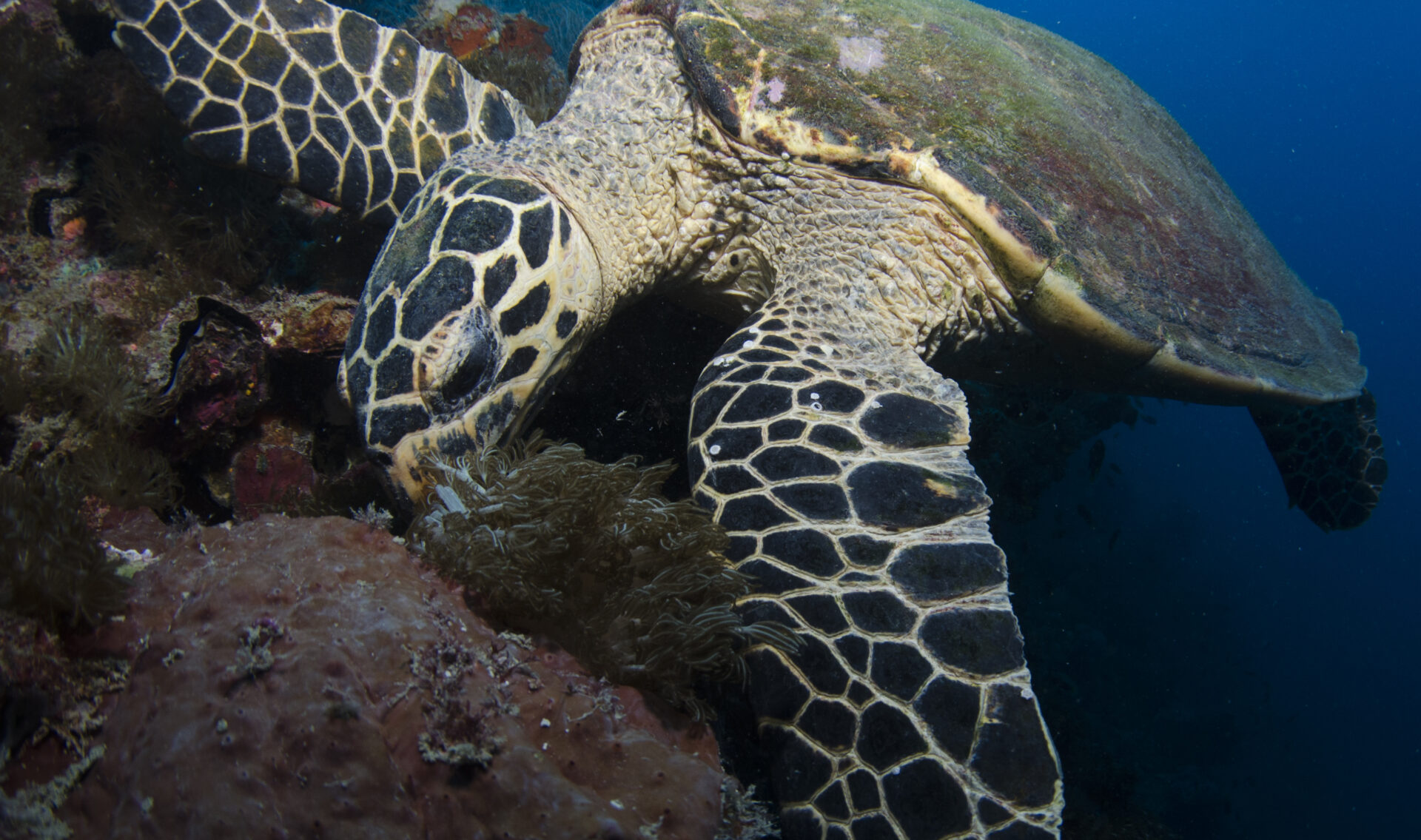
These turtles make a substantially larger dent in the algae mats than urchins or fish: one female took up to 18 bites in a 95-second burst, leaving a 5-15 cm diameter gap across the algal canopy.
The Hawai’ian green sea turtle is currently classified as threatened under the US Endangered Species Act, having rebounded from a 1978 listing due to strict protections.
“Our multi-partner effort to prevent this seaweed from taking hold in the Main Hawai’ian Islands must include a plan to increase numbers of threatened, native green sea turtles, as well as ramping up efforts to identify all routes that could allow Chondria to spread to Oʻahu,” said Celia Smith, UH Mānoa’s School of Life Sciences professor and senior author of the study.


"*" indicates required fields
Printed editions
Current issue
Back issues


Enjoy so much more from Oceanographic Magazine by becoming a subscriber.
A range of subscription options are available.
