EU blocks extension of Mediterranean deep-sea trawling ban
A proposal to extend the ban on deep-sea bottom trawling in the Mediterranean and Black Sea from 1,000 to 800 metres depth has been blocked, with the European Union (EU), led by Italy and Spain, standing in the way of what campaigners describe as ‘a historic opportunity to strengthen protection of the Mediterranean deep sea’.
The proposal was tabled by the Republic of Türkiye at the annual meeting of the General Fisheries Commission for the Mediterranean (GFCM), held in Rome from 26 to 30 October 2026. It was backed by Egypt, Lebanon, Montenegro and Morocco.
The European Commission had initiated GFCM discussions on the measure in 2023, and publicly supported the extension at the AgriFish Council in June 2026. Italy and Spain, however, refused even to consider a two-year phase-in of the ban proposed by Türkiye, offering no reasonable justification for their position.
Faced with the determination of both countries to sink the proposal, Türkiye has announced it will bring it back next year at the GFCM annual session in Ankara.
NGOs attending this year’s meeting as observers said they witnessed, for the first time, a significant presence of industry representatives within the Italian delegation.
Vera Coelho, Executive Director and Vice President at Oceana in Europe, said: “This failure to act is a disgrace, as Italy and Spain are able to hold hostage the entire Mediterranean region for the sake of a few industrial deep-sea trawlers, when it is proven that the economic impacts are minimal.
“As the region is suffering from intense heatwaves, precaution should prevail to protect the important role of deep-sea ecosystems as climate refugia. This outcome also raises concerns about the EU’s stated leadership and ability to deliver ocean conservation in practice.”

In other news
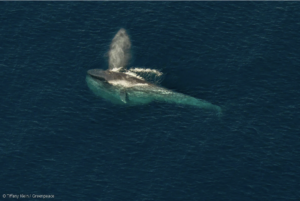
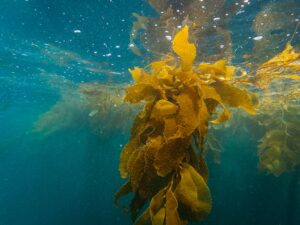
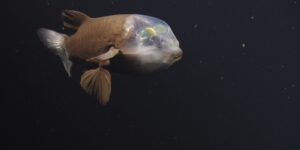

The setback leaves vulnerable deep-sea habitats exposed to the impacts of fishing, despite their importance for marine biodiversity, climate resilience and the recovery of overexploited, high-value stocks such as red shrimp.
The Mediterranean is warming more rapidly than other oceans and facing more intense marine heatwaves. Campaigners say this makes the rejection particularly hard to justify, given that GFCM pilot studies across the region have identified a negligible socio-economic impact of such a ban on the fishing sector.
Domitilla Senni, MedReAct Director, said: “We urge Mediterranean countries and the EU to maintain momentum and extend the deep-sea trawling ban in 2027 at the latest, and we congratulate the leadership by Türkiye and countries that already introduced national bans on bottom trawling below 800 metres, including Egypt, Montenegro and France.”
Zafer Kızılkaya, President of Mediterranean Conservation Foundation (Akdeniz Koruma Vakfı), said: “Türkiye has shown that a Mediterranean country can lead on deep-sea protection, and it was backed by countries on both shores of the basin. It is deeply disappointing that Italy and Spain chose to block a measure with negligible costs for the fishing sector and lasting benefits for biodiversity and fish stocks. We will keep working with our partners so that the ban is extended in Ankara next year.”


"*" indicates required fields
Printed editions
Current issue
Back issues
Enjoy so much more from Oceanographic Magazine by becoming a subscriber.
A range of subscription options are available.