Marine heatwaves and hungry fish decimate Japan’s vital kelp forests
Marine heatwaves pushed kelp beyond its heat tolerance while warmer seas gave plant-eating fish up to 86 more days a year to graze, researchers say
A surge in ocean warming and marine heatwaves, combined with a longer grazing season for plant-eating fish, has driven the collapse of kelp forests along Japan’s Izu Peninsula, according to a new study.
Researchers from the University of Tsukuba found that the Izu coast experienced a dramatic rise in warming and marine heatwave activity between 2017 and 2025, during the prolonged Kuroshio Large Meander event. Over the same period, warming extended the annual window of temperatures suitable for grazing by herbivorous fish by up to 86 days.
Laboratory experiments showed that the photosynthetic performance of Ecklonia cava, a kelp known in Japan as kajime, declined rapidly at temperatures above about 29.5°C.
The researchers say the combination of heat stress and a longer grazing season has hindered the kelp’s recovery, contributing to widespread loss of kelp forests and a shift to “isoyake” – the Japanese term for the ecological phenomenon where rocky coastal reefs lose their large brown seaweeds and kelp forests, turning into barren grounds.
Kelp forests are ecosystems formed by large brown seaweeds in coastal waters. They provide habitat for numerous fish and invertebrates and are vital to coastal productivity and carbon cycling. These underwater forests capture carbon dioxide up to 20 times faster per unit area than terrestrial forests by using rapid photosynthesis to convert seawater carbon into plant biomass.

In other news
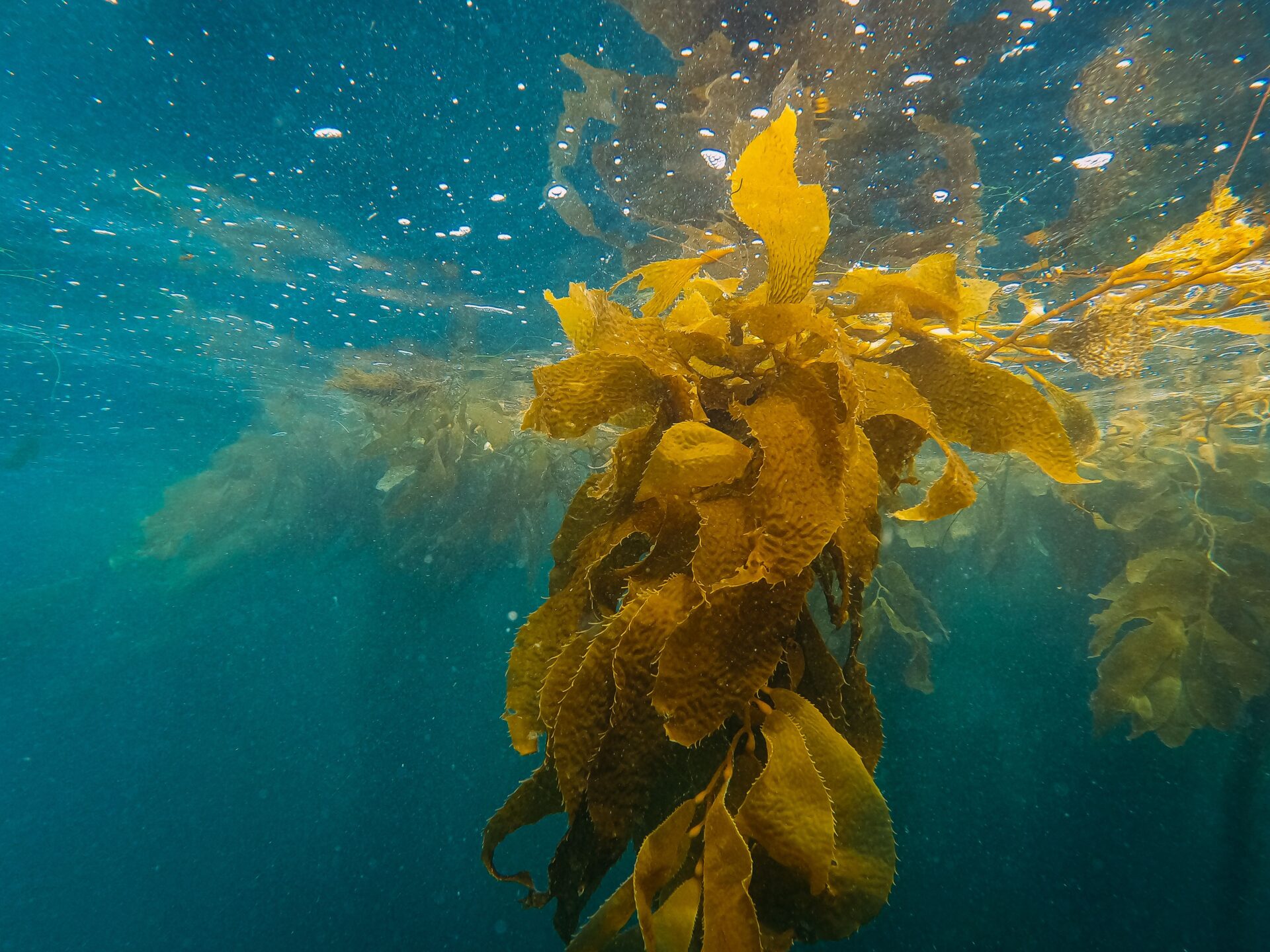
In recent years they have declined throughout Japan, and the spread of “isoyake” has been mainly attributed to rising sea temperatures and intensified grazing by herbivorous fish.
To test the causes, the team combined more than 40 years of data on the biomass of E. cava with long-term surveys of kelp cover across about 200km of the Izu Peninsula coastline. They brought these together with satellite-derived sea surface temperatures and marine heatwave records, field surveys of herbivorous fish and the laboratory heat-tolerance experiments.
This shift, the study says, signals a: “Fundamental reconfiguration of ecosystem processes with cascading consequences for coastal fisheries, blue carbon potential, and socio-ecological resilience.”
Click here for more from the Oceanographic Newsroom


"*" indicates required fields
Printed editions
Current issue
Back issues
Enjoy so much more from Oceanographic Magazine by becoming a subscriber.
A range of subscription options are available.