Farmed salmon DNA is now present in a fifth of Scotland's rivers
Scotland's most comprehensive survey of wild salmon genetics has found farmed DNA present across a fifth of the country's river network, with contamination nearly six times higher in salmon farming regions than in areas without farms.
Wild Atlantic salmon in Scotland’s salmon farming regions are carrying nearly six times as much farmed genetic material in their DNA as those in areas without farms, new research from the Marine Directorate of the Scottish Government has found.
The study is the most comprehensive national assessment of genetic contamination in wild salmon ever conducted in Scotland and the first capable of producing results that can be reliably scaled to both regional and national levels.
Wild Atlantic salmon in Great Britain were classified as Endangered on the IUCN Red List in 2023. The new study shows that the industry operating in the waters where those salmon live and breed is now leaving a permanent mark on the species’ genetic identity.
Researchers surveyed 834 river sites across Scotland and tested some 6,639 juvenile wild salmon. Across those marine farming areas, 3.14% of the wild salmon genome was found to be derived from farmed fish. In areas with no farming, that figure was 0.55%.
What’s more is that contamination was present across 39% of the surveyed river network in farming areas, against only 15% elsewhere. Nationally, farmed DNA was detected in roughly one fifth of Scotland’s salmon rivers, with significant contamination recorded in 25 of the 28 regions surveyed.

In other news

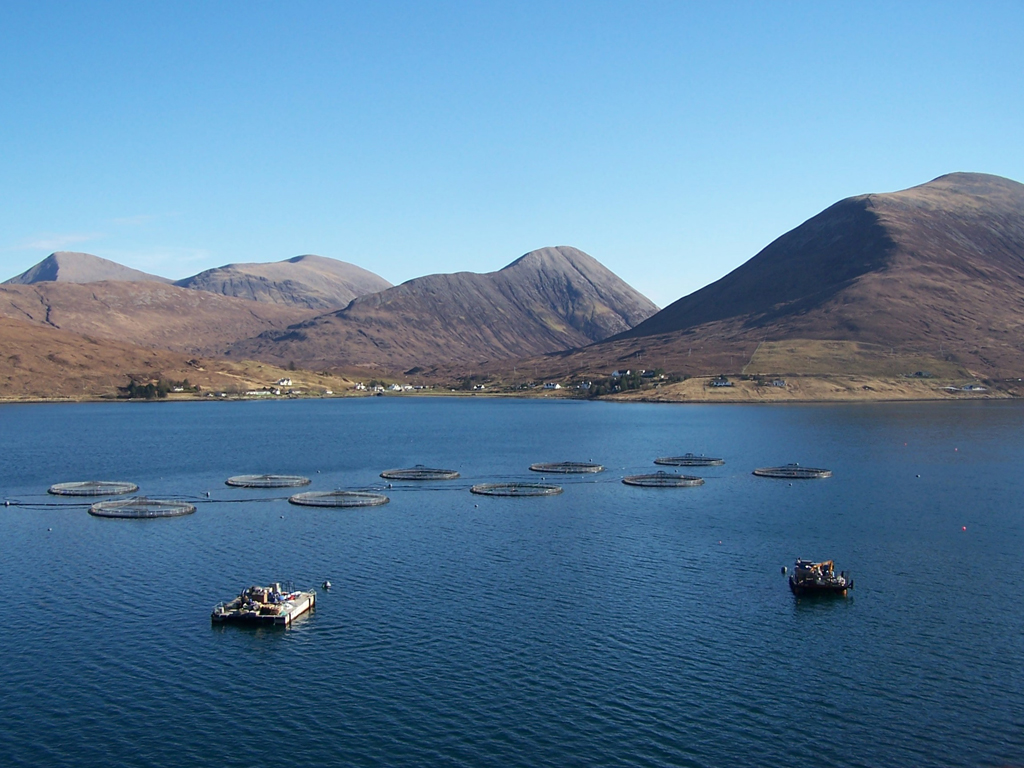
The worst affected region is Lochaber, at the centre of Scotland’s salmon farming activity, where farmed DNA was found across 72% of the river network and accounts for 6.72% of the wild salmon genome. Wester Ross and Skye followed at 57%.
The study’s authors state, however, that their figures are likely to underestimate the true scale of the problem, No pre-aquaculture genetic baseline exists for Scotland, and the genetic test used cannot detect escapes from farms using Scottish-origin stock. Instead, it can only use Norwegian-origin fish, which are genetically distinct enough from native Scottish populations to be accurately identified.
Farmed salmon in Scotland are overwhelmingly of Norwegian genetic origin. When escaped farmed fish breed with wild salmon, the resulting genetic material passes permanently into the wild population and cannot be removed.
Dale Vince, founder of the Green Britain Foundation, said: “Wild salmon have been in existence for over 70 million years, but in just a few decades the salmon farming industry in Scotland – entirely foreign owned, by the way – has corrupted its DNA. Millions of years in the making, decades in the breaking, in pursuit of a buck, or indeed a krone, the currency of Norway where most of Scotland’s farms are owned.”
Earlier assessments of genetic contamination could not be reliably scaled beyond individual sites, allowing the industry to argue that findings were localised. This study’s randomised, spatially balanced methodology was designed specifically to produce results that hold at regional and national level.
The research was carried out by the Marine Directorate of the Scottish Government and part-funded by SEPA, NatureScot, and Crown Estate Scotland – the public body that leases the seabed to the salmon farming industry.


"*" indicates required fields
Printed editions
Current issue
Back issues

Enjoy so much more from Oceanographic Magazine by becoming a subscriber.
A range of subscription options are available.
