Fewer reef sharks on Caribbean reefs with high diving activity
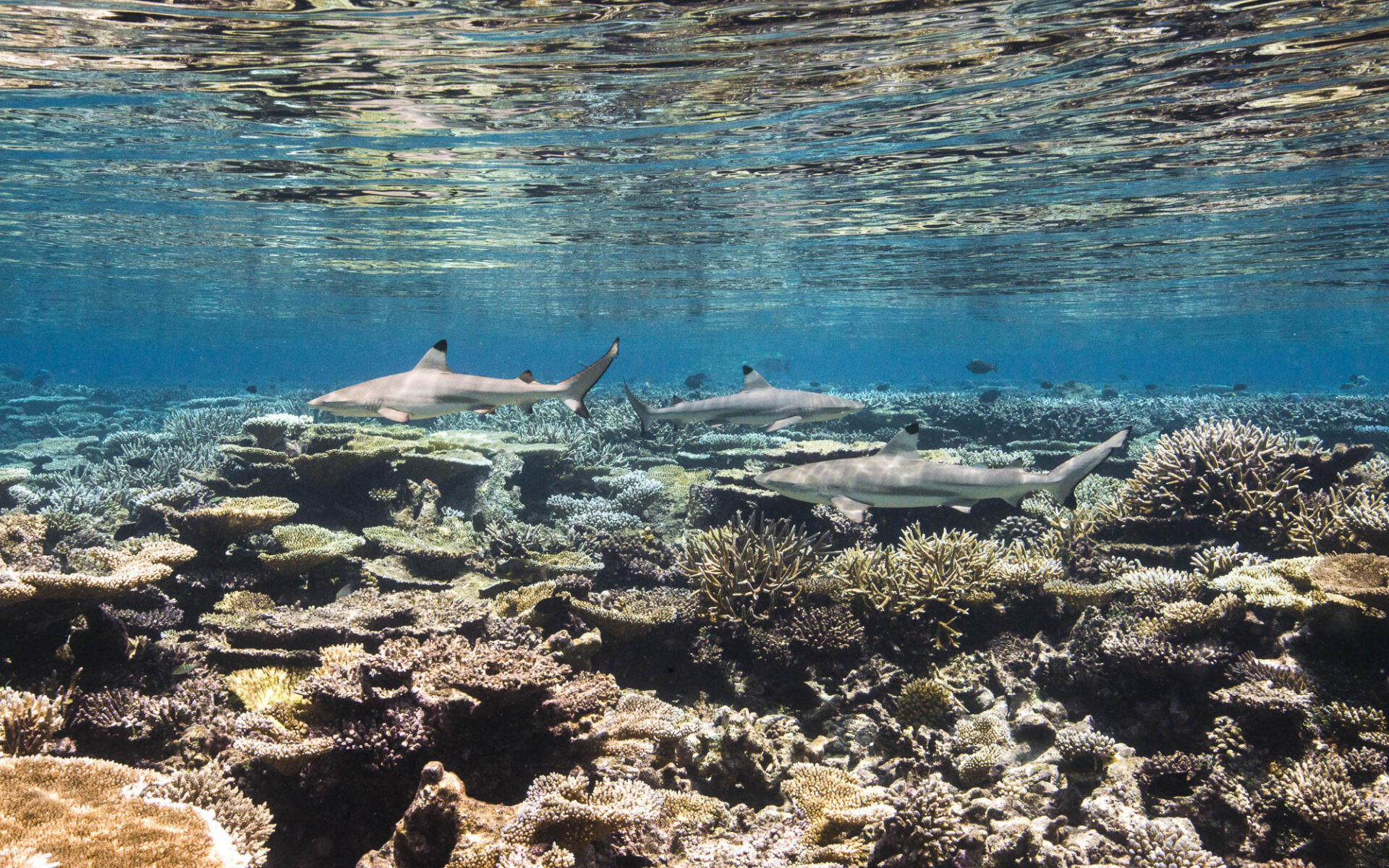
New research finds that reef sharks are less commonly observed on Caribbean reefs with high levels of diving activity and coastal development, suggesting tourism plays a greater role in shark decline than previously recognised.
Reef sharks are less commonly found on Caribbean reefs with high levels of diving activity and coastal development, according to new research published in the Journal of Applied Ecology.
The findings suggest that even recreational activities widely considered to be low impact are associated with reduced shark presence – and raise important questions for the management of some of the region’s most visited marine environments.
The study, led by Twan Stoffers, a fish ecologist at Wageningen University & Research, is based on 995 underwater video recordings collected between 2012 and 2017 using Baited Remote Underwater Video systems (BRUVs) across seven reef systems in the Caribbean. Cameras were deployed around six inhabited islands in the Dutch Caribbean and on the Saba Bank, a large, remote reef area with minimal human disturbance. The contrast between the two settings proved to be significant.
“What stands out is that we observe this pattern even on reefs that are otherwise in good ecological condition,” says Stoffers. “This suggests that human presence plays an important role in shaping where these animals occur.”
Around the inhabited islands, reef shark presence was strongly associated with diving activity and coastal development, with sharks less frequently recorded in areas of greatest human pressure. On the Saba Bank, the pattern was markedly different. With human disturbance largely absent, natural environmental factors – water depth, reef structure, habitat complexity – were the primary drivers of shark distribution.
“On the Saba Bank, where human disturbance is minimal, natural factors such as water depth and reef structure mainly determine where reef sharks occur,” Stoffers explains. “On populated reefs, these natural factors play a smaller role, and patterns are more closely linked to human activity.”

In other news


The influence of human activity varied between species. Caribbean reef sharks showed the strongest response to disturbance, with lower numbers recorded in areas of intensive diving activity and higher coastal development, and higher numbers observed farther offshore and on less disturbed reefs.
Nurse sharks and southern stingrays, both bottom-dwelling species, appeared less sensitive to human presence – their distribution more closely linked to reef structure and water depth than to levels of tourism or development. Nurse sharks were most commonly found on structurally complex reefs, while stingrays tended to favour flatter, less structured seabeds.
To assess human pressure across such a wide study area, the researchers combined ecological field data with openly available sources. Geolocated underwater photographs shared on social media were used as a proxy for diving activity, while publicly available spatial data informed their assessment of coastal development.
“By combining underwater video data with spatial indicators of diving activity and coastal development, we were able to analyse patterns across a large region,” says Stoffers. “This approach is especially valuable in areas where detailed data on recreational use and human-made infrastructure are not available.”
Reef sharks play an important role in maintaining healthy reef ecosystems, helping to keep the balance between species. Their reduced presence, even on reefs that appear otherwise ecologically intact, is a finding the researchers say should not be overlooked.
Previous research has largely focused on fishing pressure and habitat destruction as the primary drivers of shark decline. This study indicates that tourism and coastal development also influence where reef sharks are found – and that these factors have, until now, received insufficient attention in both research and management contexts.
The authors argue that non-extractive human activities need to be explicitly considered in reef management policy, alongside traditional factors such as habitat quality and water depth. Understanding not just the condition of a reef, but how it is being used by people, may prove essential to protecting the species that depend on it.


"*" indicates required fields
Printed editions
Current issue
Back issues




Enjoy so much more from Oceanographic Magazine by becoming a subscriber.
A range of subscription options are available.
