More than 700 dolphins killed in a single day of Faroe Islands hunts
Three dolphin drives in the Faroe Islands killed 706 animals in a single day - surpassing two-thirds of last year's total - amid equipment failures, chaotic scenes, and the arrest of conservation observers.
In one of the most significant single-day killing events in the history of the Faroe Islands’ dolphin hunts, more than 700 Atlantic white-sided dolphins were driven ashore and killed on Wednesday across three separate drives – surpassing two-thirds of the approximately 1,000 marine mammals killed across the entirety of last year.
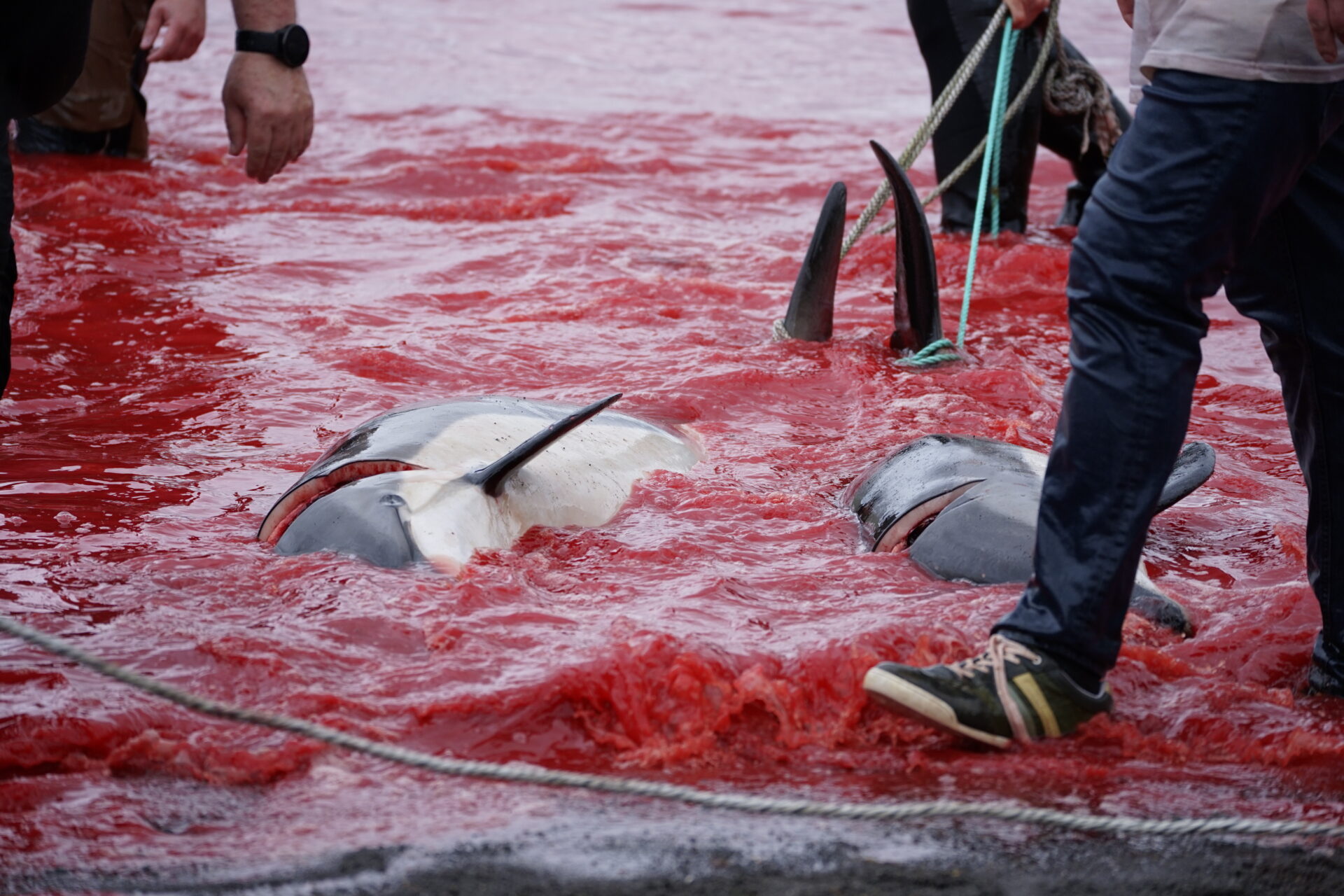
The hunts, known locally as the grind, took place at multiple locations across the archipelago, which sits roughly 200 miles north of Scotland. Hundreds of dolphins were herded towards the shoreline before being killed using hooks and long knives in scenes that quickly drew international condemnation from conservation groups.
The day’s events were compounded by what participants themselves acknowledged was a critical shortage of spinal lances – equipment that is legally mandatory for the killing of dolphins in the islands. In their absence, multiple animals were killed using knives alone.
Reports from observers on the ground have described scenes of ‘prolonged suffering’ in which dolphins were crushed against rocks, driven over by vessels, and struck by boat propellers – the apparent consequence of both the equipment shortage and an insufficient number of trained participants.
A total of 706 dolphins were killed across the three hunts. The largest single drive took place in Tórshavn, the islands’ capital, where 406 animals were killed.

In other news

The scale of the killing has drawn immediate and stark condemnation from Sea Shepherd, the global marine conservation organisation that had observers present. Two of its crew members were arrested after being reported to police by whalers who alleged they had interfered with the hunts.
Sea Shepherd maintains its crew were solely documenting the events. Both individuals now face potential deportation.
A third hunt, described by Sea Shepherd as having been deliberately concealed from public channels, added further controversy to an already volatile situation.
“The events unfolding this week are not a cultural tradition on display,” said Valentina Crast, Campaign Director for the Faroe Islands at Sea Shepherd. “They are chaotic scenes of extreme animal cruelty, producing a death toll exceeding two thirds of last year’s entire annual figure. Dolphins were killed without the mandatory equipment. Animals were crushed against rocks and struck by boat propellers. And when a third, secret grind began, one deliberately hidden from public channels, marine conservationists were arrested for documenting it.
“Nobody can ever justify this level of intense suffering inflicted on innocent animals. We call on governments across Europe to stand up to see these hunts banned once and for all.”
Faroese authorities currently defend the practice as a centuries-old cultural tradition with regulated procedures, while international conservation groups argue it constitutes unnecessary and large-scale cruelty. Wednesday’s events – marked by equipment failures, chaotic scenes, and the arrest of observers – are likely to intensify the debate significantly.
Sea Shepherd has called on European governments to take formal action to bring the hunts to an end.


"*" indicates required fields
Printed editions
Current issue
Back issues



Enjoy so much more from Oceanographic Magazine by becoming a subscriber.
A range of subscription options are available.
