First deep-sea mining lease 'being forced on Pacific communities'
The Trump administration has proposed the world's first commercial deep-sea mining lease sale near American Samoa, drawing fierce opposition from Pacific Indigenous leaders and territorial governments who have already imposed moratoriums on the practice.
The Trump administration has proposed a ‘deep-sea mining lease’ sale in federal waters near American Samoa, marking what would be the world’s first attempt to commercially mine the seabed. It’s a move that has drawn immediate and fierce opposition from Pacific Indigenous leaders, community organisations, and conservation groups alike, including those from the territory whose waters are directly at stake.
The announcement was made by the newly re-designated Marine Minerals Administration, which outlined plans for a lease sale near American Samoa in August 2026. Documents have also identified Guam and the Northern Mariana Islands as targets for future lease sales.
The administration indicated that funding for tribal and Pacific Islands outreach would only follow the lease sales rather than precede them. Critics have described this move as a “fundamental failure of consultation.”
“The federal government is moving forward with a decision affecting Pacific communities before meaningful consultation has even begun – scheduling outreach after the lease sale, not before it,” said Arlo Hemphill, Greenpeace USA Oceans Are Life Campaign Lead.
“The Trump administration is attempting to launch the world’s first commercial deep sea mining lease sale despite clear opposition from Pacific communities and major unanswered scientific questions. Pacific peoples are being asked to shoulder the risks of a destructive new industry enabling corporations to chase profits in one of the last wild places on earth.”

In other news
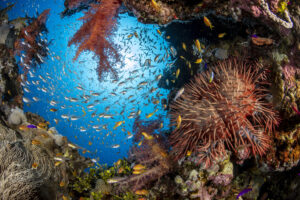
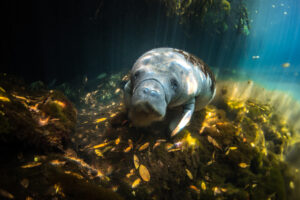

The announcement comes in direct contradiction to positions already taken by the communities and governments it affects. American Samoa has imposed a moratorium on seabed mining in its own waters and formally opposed federal proposals to mine the outer continental shelf near the territory. The governors of both Guam and the Northern Mariana Islands have called for a moratorium on the practice. The governor of Guam signed a ban on deep-sea mining in nearshore waters under territorial control on 5 June.
More than 3,000 residents of US territories have signed petitions opposing the industry’s expansion into the region.
Sabrina Suluai-Mahuka, founder of American Samoa’s Finafinau foundation, said the administration was imposing irreversible decisions on communities that had already made their opposition clear.
“Pacific people have made our position clear: we do not want deep sea mining in our waters. Yet the Trump administration is forcing this industry on our communities – imposing decisions that could affect us permanently without consulting us,” she said. “Our ocean is our home, our food, our culture, and our future, and we are calling on the Administration to stop this reckless lease sale before irreversible harm is done.”
For Indigenous Pacific leaders, the announcement echoes a pattern of exploitation that their communities have faced before. Solomon “Uncle Sol” Pili Kahoʻohalahala, a Native Hawaiian Elder of the Papahānaumokuākea Marine National Monument Advisory Council and Native Hawaiian Cultural Working Group, said the resistance to deep-sea mining was rooted in a collective understanding of what the ocean represents and what its loss would mean.
“The Pacific has already seen what happens when governments and corporations treat our ocean as something to exploit instead of a living system that sustains our people. Indigenous leaders across the Pacific are standing together against deep sea mining because we know the risks will not stop at our shorelines,” he said. “The ocean connects our communities across generations, and Pacific peoples will continue protecting it.”
The proposal arrives amid mounting scientific uncertainty about the environmental consequences of deep-sea mining, and at a moment when opposition to the industry – from governments, scientists, businesses and investors – has been growing globally.
Some 43 countries have called for a precautionary pause on deep-sea mining, and the EU has repeatedly endorsed that position.
Whether the world’s first commercial lease sale proceeds will now depend on whether the legal and political opposition from Pacific communities, territorial governments and conservation organisations is sufficient to slow an administration that has shown little willingness to be constrained by either.


"*" indicates required fields
Printed editions
Current issue
Back issues
Enjoy so much more from Oceanographic Magazine by becoming a subscriber.
A range of subscription options are available.
