How the “big five” fish took over the British dinner table
A new study of recipes from the last 100 years shows how a varied seafood culture gave way to the "big five" that now make up about 80% of the fish eaten in the UK.
The variety of seafood presented in recipes in the UK over the last 100 years has significantly narrowed, new research shows.
Dr Ruth Thurstan, of the University of Exeter, studied the seafood recipes published in British Good Housekeeping from 1923.
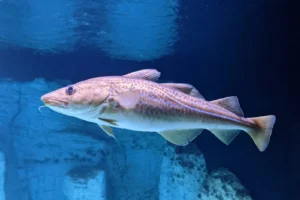
She found that cod, haddock, tuna, salmon and shrimp, the “big five”, now account for about 80% of the seafood eaten in the UK.
“For decades, British cooks have turned to published recipes for inspiration about what to put on the dinner table,” she said. “I wondered whether these everyday sources could tell us how our relationship with fish has changed over time.”
Thurstan examined issues of the magazine, first published in 1922, and extracted fish and shellfish recipes from selected editions, collating 1,192 recipes spanning a century.
The results reveal three broad phases. Before the 1970s, recipes featured a diverse mix of species, with flatfish, herring and oysters prominent and an emphasis on domestic skills, economy and preparing whole fish.
In the 1970s, diversity declined as the big five took centre stage. The shift coincided with falling catches in UK waters and rising imports, alongside the growth of supermarkets, frozen foods and standardised products.
From the 1980s to the present, the big five appeared in well over half of recipes. Other species did not disappear entirely, but aspirational recipes based on value and status, and convenience-focused products, became increasingly prominent.
“The results reveal a striking story of change,” said Thurstan, of the Centre for Ecology and Conservation at Exeter’s Penryn Campus in Cornwall. She said the trend was not simply down to availability, as herring, oysters and lobster can all still be bought, but reflected “a genuine narrowing of what readers were being shown and encouraged to cook”.
In other news


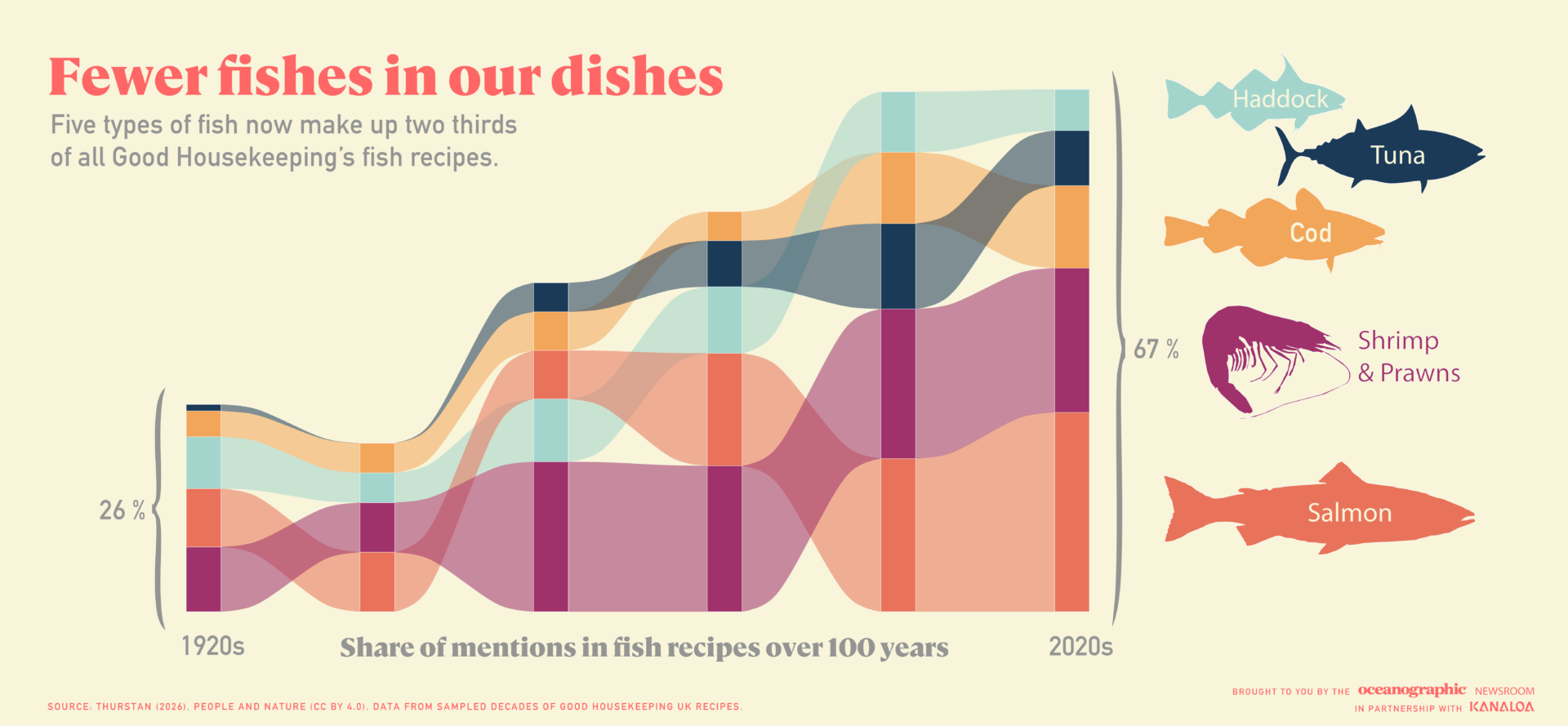
This change in recipes therefore also offer an interesting glimpse into changing British life. The 1920s and 1930s featured oyster soup and halibut steaks in milk, while the 1940s brought fish pasties and jellied herrings. Wartime Ministry of Food recipes encouraged eating fish and alternative proteins, including curried whale meat in the 1940s. The 1970s offered tuna sour cream quiche and salmon trout in aspic, and 2020s favourites have included golden hasselback salmon, gochujang sticky cod and miso shrimp skewers.
Thurstan said the change was not down to naturally conservative British tastes, but to decades of interacting shifts in fish supply, trade and supply chains that shaped what cooks came to see as familiar and desirable. Recipes are not a direct measure of consumption or preference, she cautioned, but they show what people were expected to recognise, access and want to cook.
The findings suggest current diets are not “fixed or inevitable”, Thurstan said, and can be shaped by supply, price, history and culture.
“Today, the UK exports most of the diverse fish caught here, and imports most of the narrow range of fish we eat,” she said. “If we want to change that, and make our seafood consumption healthier and more sustainable, understanding this mix of factors will be a key ingredient.”
The findings sit alongside separate research from the University of East Anglia (UEA), published in January 2026, which suggests there may be an appetite among the British population for change.
Up to 41% of consumers said they would be willing to try species such as sprat, sardine or flatfish. Many have never done so: 58% had never tried sprats, 28% anchovies, 23% herring and 12% sardines.
“This imbalance drives up carbon emissions, leaves the UK vulnerable to global supply chains,” said the UEA study’s lead researcher, Dr Silvia Ferrini.
The UEA’s report recommended measures including supermarket promotions, VAT reductions, greater shelf space for small fish and the introduction of British fish into school meals.


"*" indicates required fields
Printed editions
Current issue
Back issues
Enjoy so much more from Oceanographic Magazine by becoming a subscriber.
A range of subscription options are available.