World’s largest penguin colony suffers steep decline in numbers
Occupied chinstrap nests on Zavodovski Island have fallen by 63% since 2011, scientists say, with warming seas pushing the penguins' krill prey out of reach
The world’s largest penguin colony has lost its title after a steep decline in chinstrap penguins on a remote volcanic island near Antarctica, according to new research by the British Antarctic Survey (BAS).
The study, published in the journal Current Biology, found that the number of occupied chinstrap nests on Zavodovski Island, in the South Sandwich Islands, fell by 63% between 2011 and 2025. The island now has the highest rate of chinstrap decline anywhere in the world, and the title of largest colony passes to Cape Adare in the Ross Sea, more than 5,000km away.
In 2011, Zavodovski was home to an estimated 600,000 chinstrap penguins and 90,000 macaroni penguins.
“It is an enormous population crash, equivalent to half a million breeding individuals being lost from that island,” said Prof Norman Ratcliffe, the BAS penguin ecologist who led the research.
The researchers say the cause is climate-driven change in the Southern Ocean. Chinstraps have a specialist diet and prefer cooler water, and tracking data showed they forage to the north-west of the island, where they would expect to find Antarctic krill. As the water warms, the krill have moved south into the Weddell Sea.
“Sea-ice cover to the south and a lack of suitable islands for nesting prevents chinstraps from following the food,” Ratcliffe said.
The island’s macaroni penguins, which have a broader diet and can switch to fish and crustaceans when krill become scarce, increased by 28% between 2011 and 2016 and have been stable since. Tracking data showed them foraging in warmer waters to the north-east. Ratcliffe described the shift as the biggest change in community composition ever observed at a single location in Antarctica.

In other news
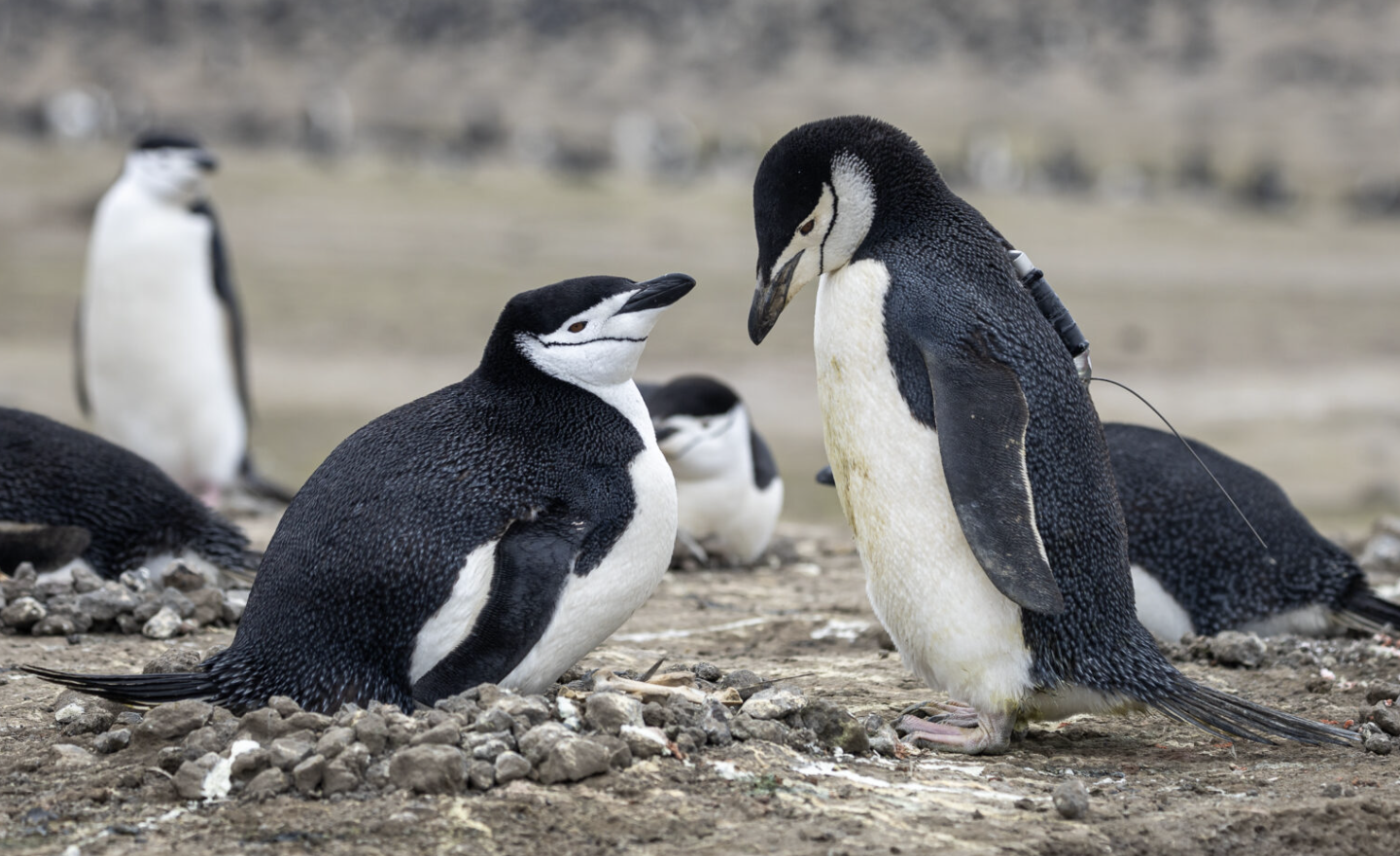
The team travelled for 15 days by yacht to reach the island, which is more than 2,000km from the nearest permanent human settlement. They used drone surveys, aerial photography from an RAF aircraft based in the Falklands, and tracking devices fitted to penguins.
The scientists ruled out several other explanations. Zavodovski’s volcano, Mount Curry, erupted in March 2016, but the decline began years earlier and has been steady, and the researchers say it is not to blame. They also dismissed competition between the two penguin species for nesting space, and krill fishing, because harvesting is banned in the marine protected area surrounding the island. However, it is unclear how krill fishing in areas connected by currents to the protected area might be affecting wider food supplies.
The South Sandwich Islands hold around 30% of the world’s chinstrap population. The researchers say the declines here, together with those elsewhere in Antarctica, could tip the species into the “Endangered” category on the IUCN Red List.
Ratcliffe warned that the loss of chinstraps could have wider consequences for marine food webs. “Each ecosystem could be regarded as like a giant Jenga set, and every component that you remove increases the risk of ecosystems collapsing completely,” he told the Guardian.
Peter Fretwell, a BAS researcher who specialises in remote sensing of penguins, said the findings showed that even the most remote places were affected by climate change. “Not even they can escape the impacts of climate change,” he said.
The study comes six months after emperor penguins were declared an endangered species because of sea ice loss.


"*" indicates required fields
Printed editions
Current issue
Back issues



Enjoy so much more from Oceanographic Magazine by becoming a subscriber.
A range of subscription options are available.
