Hundreds of new species found in Pacific face deep-sea mining destruction
A five-year research study into the effects of deep-sea mining on the sea floor found animal numbers and diversity to decrease by roughly a third, and incidentally discovered hundreds of new species previously unknown to scientists – highlighting how little is known about these environments.
Hundreds of new species, previously unknown to scientists, have been discovered in the deepest regions of the Pacific Ocean as an incidental consequence of a five-year study measuring the effects of deep-sea mining that also found animal numbers and diversity to decrease by a third.
The study has gone some distance to highlight just how little is still known about these deep-sea environments.
Marine biologists from multiple countries joined forces in the large research effort. They spent 160 days at sea, living at depths of 4000 metres, to understand the impacts of deep-sea mining in the Clarion-Clipperton Zone (CCZ), a vast region in the Pacific Ocean between Mexico and Hawaii that is increasingly targeted for deep-sea mining.
Results showed that deep-sea habitats were directly disturbed by mining equipment, experiencing a 37 percent decline in animal numbers, and a 32 percent decline in species diversity.
In the process, they were surprised to also document nearly 800 species, many previously unknown.
Researchers collected 4,350 animals larger than 0.3 mm living in and on the seabed. From these samples, 788 species were identified. Most belonged to groups such as marine bristle worms, crustaceans, and mollusks, including snails and mussels. The team also identified a new solitaire coral.

In other news

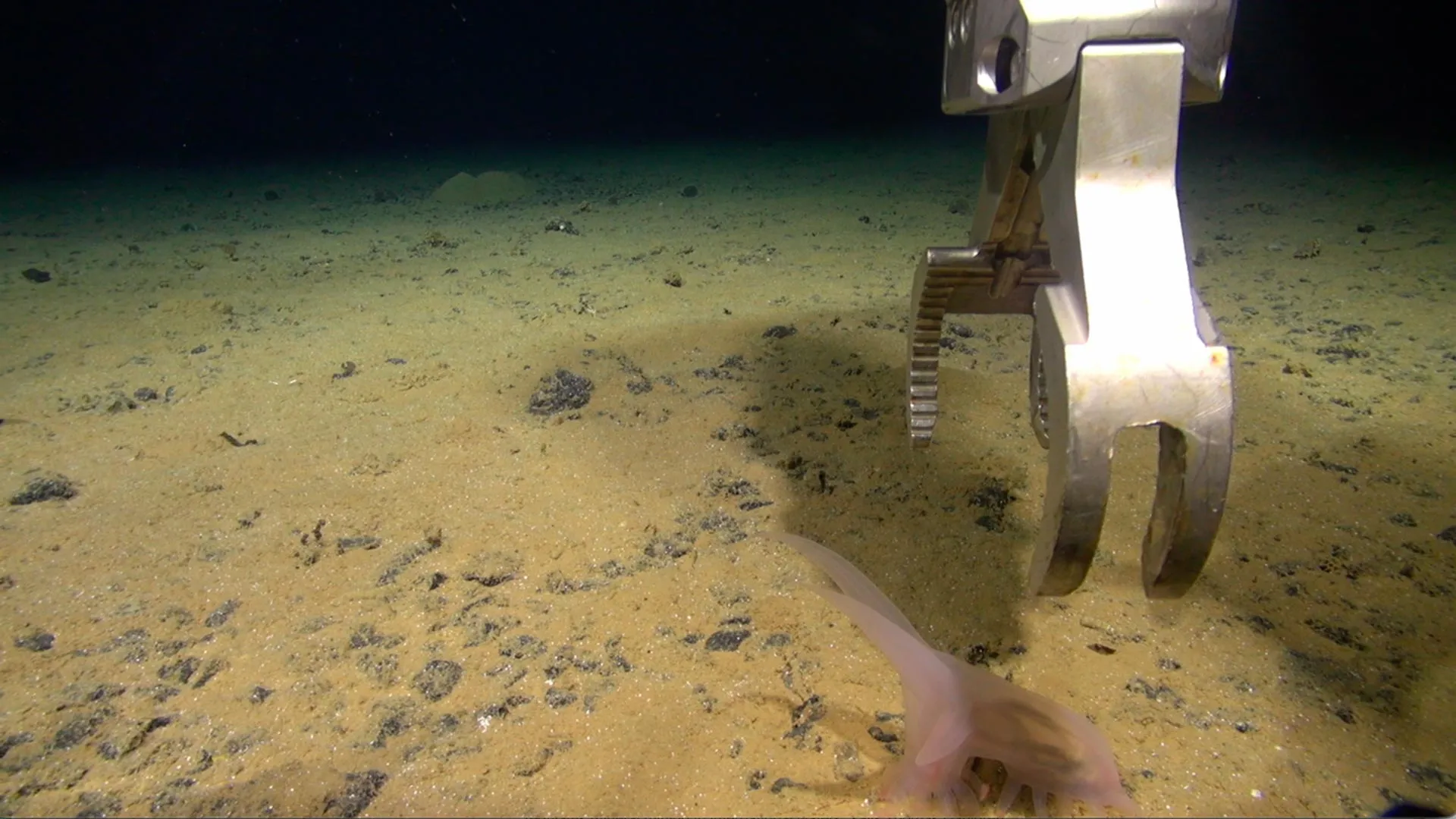
The research, published in Nature Ecology and Evolution, was driven in part by growing commercial and geopolitical interest in the area.
“Our study will be important for the International Seabed Authority (ISA), which regulates mineral mining in international waters,” says Thomas Dahlgren, a marine biologist from the University of Gothenburg who has participated in the research project.
Last April, US president Donald Trump signed an executive order to allow fast-track regulatory processes, to permit commercial-scale mining of the seabed, bypassing international bodies. And this January, Canadian mining firm, The Metals Company took advantage of this, as they applied to fast-track its deep-sea mining operations in the CCZ.
In January 2026, a research expedition was also launched to understand how polymetallic nodules on the seafloor are producing “dark oxygen”, which could be sustaining marine life on the sea floor.
“I have been working in the Clarion-Clipperton Zone for over 13 years, and this is by far the largest study that has been conducted. Since most species have not been described previously, molecular (DNA) data was crucial in facilitating studies of biodiversity and ecology on the seabed,” says Thomas Dahlgren.
“It is now important to try to predict the risk of biodiversity loss as a result of mining. This requires us to investigate the biodiversity of the 30 percent of the Clarion-Clipperton Zone that has been protected. At present, we have virtually no idea what lives there,” says Adrian Glover, senior author from the Natural History Museum of London.


"*" indicates required fields
Printed editions
Current issue
Back issues
Enjoy so much more from Oceanographic Magazine by becoming a subscriber.
A range of subscription options are available.
