Native oysters make encouraging comeback on restored North Sea reef
The majority of adult and juvenile oysters were found to be alive and in healthy condition, providing habitats for fish, shrimp and squat lobsters.
Native oysters are surviving and thriving on a newly restored reef off the coast of Whitburn, South Tyneside, a year after specialist “oyster reef cubes” were deployed in the North Sea, according to the latest dive surveys.
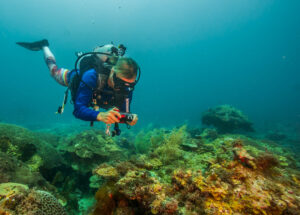
The surveys, carried out by volunteer divers from Project Baseline UK, found that adult and juvenile oysters were not only surviving but that the reef cubes were already providing a home for native fish and crustaceans.
Native oyster reefs disappeared from the area more than a century ago. Across the UK, habitat loss, over-harvesting, pollution and disease have driven a decline of more than 95% in native oyster numbers since the 1800s. A 2024 assessment by ZSL and the University of Edinburgh found a similar pattern of collapse across Europe.
The work is part of the Wild Oyster Project: Tyne and Wear, a five-year restoration and conservation programme run by the Zoological Society of London (ZSL) and Groundwork NE & Cumbria, aiming to improve water quality, boost biodiversity and create nursery habitats for fish and other species along the region’s coast.
The one-hectare restoration site – roughly the size of one-and-a-quarter football pitches – was created in October 2025 as a first-of-its-kind project in the region.
It comprises 20 specially designed oyster reef cubes, 60,000 juvenile oysters and 100 tonnes of scallop shell cultch, which provides a stable base for reef development. The cubes were seeded with 4,000 adult oysters which have central portholes to create shelter for fish, crabs and other marine species.
Seven volunteer divers surveyed the site in July, nine months after installation. They found the reef structures stable, with all 20 cubes still securely in place despite the challenges of wave energy and tidal surges in the exposed coastal waters.
Some 99% of the adult oysters attached to the cubes were found alive and healthy, while others that had become detached were found loose on the seabed nearby and still surviving. Sampling also confirmed that young oysters, known as spat, had successfully overwintered through cold temperatures and limited food availability.
In other news
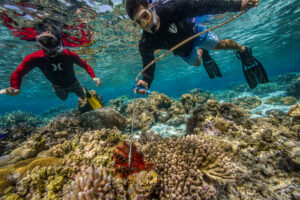

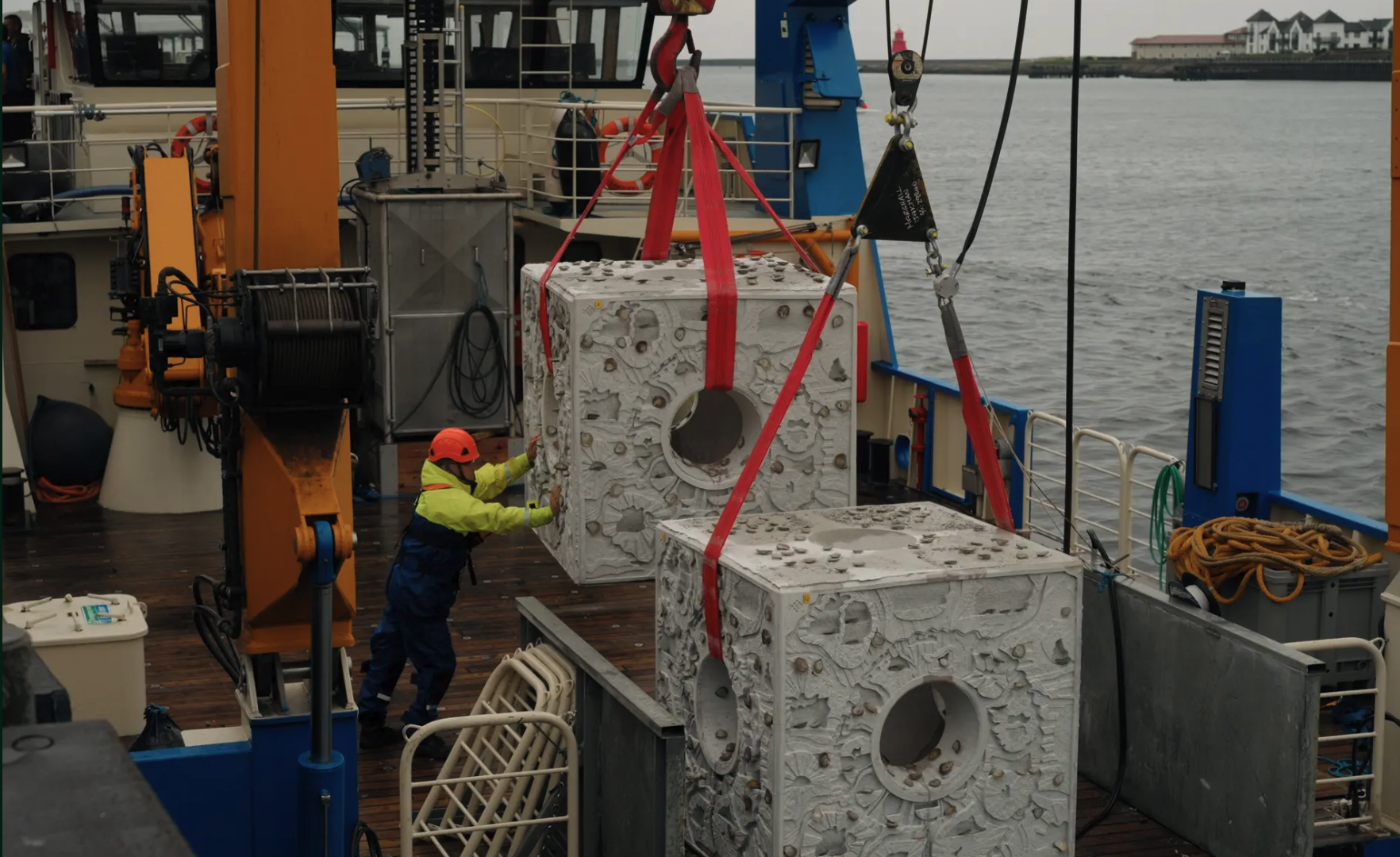
Divers additionally recorded a range of fish and crustaceans already living in and around the reef cubes, with shrimps and squat lobsters among the most abundant species found across the wider site.
Celine Gamble, senior partnerships manager at ZSL, said the project was breaking new ground for oyster restoration in the UK.
“Restoring a reef in the open North Sea is challenging – the oysters have to contend with the impact of wave energy, water quality, changing conditions and predation – so seeing both adult and juvenile oysters survive their first winter is a really encouraging milestone,” she said.
Following the survey, the team has begun installing custom-designed cages into the central holes of the reef cubes, each containing a mix of adult and juvenile oysters to establish multiple generations on the reef while reducing the risk of predation in the early stages. So far, the team has added a further 1,000 mature oysters and 15,000 juvenile oysters to the site.
“We are now keen to build on these early successes and trial new restoration techniques,” said Tinlin-Mackenzie. “The results so far are encouraging and show what is possible when we invest in science-driven conservation.”
Click here for more from the Oceanographic Newsroom


"*" indicates required fields
Printed editions
Current issue
Back issues



Enjoy so much more from Oceanographic Magazine by becoming a subscriber.
A range of subscription options are available.
