Legal bid to stop underwater AI data centre in endangered whale habitat launched
Eastport’s city council has banned large data centres, but a separate federal permitting process is continuing, and campaigners have filed a legal challenge to stop the project
A proposed underwater AI data centre off the coast of Maine is facing a legal challenge from conservationists, who warn it could harm endangered whales, after federal regulators accepted the developer’s application for a preliminary permit a week after the local council imposed a moratorium on the project.
DeepGreen Western Passage SPV LLC, a company set up by developers behind DeepGreen Holdings, wants to build a tidal-powered subsea data centre in the Western Passage of the Bay of Fundy, near Kendall Head off Eastport. The company’s plans involve up to 34 underwater tidal turbines. If the project goes ahead, it would be among the first of its kind in the United States.
The Federal Energy Regulatory Commission (FERC) accepted DeepGreen’s application for a 48-month preliminary permit on 19 August 2026. While this does not authorise construction, it gives the company priority to apply for a licence while it carries out engineering and environmental studies at the site. It also opens a 60 day public comment and intervention period, with a deadline of 19 October.
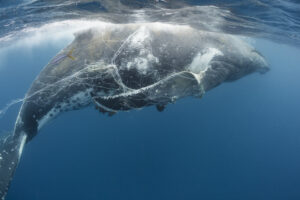
The site overlaps with habitats used by some of the world’s most endangered whales, including North Atlantic right whales and fin whales. Fewer than 400 North Atlantic right whales remain.
On 24 September 2026, the Center for Biological Diversity, a US non-profit, filed a motion to intervene in the FERC process, arguing that both the preliminary surveys and the data centre itself pose risks to marine life. The group says the survey work could increase vessel traffic and noise, disrupting the behaviour of right whales, fin whales and other wildlife and interfering with their communication and foraging.
It also warns that the data centre could bring further risks, including animals becoming trapped, contamination, thermal pollution from heated seawater, noise and construction impacts.
Kristen Monsell, oceans legal director at the Center for Biological Diversity, called the plan “a truly terrible idea” and said the project “needs to be stopped in its tracks”. She warned that noise from surveys and vessels could stress and disturb wildlife, and that the data centre could make the bay even more dangerous if built.

In other news





Local opposition began in June 2026, when residents, organised as the Eastport Coalition for Healthy Oceans, submitted two petitions to the city council. One called for a permanent ban on data centres larger than 25,000 square feet in Eastport or its coastal waters; the other sought a voter-approval requirement for large industrial developments exceeding 25,000 square feet on land or 10,000 square feet in the ocean. First-nation Passamaquoddy officials have also strongly opposed the development.
After a packed public hearing on 5 August 2026, Eastport City Council voted unanimously on 12 August to enact a 180-day moratorium on the project. On 9 September, the council unanimously adopted the first ordinance – prohibiting large-scale data centres in the city – but rejected the second ordinance demanding voter-approval, as city attorneys deemed it unlawful and unenforceable.
On a separate pathway, the federal permitting process continued, and the FERC accepted DeepGreen’s application a week after the moratorium was passed.
DeepGreen’s founder, Louis Wolfson, has said a preliminary permit is “a license to study, not a license to construct”. Neither the Maine project nor a similar DeepGreen proposal for Alaska’s Cook Inlet has received a permit to build.
“The project needs to be stopped in its tracks,” added Monsell.
Local opponents are now urging members of the public to submit comments to the federal record before the 19 October deadline.


"*" indicates required fields
Printed editions
Current issue
Back issues




Enjoy so much more from Oceanographic Magazine by becoming a subscriber.
A range of subscription options are available.
