Marine heatwaves revelation sparks concern for seafloor species
Until now, studies have focused attention on heatwaves at the ocean surface, with little known about what may happen on the seafloor. But revelatory research has sparked concerns for the future of bottom-dwelling species unable to evade rising temperatures.

Marine heatwaves across the seafloor could be more than 50% more frequent in the future than the surface of the ocean during hot summer months, a new study has found, sparking fresh concern for bottom-dwelling species unable to escape the seabed’s rising temperatures.
A marine heatwave is a period lasting at least five days where sea temperature is greater than the 90th percentile of historical temperatures for that time of year. Findings of this latest study suggest that a future in which marine heatwaves frequently pass across the seafloor will have ripple effects across entire ecosystems and humans.
Led by Plymouth Marine Laboratory’s Dr Robert J Wilson, the study investigated how marine heatwaves will change the future on the northwestern European shelf – a vital marine ecosystem that provides ecological, cultural, and economic services to many countries.
Typically defined more by seabed topography than by strict political or oceanographic boundaries, the shelf generally includes the North Sea, the English Channel, the Celtic and Irish Seas, the Bay of Biscay, parts of the Norwegian Sea, and Shetland-Orkney waters.
It is one of the world’s most heavily fished regions and the site of the world’s fastest growing offshore wind industry. Understanding how climate change will impact the region will therefore be critical to enabling effective spatial and fishery management into the future.
One of those impacts will be an increase in experienced marine heatwaves, which are already becoming more frequent and more severe. These extreme events harm ocean life by pushing temperatures beyond what many species can tolerate. Already, negative impacts on seaweeds, seagrasses, seabirds, coral reefs, crustaceans, fish, and plankton have been recorded.
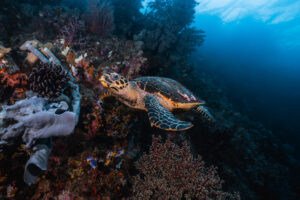
But the impacts of marine heatwaves on the sea surface and those across the seafloor are likely to be distinct. Pelagic species – those which live in the open ocean – can usually swim across large regions and therefore acclimatise – or reorganise – in response to climate change. In contrast, organisms living on the seafloor have limited mobility and are, therefore, more likely to suffer negative impacts.
Until now, most studies have focused their attention on heatwaves at the ocean surface, with little known about what may happen on the seafloor in the future. Using new regional climate models, Dr Wilson and colleagues from Plymouth Marine Laboratory and the National Oceanography Centre found that heatwaves will become much more common – especially at the seafloor, where natural temperature changes are usually smaller.
In other news
“Until now, we have largely predicted future marine heatwave rates based on what will happen on the sea surface,” said Dr Wilson. “We have shown that this can be highly misleading for critical European seafloor ecosystems, where climate change will cause more frequent extreme temperatures than at the sea surface.
“It is therefore critical that marine heatwave monitoring and assessment move beyond the surface and shift to a 3D view of the ocean.”
The paper – ‘Seafloor marine heaves outpace surface events in the future on the northwestern European shelf’ – has been published in the academic journal, European Geosciences Union. In it, it details the need for future marine planning and conservation strategies to take account of changes both at the surface and deep underwater.
“The general conclusion of the study that seafloor heatwaves are likely to be greater in the future than at the surface is likely to be transferable to most shelf seas due to the common existence of seasonal stratification,” write Dr Wilson and the team. “However, future research should consider the magnitude of the difference in other regions.”
Many species have critical temperatures which can either trigger key life cycle events or represent thermal limits above which there is “rapid mortality or tissue damage”. Projecting future heatwaves based on known thermal thresholds for key species is therefore the next step in understanding how marine ecosystems will change in the future.


"*" indicates required fields
Printed editions
Current issue
Back issues

Enjoy so much more from Oceanographic Magazine by becoming a subscriber.
A range of subscription options are available.
