New tiny octopus species discovered in the Galapagos deep sea
Scientists said discovery is stark reminder of the hidden ecosystems still waiting to be discovered in the uncharted depths of our oceans.
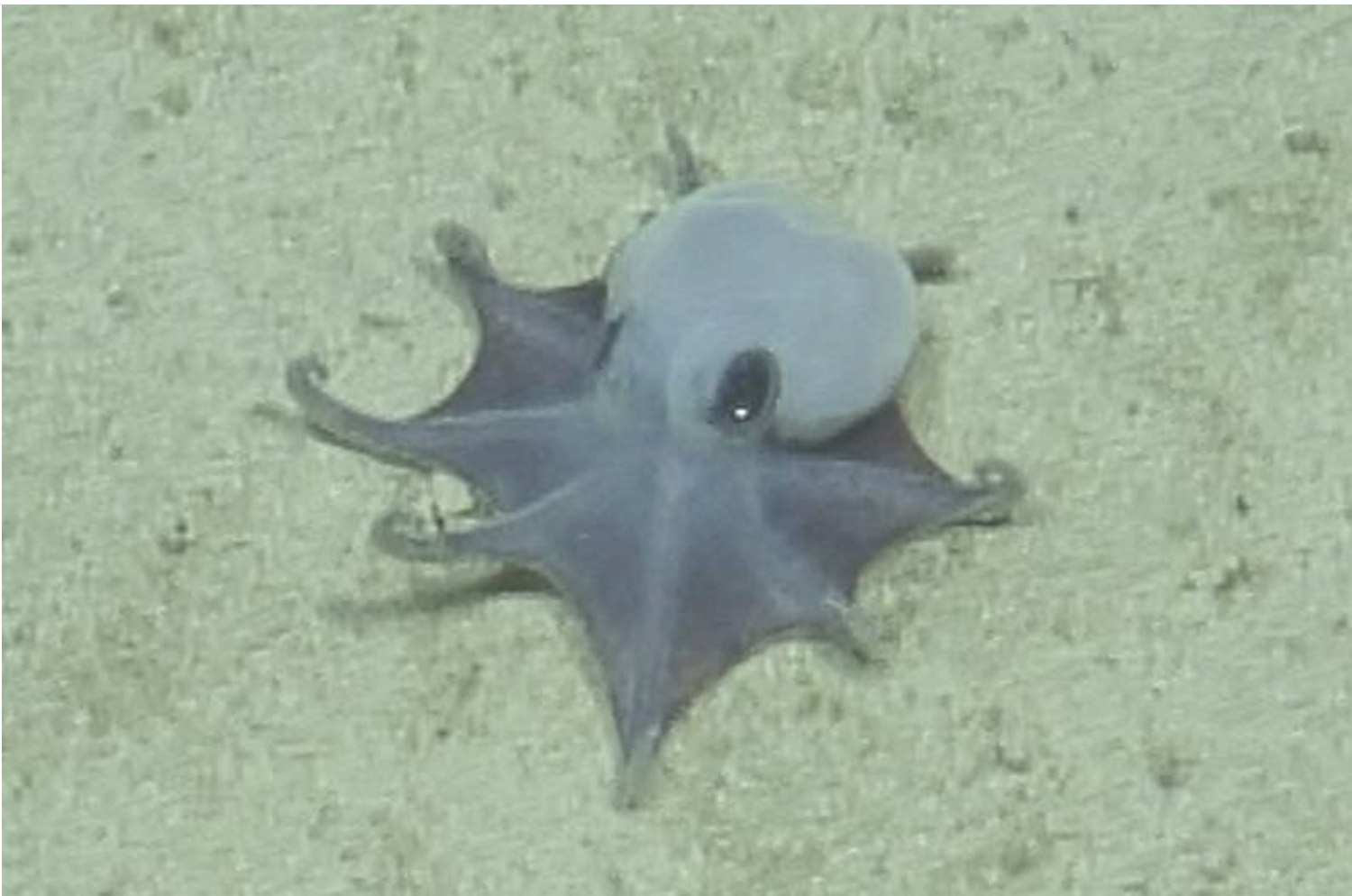
A completely new species of octopus has been discovered off the coast of Galapagos, and this tiny blue octopus the size of a golf ball, scientists say, highlights how much more there is to be discovered in the deep ocean.
Scientists from the Charles Darwin Foundation and the Galápagos National Park Directorate first came across the octopus while on a deep-sea expedition in 2015.
Researchers were exploring the seafloor near Darwin Island using a remotely controlled underwater robot, and as the robot approached 1773 metres (5,800 feet) below sea level, the researchers noticed an octopus.
Using the robot, the crew was able to collect the octopus, and capture footage of two others that looked like it.
Over the course of the mission, researchers had collected dozens of deep-sea specimens, but researchers were stumped when they tried to categorise this small, golf ball-sized octopus.
“When we were sorting through dozens of specimens collected during the expedition, this tiny blue octopus fascinated us,” said Salome Buglass, marine scientist at the University of California of Los Angeles, former researcher at the Charles Darwin Foundation and co-author of the paper.
They sent octopus expert Janet Voight a photo of the animal for assistance, and then sent the octopus’s preserved body from the Galápagos Islands to Chicago for Voight to be examined at the Field Museum. Excitingly, the little blue octopus turned out to be an entirely new species to science – Microeledone galapagensis. This discovery was announced in a new paper in the journal Zootaxa.

In other news

The process of describing a new octopus to science however requires descriptors of their teeth, mouth and beak, all of which require cutting the specimen open.
“We only had the one specimen, so I didn’t want to take it apart,” said Voight, curator emerita of invertebrates at the Field Museum in Chicago and the lead author of the study describing the new species.
The team found a workaround, and instead created micro CT scans of the octopus. This allowed them to see details of its internal organs, including its mouth, that helped provide the information needed to declare it a new species to science and suggest where it fits among other octopods.
“Because CT imaging is non-destructive, it’s especially important for type specimens like this one. And that’s great for me because people are often bringing me these incredibly rare and stunningly beautiful specimens that I get the privilege of virtually opening up,” said Stephanie Smith, a co-author of the paper describing the new species.
“There’s nothing like spending the day looking at something no other human has ever seen,” she added.
Bulglass reflected on the larger significance of finding this tiny octopus.
“Discoveries like these remind us how much of the deep ocean in Galápagos remains unexplored. Every new species helps us better understand these hidden ecosystems and why protecting them matters,” she said.


"*" indicates required fields
Printed editions
Current issue
Back issues



Enjoy so much more from Oceanographic Magazine by becoming a subscriber.
A range of subscription options are available.
