Ocean Acidification officially breaches Planetary Boundary
Ocean Acidification has been added to the growing list of Planetary Boundaries now considered to be breached, bringing the running total to seven out of nine, a new scientific report has declared.

Ocean Acidification has been added to the growing list of Planetary Boundaries now considered to be breached, bringing the running total to seven out of nine, with the finger of blame directed firmly at fossil fuel burning made worse by deforestation and land-use change, a new scientific report has declared.
For the first time in history, Ocean Acidification has been added to the list of ailments our planet is suffering from, as outlined in the 2025 Planetary Health Check. It’s a shift – scientists warn – that is degrading the ocean’s ability to act as Earth’s stabiliser, pushing humanity “further beyond the safe zone for civilisation.”
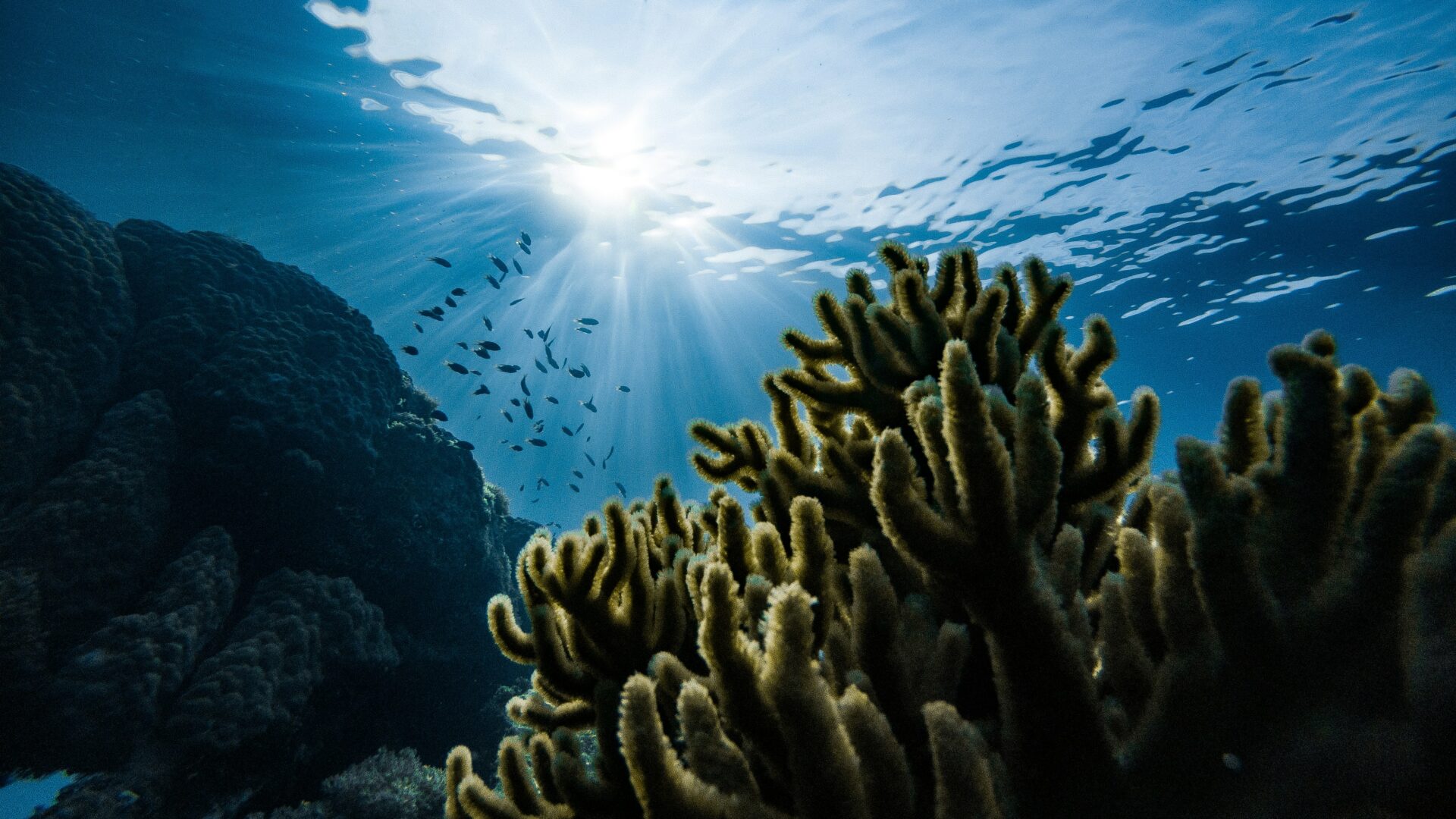
The consequences are already noticeable: Ocean Acidification has now gone beyond what is considered safe for marine life and ecosystems are already feeling the effects. Cold-water corals, tropical coral reefs, and Arctic marine life are especially at risk as acidification continues to spread and intensify.
“More than three-quarters of the Earth’s support systems are not in the safe zone. Humanity is pushing beyond the limits of a safe operating space, increasing the risk of destabilising the planet”, said Johan Rockström, director at the Potsdam Institute for Climate Impact Research, the research organisation behind the report.
The seven breached boundaries are: Climate Change, Biosphere Integrity, Land System Change, Freshwater Use, Biogeochemical Flows, Novel Entities, and Ocean Acidification (new in 2025). All of these seven boundaries show worsening trends.
Since the start of the industrial era, the ocean’s surface pH has fallen by around 0.1 units, a 30-40% increase in acidity, pushing marine ecosystems beyond safe limits. Tiny sea snails known as pteropods are already showing signs of shell damage. As an important food source for many species, their decline affects entire food chains, with consequences for fisheries and ultimately for people.
“The movement we’re seeing is absolutely headed in the wrong direction. The ocean is becoming more acidic, oxygen levels are dropping, and marine heatwaves are increasing. This is ramping up pressure on a system vital to stabilise conditions on planet Earth,” said Levke Caesar, Co-lead of Planetary Boundaries Science Lab, and one of the lead authors of the report.
“This intensifying acidification stems primarily from fossil fuel emissions, and together with warming and deoxygenation affects everything from coastal fisheries to the open ocean The consequences ripple outward impacting food security, global climate stability, and human wellbeing.”
In other news


The nine boundaries together form Earth’s operating system, the interconnected life-support processes that must stay within safe limits to keep humanity safe and the natural world resilient. Scientists monitor these boundaries through key measures, much like vital signs in a health check, to track the planet’s condition.
The findings point to accelerating deterioration and growing risk of irreversible change, including a higher risk of tipping points.
Dr Sylvia Earle, oceanographer, and Planetary Guardian, said: “The Ocean is our planet’s life-support system. Without healthy seas, there is no healthy planet. For billions of years, the ocean has been Earth’s great stabiliser: generating oxygen, shaping climate, and supporting the diversity of life. Today, acidification is a flashing red warning light on the dashboard of Earth’s stability. Ignore it, and we risk collapsing the very foundation of our living world. Protect the ocean, and we protect ourselves.”
Only two boundaries remain within safe boundaries: loading of aerosols (air pollution) and the stratospheric ozone layer. Decades of international action, like the Montreal Protocol and shipping regulation, show that policy can turn the tide. Global aerosol emissions are declining, although South and East Asia, and parts of Africa and Latin America, still face significant and dangerous particulate pollution, while the ozone layer has largely recovered.
Rockström added: “We are witnessing widespread decline in the health of our planet. But this is not an inevitable outcome. The drop in aerosol pollution and healing of the ozone layer, shows that it is possible to turn the direction of global development.
“Even if the diagnosis is dire, the window of cure is still open. Failure is not inevitable; failure is a choice. A choice that must and can be avoided.”


"*" indicates required fields
Printed editions
Current issue
Back issues
Enjoy so much more from Oceanographic Magazine by becoming a subscriber.
A range of subscription options are available.
