A climate-chaos triple-whammy has pushed Antarctica to the edge
Scientists have identified the compounding chain of events that drove Antarctic sea ice to record lows since 2015 - and warn the Southern Ocean may now be locked in a cycle of irreversible warming.
A new study has identified the three-stage process that has driven Antarctic sea ice to record lows – and warns that the Southern Ocean may already be locked in a cycle from which it cannot easily recover.
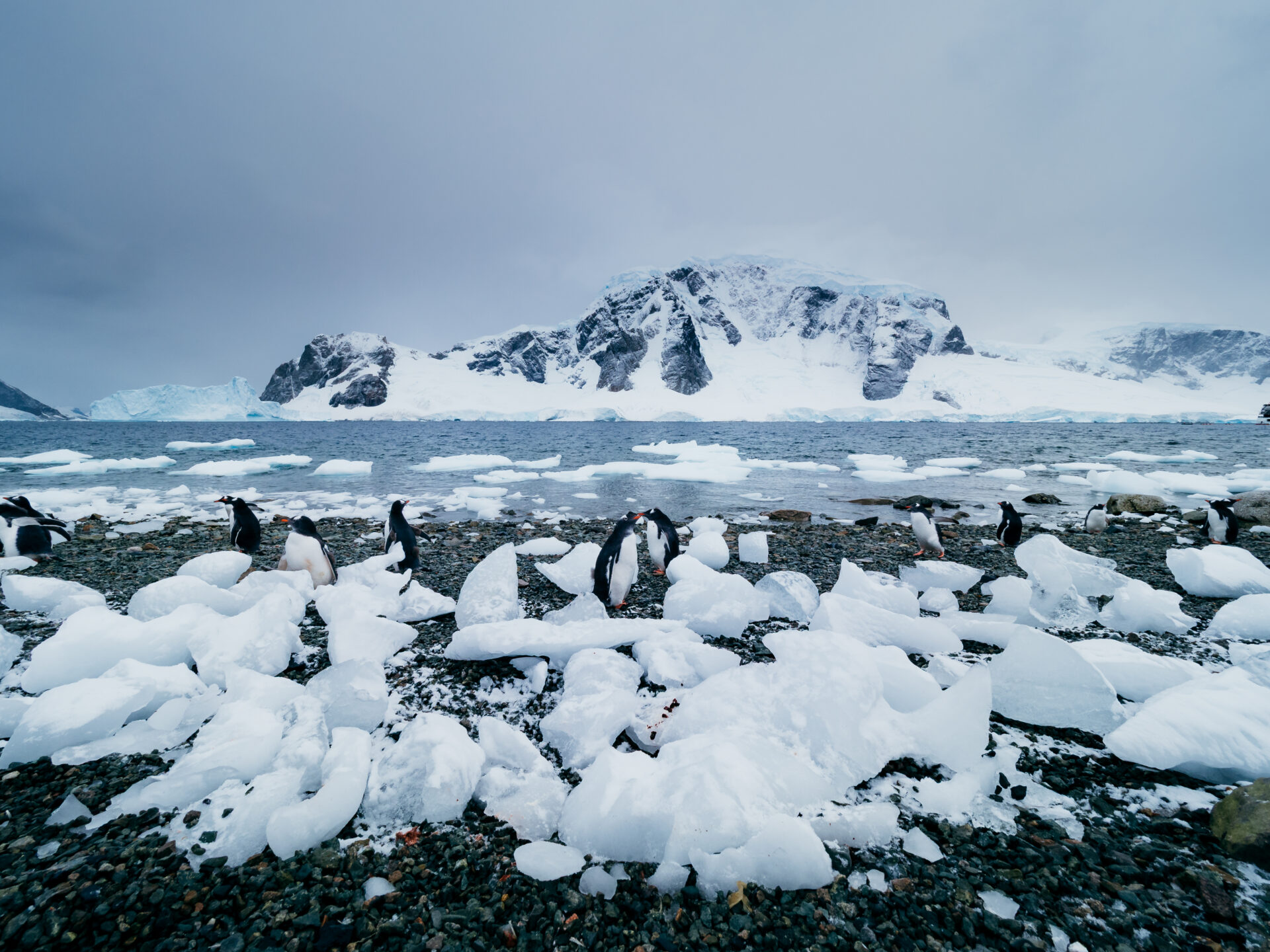
For decades, Antarctica had managed to defy the trajectory of a warming planet. While sea ice retreated across the Arctic, the frozen wilderness at the bottom of the world held and in places even grew. Then, in 2015, something changed. Sea ice began retreating at a pace and scale that alarmed scientists, culminating in record-breaking lows in 2023.
But it was the question of ‘why’ that had – until now – eluded so many and remained answered.
A new study led by the University of Southampton, published in Science Advances, has identified the mechanism behind the collapse, with findings that have left some researchers concerned. It shows that a series of compounding events pushed the Southern Ocean out of equilibrium, drawing unusually warm, salty water from the deep up to the surface in a process so extreme that it wiped out areas of sea ice equivalent in size to Greenland.
The decline unfolded in three distinct stages. Around 2013, strengthening winds began pulling warm, salty Circumpolar Deep Water closer to the surface. By 2015, intensifying winds mixed that deeper heat directly into the surface layer, rapidly melting sea ice – particularly across East Antarctica. Since 2018, the system has become trapped in a self-reinforcing cycle: with less ice to cool the surface, the water remains warm and salty, inhibiting new ice from forming.
“What started as a slow build-up of deep-sea heat under the Antarctic sea ice was followed by a violent mixing of water, ending in a vicious cycle where it’s too warm to let ice recover,” said Dr Aditya Narayanan, lead author and oceanographer at the University of Southampton.
“It’s concerning because massive loss of sea ice destabilises the world’s ocean current systems, warming our planet far quicker than expected.”

In other news


The study also reveals a striking asymmetry in how the ice is retreating across the continent. In East Antarctica, the loss is almost entirely ocean-driven – fuelled by the upward surge of warmer deep water. In West Antarctica, the mechanism differs: intense cloud cover has been trapping heat in the ocean, funnelled southward by warm air from the subtropics, melting sea ice during the summers of 2016 and 2019. The same crisis, but driven by different forces in different places – a complexity that makes both prediction and response significantly more difficult.
The consequences extend well beyond the continent itself. Antarctic sea ice acts as a vast reflective surface, bouncing solar radiation back into space. Its loss allows the ocean to absorb more heat, accelerating the warming it is already struggling to contain.
“This isn’t just a regional problem,” said co-author Dr Alessandro Silvano, also from the University of Southampton. “Antarctic sea ice acts as Earth’s mirror, reflecting solar radiation back into space. Its loss could destabilise the currents that store heat and carbon in the ocean, accelerating global warming, and also destabilise ice shelves that prevent glaciers from sliding into the sea, raising global sea levels.”
The research team warns that human-driven climate change is strengthening the winds that expose the Southern Ocean’s surface and push deep-sea heat upward – the very mechanism that triggered the collapse in the first place. If that process continues unchecked, the Southern Ocean could be pushed into a prolonged state of low sea ice from which recovery becomes increasingly unlikely.
“If the low sea-ice coverage prevails into 2030 and beyond, the ocean may transition from a stabiliser of the world’s climate to a powerful new driver of global warming,” Professor Alberto Naveira Garabato, Professor in Physical Oceanography at the University of Southampton, warned.
The study was undertaken by the Southampton team working with scientists worldwide, using a sophisticated ice-measuring programme to reconstruct the sequence of events that has reshaped one of the planet’s most critical climate systems.


"*" indicates required fields
Printed editions
Current issue
Back issues



Enjoy so much more from Oceanographic Magazine by becoming a subscriber.
A range of subscription options are available.
