Two dozen species discovered in the ocean's least explored habitat
Scientists aboard the Falkor (too) have discovered more than two dozen new species in the ocean's midwater off Brazil, using advanced imaging and genetic technology to confirm the finds within days.
An international team of scientists has discovered more than two dozen new marine species in the ocean’s midwater – the vast, dark expanse between the surface and the seafloor – during an expedition off the coast of Brazil in the tropical South Atlantic Ocean.
The team, working aboard Schmidt Ocean Institute’s research vessel Falkor (too), used a combination of advanced imaging technology and genetic analysis to identify the new species while still at sea – a major transformation of a process that would traditionally take decades.
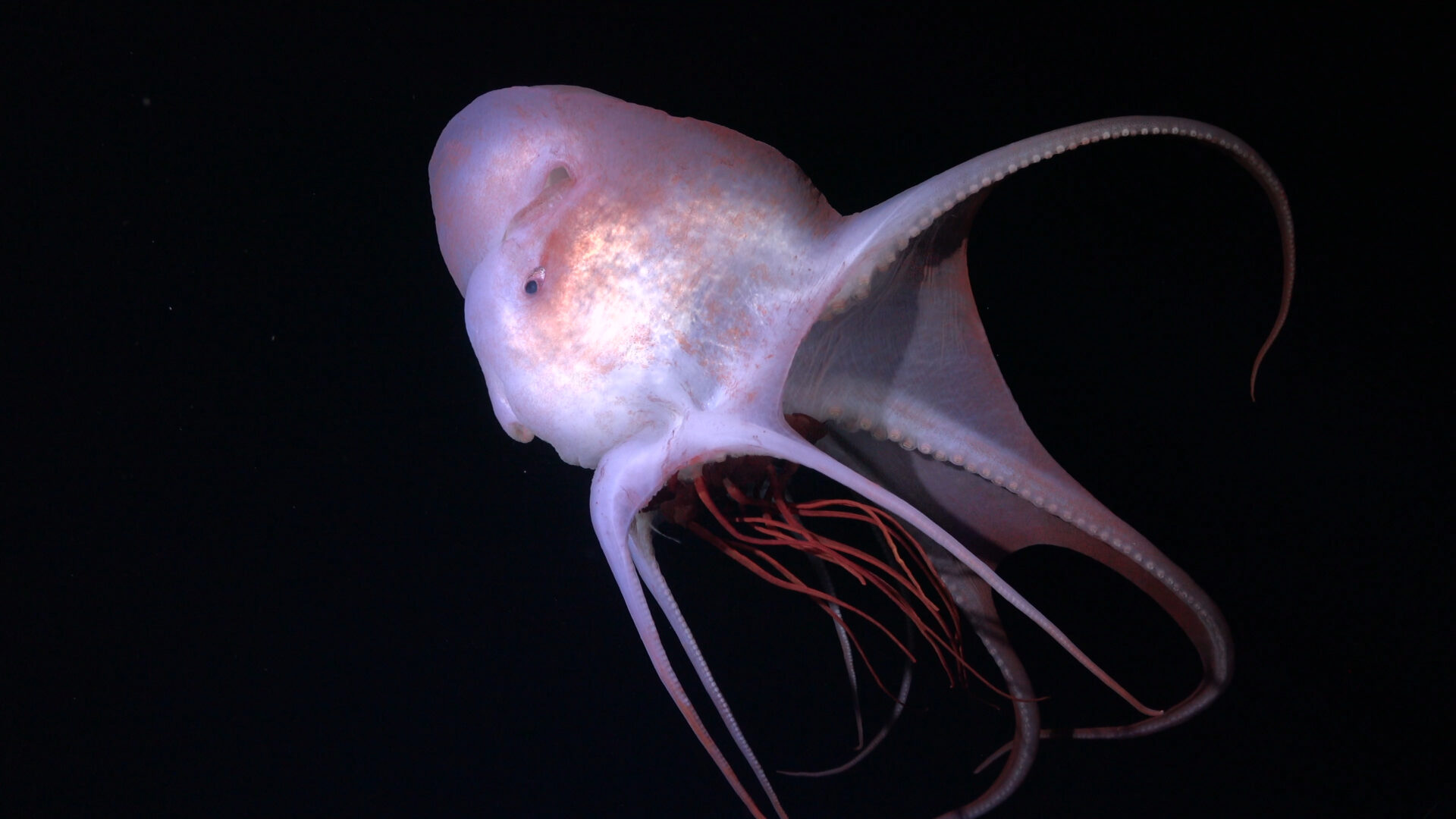
Among the finds are nine jellyfish, seven siphonophores, seven comb jellies, four larvaceans, two giant rhizarians, a crustacean amphipod, and a gossamer worm that moves significantly faster than its body shape would suggest. The team also observed glass squid and a pelagic octopus feeding on a bright red jellyfish – encounters that hinted at a level of diversity and abundance in the midwater that exceeded the scientists’ expectations.
The midwater is the largest habitable ecosystem on earth, yet remains one of the least explored. Its inaccessibility and immense volume have long made it a frontier that science has struggled to reach, let alone understand.
“The largest habitat on Earth, the midwater, is filled with incredible animals we are only just starting to understand,” said expedition chief scientist Dr Karen Osborn of the Smithsonian National Museum of Natural History. “I continue to be fascinated by the fantastic variety of solutions they have evolved to survive in this formidable environment, and that drives me to keep asking questions about our ocean.”

In other news
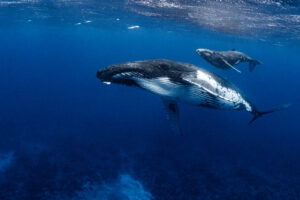
Key to the expedition’s success was a suite of non-invasive imaging tools designed to study the midwater’s fragile, gelatinous organisms without the damage caused by traditional collection methods. The DeepPIV and EyeRIS instruments, developed by the Bioinspiration Lab at MBARI and attached to Schmidt Ocean Institute’s remotely operated vehicle SuBastian, use lasers to scan organisms and produce three-dimensional images without physical contact. A shadowgraph camera from JAMSTEC added further detail on internal structures invisible in the 3D scans, while a virtual reality chamber and a hydrodynamic microscope allowed scientists to observe living animals in conditions close to their natural habitat.
“It’s an incredible honour to not only view and experience this rare and inspiring midwater life, but also to be able to work towards describing and sharing that life broadly through the use of novel, non-invasive technologies,” said Dr Kakani Katija, principal engineer of the Bioinspiration Lab at MBARI.
A further breakthrough came from Squid, an open-source confocal microscope developed at Stanford University, which achieved something never before accomplished at sea – the imaging of living internal cellular structures in three dimensions. When applied to a large single-celled microbe, the microscope allowed scientists to observe in real time how its cellular structure interacted with its glass skeleton.
“This opens a new door for researching deep-sea physiology, linking cellular architectures to organism function,” said Dr Manu Prakash of Stanford University. “We can now witness live internal processes within these extreme organisms adapted to withstand immense pressure and darkness.”
Rapid genome sequencing conducted aboard the vessel allowed the team to cross-reference visual and genetic data and confirm new species at a pace that has not previously been possible. The expedition was supported by the Sasakawa Peace Foundation’s Ocean Shot Research Grant Program.
“The novel suite of technologies on this cruise is a glimpse into the future of marine biological science,” said Schmidt Ocean Institute Executive Director Dr Jyotika Virmani. “We look forward to a future in which scientists study marine life as elegantly as this team did — and in virtual reality.”


"*" indicates required fields
Printed editions
Current issue
Back issues

Enjoy so much more from Oceanographic Magazine by becoming a subscriber.
A range of subscription options are available.
