Roundtable catchup: “Our habitats need the chance to recover”
A new report finds no UK cetacean MPA fully bans bottom trawling, despite most assessments flagging it as a threat - with experts calling for stronger enforcement and independent verification of protections.
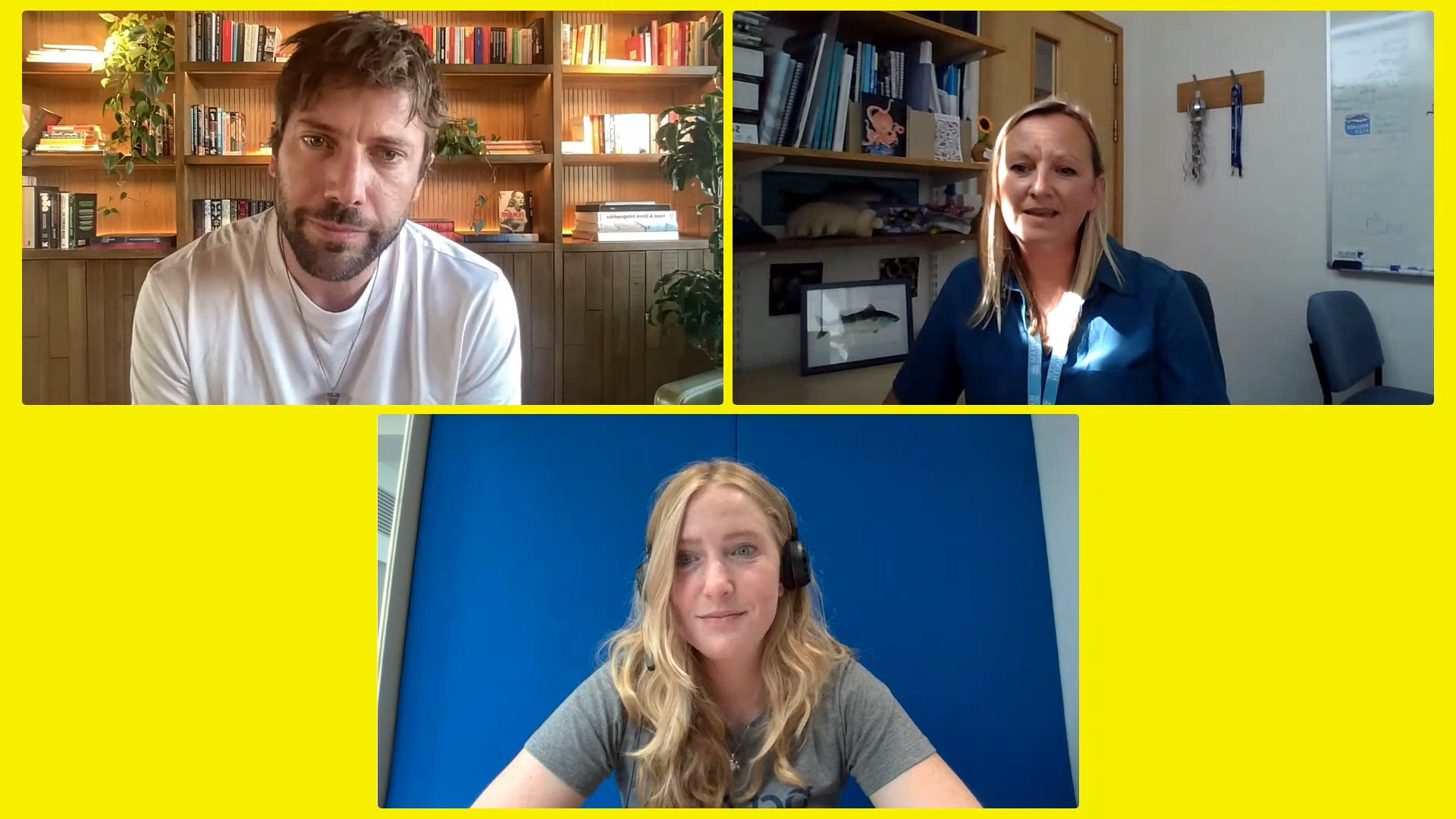
Not a single marine protected area (MPA) in the UK designated to safeguard whales, dolphins and porpoises fully bans bottom trawling across its site, according to new research discussed on Oceanographic’s Roundtable this week – despite three-quarters of official assessments identifying the practice as a direct threat.
Of 113 UK sites designated for seabirds and cetaceans, only two are fully protected from bottom trawling. Eleven cetacean MPAs have been explicitly recommended for a trawling ban by their own site assessments; yet to date, such full protections have failed to be implemented.
“Even the government knows that the vast majority of these marine protected areas are threatened by the harms of bottom trawling,” said Izzy Ross, habitats and fisheries campaigner at Oceana UK. “They should be listening to their own data.”
The research, led by Professor Emma Sheehan of the University of Plymouth, builds on nearly two decades of monitoring in Lyme Bay, one of the first UK sites protected from scallop dredging and trawling across its entire area. Her team found that sediment seabed, long assumed too disturbed to matter, can stabilise and function like reef habitat once left alone – providing the nursery and feeding grounds that sit at the base of the food chain for seabirds and cetaceans further up it.
A patch of seabed once dismissed as unremarkable sandy habitat, she noted, turned out – on closer inspection – to be an important nursery ground for small catshark species, some of which were found – following the deployment of underwater cameras in the area – to be pregnant.
Sheehan described the damage caused by continued trawling in blunt terms drawn from fishers she has worked alongside in Lyme Bay. The seabed, she said, ends up “like having a field” – repeatedly turned over before it has any chance to stabilise and support life.
The report sets out four distinct pathways of harm to cetaceans and seabirds: habitat destruction, prey depletion, underwater noise and direct entanglement. While entanglement is the most visible and emotive, Sheehan argued that habitat destruction and the resulting loss of prey are likely the most fundamentally damaging, driving starvation in seabirds and food shortages for whales, dolphins and porpoises. She also flagged underwater noise as a growing area of concern, pointing to international momentum behind designating dedicated “quiet MPAs” as a comparatively fast, actionable step.
In other news
Bycatch adds a further, more direct threat. Ross cited data showing an estimated 118 porpoises caught per year in the Celtic and Irish Seas – well above the sustainable threshold of 82 needed to prevent population decline – and warned that reporting on such losses is likely incomplete, particularly where gillnetting is involved.
“Marine protected areas are often, unfortunately, protected on paper alone,” Ross said, arguing that continued trawling inside protected sites amounts to a governance failure rather than a technical loophole. She said the gap between government rhetoric and what is actually enforced on the water was the report’s central concern – and that with the UK’s 30×30 target claimed as already met in some areas, independent verification is sorely lacking.
Currently, she noted, compliance is essentially self-reported by government.
Both panellists stressed that recovery is achievable but slow. Sheehan’s monitoring shows visible ecological change beginning around year three post-protection, with a functioning ecosystem typically established by year five in temperate waters – though full recovery timelines remain uncertain, complicated by disruptive events such as storms.
“We just need to give our habitats a chance to recover,” she said, “and start resuming some of these functions.”
The panel also pushed back on the framing of the fishing industry as uniformly opposed to restrictions. According to the report, 80% of fishers in England agree marine conservation is important to their own job security – a figure Ross said reflects growing recognition, particularly among smaller-scale and low-impact operators, that sustainable practice underpins their long-term livelihoods, even as larger, less sustainable vessels dominate public debate.
Sheehan pointed to a fisherman still working inside the Lyme Bay MPA nearly two decades after protections began, who has reported a more diversified catch and undamaged gear – evidence, she argued, that exclusion of bottom trawling can benefit both nature and fishing communities simultaneously.
With a further government consultation on cetacean and seabird MPA protections still delayed, Ross called for stronger, independently verified enforcement of existing commitments. “There should be a global standard,” she said, “where bottom trawling just isn’t allowed in marine protected areas.”
Watch the Oceanographic Roundtable here and be sure to join for next week’s discussion.


"*" indicates required fields
Printed editions
Current issue
Back issues

Enjoy so much more from Oceanographic Magazine by becoming a subscriber.
A range of subscription options are available.
