Rowing race around Britain will be floating lab for UK ocean science
The Crown Estate has partnered with the GB Row Challenge, turning a gruelling rowing race around Great Britain into a floating research platform that collects open-access data on microplastics, biodiversity and ocean conditions to support UK marine conservation.
The health of the UK’s coastal waters will soon be measured stroke by stroke, as The Crown Estate joins forces with one of the world’s most demanding ocean endurance events, the GB Row Challenge to make public a comprehensive library of marine environmental data collected by rowers along the way.
Billed as ‘the world’s toughest rowing race’, the challenge will see teams row more than 2,000 miles around the entire coastline of Great Britain, unsupported, through complex tidal systems, heavy shipping traffic, and often volatile weather. As in previous year, this extraordinary physical effort will once again double-up in 2026, as a large-scale scientific mission.
Every boat taking part will be fitted with scientific sensors designed to collect environmental data from some of the UK’s most dynamic and least monitored coastal waters. As crews battle fatigue and the elements, their vessels will be gathering information on microplastic pollution, biodiversity, underwater noise, sea temperature, and salinity.
All this data will then be uploaded to The Crown Estate’s Marine Data Exchange – one of the world’s largest repositories of marine industry data – where it will be made openly available for scientists, policymakers, and the public.
GB Row Challenge founder William de Laszlo has said that the partnership ‘represents a natural alignment between human endurance and environmental science’.
“We’re thrilled to welcome The Crown Estate as our lead environmental data partner. We share a deep commitment to marine conservation and to making our data openly available for scientists around the world. It’s incredibly exciting to have them alongside us as we turn human endurance into meaningful ocean insight,” he said.

In other news




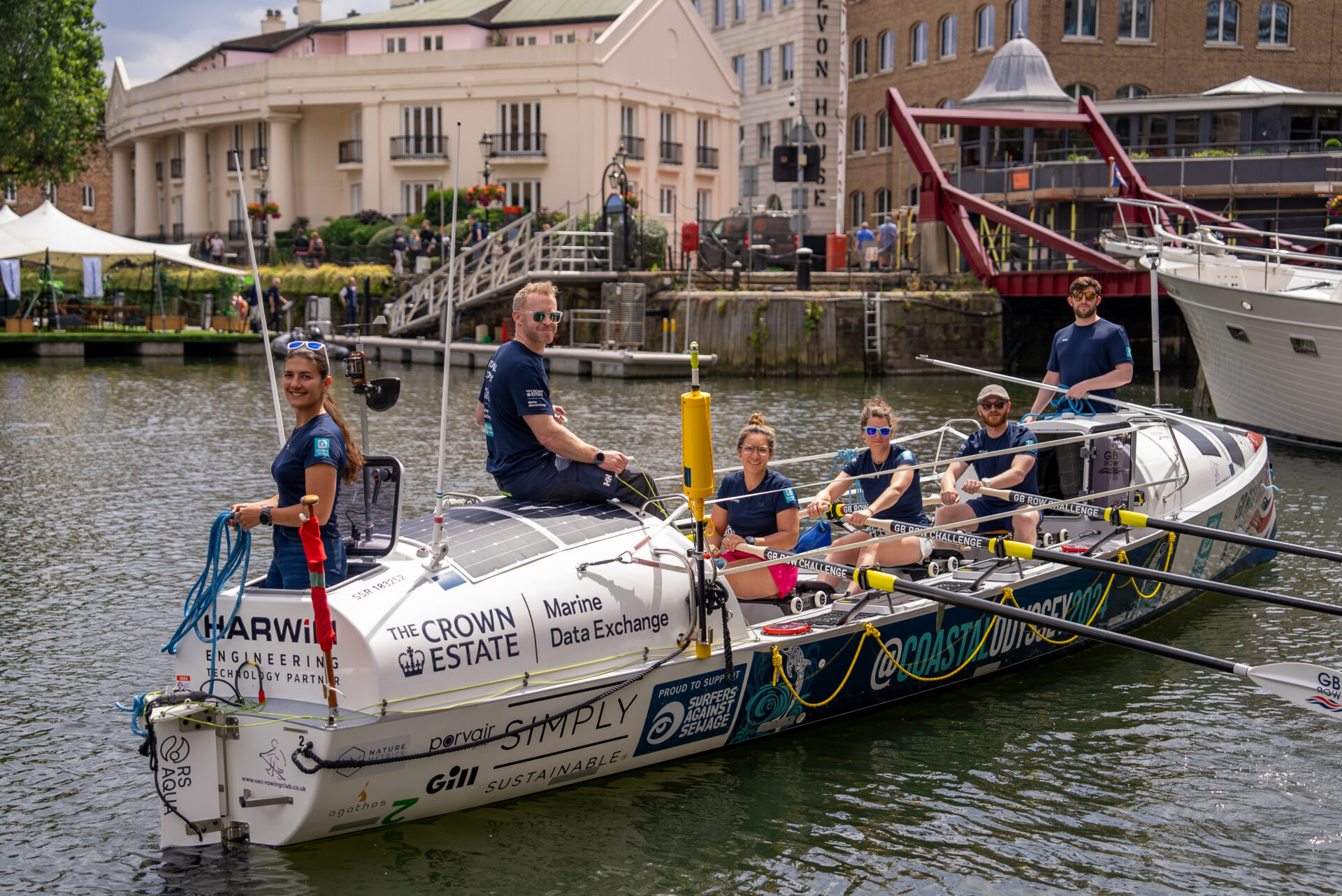
The initiative builds on data already gathered during previous editions of the race. Teams that have rowed around Great Britain since 2022 have been collecting oceanographic and environmental information, analysed through a partnership with the University of Portsmouth, the GB Row Challenge’s lead science partner.
By hosting both historical and newly collected datasets, the Marine Data Exchange will allow researchers to build a growing picture of the changing conditions around the UK’s coastline and the impacts of human activity on marine ecosystems.
Chelsea Bradbury, Senior Marine Data and Insights Manager at The Crown Estate, has said the collaboration plays a direct role in advancing national efforts to understand and restore the marine environment.
“The GB Row challenge is an important initiative providing invaluable insights about the marine environment around Great Britain and we’re proud to support it again in 2026,” she said.
“By hosting the data collected on the Marine Data Exchange, it will be openly accessible to scientists, industries and the public to enable informed decision making. This is an important element of The Crown Estate’s Nature Recovery Ambition and will contribute to a better understanding of how we can protect and restore our precious marine environment.”
Two teams are now in training for the 2026 race, which will begin at Tower Bridge in London on Sunday 14 June, launching another circumnavigation of Great Britain that will combine extreme endurance with cutting-edge marine science.


"*" indicates required fields
Printed editions
Current issue
Back issues
Back Issues
Issue 43 Sir David Attenborough’s ‘Ocean’
Enjoy so much more from Oceanographic Magazine by becoming a subscriber.
A range of subscription options are available.
