Unprotected shark hotspots mapped in Western Indian Ocean
Scientists map 125 critical shark and ray habitats across the Western Indian Ocean, revealing that most lie outside marine protected areas, leaving many threatened species exposed and highlighting an opportunity to improve conservation and meet biodiversity targets.
A sweeping new scientific assessment has identified more than 120 critical habitats for sharks and rays across the Western Indian Ocean – and found that almost all of them lie outside existing marine protected areas.
The analysis, covering more than 2.8 million square kilometres of ocean from East Africa to the island nations of the Indian Ocean, reveals a major gap between where threatened species live and where conservation efforts are currently focused.
The Western Indian Ocean (WIO) holds one of the world’s richest assemblages of chondrichthyans – the ancient group of fishes that includes sharks, rays, and chimaeras. Around 270 species are known from the region, many of which are not be found anywhere else. But decades of intense fishing pressure, weak regulation, and widespread illegal activity have pushed much of this diversity to the brink.
Nearly half of all species in the region are now threatened with extinction, a higher proportion than the global average.
Some losses are already permanent. The Java stingaree, once common in coastal waters, was declared extinct in 2023, becoming the first marine fish known to have been wiped out by human activity. Others, like the lost shark and the Red Sea torpedo ray, may soon follow.
Against this backdrop, researchers turned to a relatively new conservation tool, known as Important Shark and Ray Areas (ISRAs) – a science-based framework developed by the IUCN to identify the habitats that are essential for sharks and rays to feed, breed, migrate and survive.
Using this ISRA framework, an international team of scientists have since analysed the entire Western Indian Ocean, throwing up some striking results in the process.
Across the region, 125 ISRAs were identified, covering more than 2.8 million square kilometres (roughly 10% of the total ocean area of the Western Indian Ocean) from shallow coral reefs to waters nearly 2,000 metres deep.
These areas contain 104 species – almost 40% of all sharks and rays known from the region. Even more concerning, three-quarters of those species are already listed as threatened with extinction.
“These are not random patches of ocean,” the authors note. “They are the places that keep shark and ray populations alive – nurseries, feeding grounds and migration corridors.”
Most of them, however, remain unprotected.

In other news

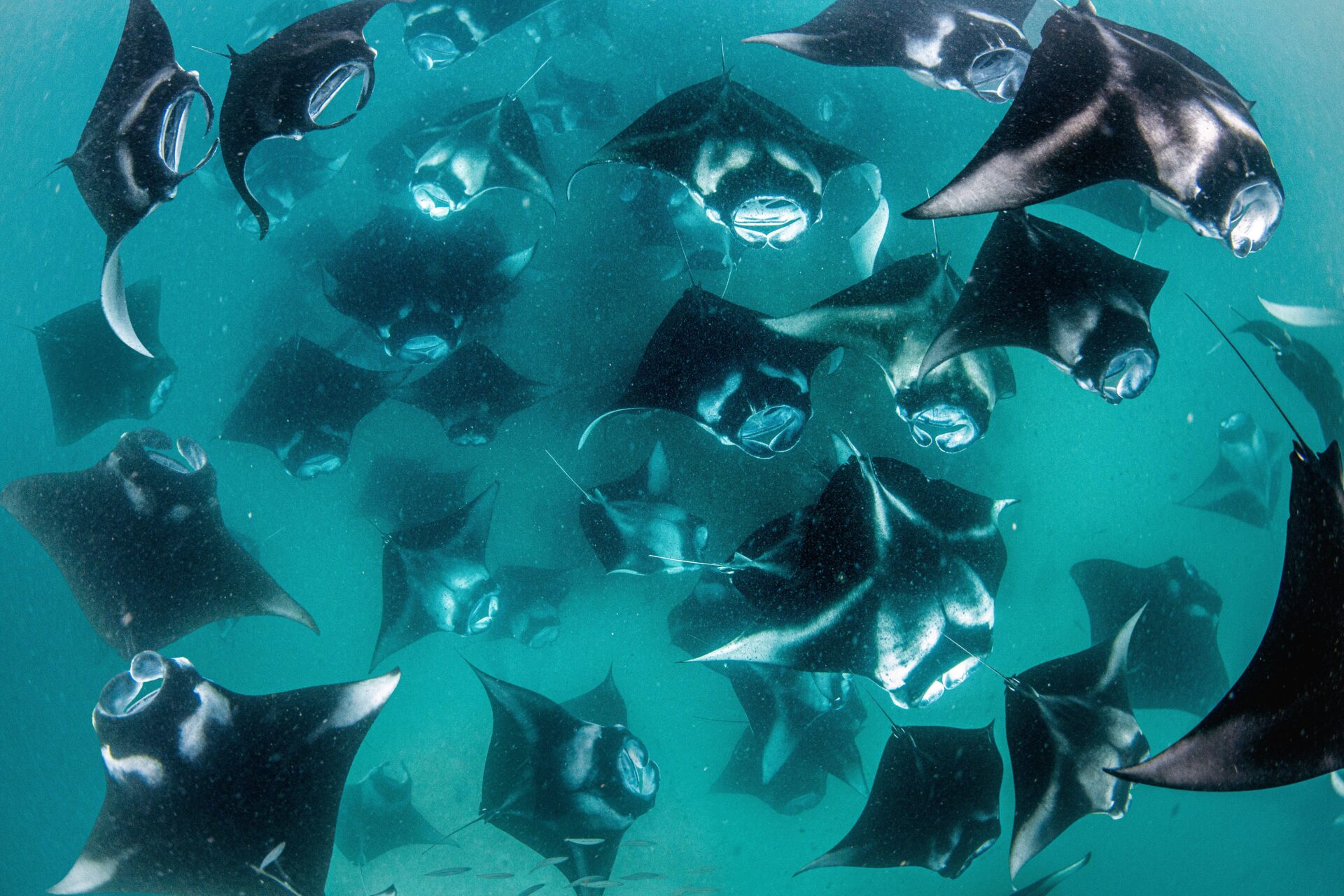
Despite decades of growth in marine protected areas (MPAs), only 7.1% of ISRA habitat overlaps with existing MPAs. Fully protected no-take zones – widely regarded as the most effective form of marine protection – cover just 1.2% of these critical areas.
The strongest overlap occurs in the Seychelles and the Chagos Archipelago, where large offshore protected areas exist. Elsewhere, most MPAs remain concentrated in shallow coastal waters designed primarily to protect coral reefs, leaving offshore, deep-water and migratory shark habitats largely exposed.
One of the most surprising findings of the study is how these vital habitats were identified.
Rather than relying primarily on expensive satellite tags or deep-sea surveys, most of the data came from low-cost and community-based methods, including visual surveys by divers and fishers (25%); fish-market and landing-site records (22.6%); and citizen science programmes (9.5%).
Crucially, unpublished data – held by NGOs, fisheries agencies and local researchers – dramatically expanded the number and size of ISRAs. Without these records, many key areas would never have been identified.
However, the data still carry biases. Large, shallow-water species are far better represented than deep-water or smaller sharks and rays – meaning some of the most vulnerable species may still be missing from the map.
The Western Indian Ocean is both a biodiversity hotspot and one of the most heavily exploited marine regions on Earth. Artisanal fishers, industrial fleets and illegal operators compete for the same waters, often with little regulation or enforcement. Shark and ray meat remains a vital source of protein and income for millions of people. In some parts of the region, more than a third of fishing activity is estimated to be illegal or unreported.
This combination of rich biodiversity and intense exploitation has turned the region into a global ‘dark spot’ for shark conservation.
ISRAs have no legal power on their own, but they provide clear, science-based maps of where sharks and rays actually need protection.
They can guide governments as they expand marine protected areas, shape fisheries regulations, and work toward global commitments like the 30-by-30 target to protect 30% of the ocean by 2030.


"*" indicates required fields
Printed editions
Current issue
Back issues
Enjoy so much more from Oceanographic Magazine by becoming a subscriber.
A range of subscription options are available.
