Scientists can now predict coral bleaching months before it happens
Woods Hole scientists have created an early-warning system that predicts coral bleaching five to six months ahead by monitoring intersecting climate patterns, giving reef managers the lead time needed to protect vulnerable ecosystems.
For reef managers racing to protect corals from warming seas, the most valuable resource has always been time. A new tool developed by researchers at the Woods Hole Oceanographic Institution may just have given them more of it.
Scientists have created an early-warning system capable of predicting coral bleaching events five to six months before they occur – enough lead time to move coral fragments to cooler waters, relocate nursery stock to land-based facilities, and prepare conservation responses before the heat arrives.
The tool, called the Bleaching Event Early Predictor (BEEP), is described in a new study published in Communications Earth and Environment.
The system works not by tracking ocean temperatures in real time, but by monitoring the interaction of three large-scale climate patterns – Atlantic Multidecadal Variability, El Niño–Southern Oscillation, and the North Atlantic Oscillation – months before peak summer heat builds in the region. When these patterns align in specific ways, they weaken regional winds and suppress the upwelling currents that normally cool reef waters, allowing temperatures to climb past bleaching thresholds. Identifying that alignment early is what makes prediction possible.
“Existing bleaching forecasts track heat stress in near-real time, and also rely on generalised thresholds for predicting bleaching risk, which means they often do not provide reef managers and restoration practitioners with enough lead time to prepare and respond effectively, or the predictions are inaccurate,” said Mariya Galochkina, lead author of the study and MIT-WHOI Joint Program doctoral researcher.
“We take a different approach by using large-scale climate patterns that interact to shape regional ocean and atmosphere conditions with a time lag, which lets us identify bleaching risk months in advance.”

In other news




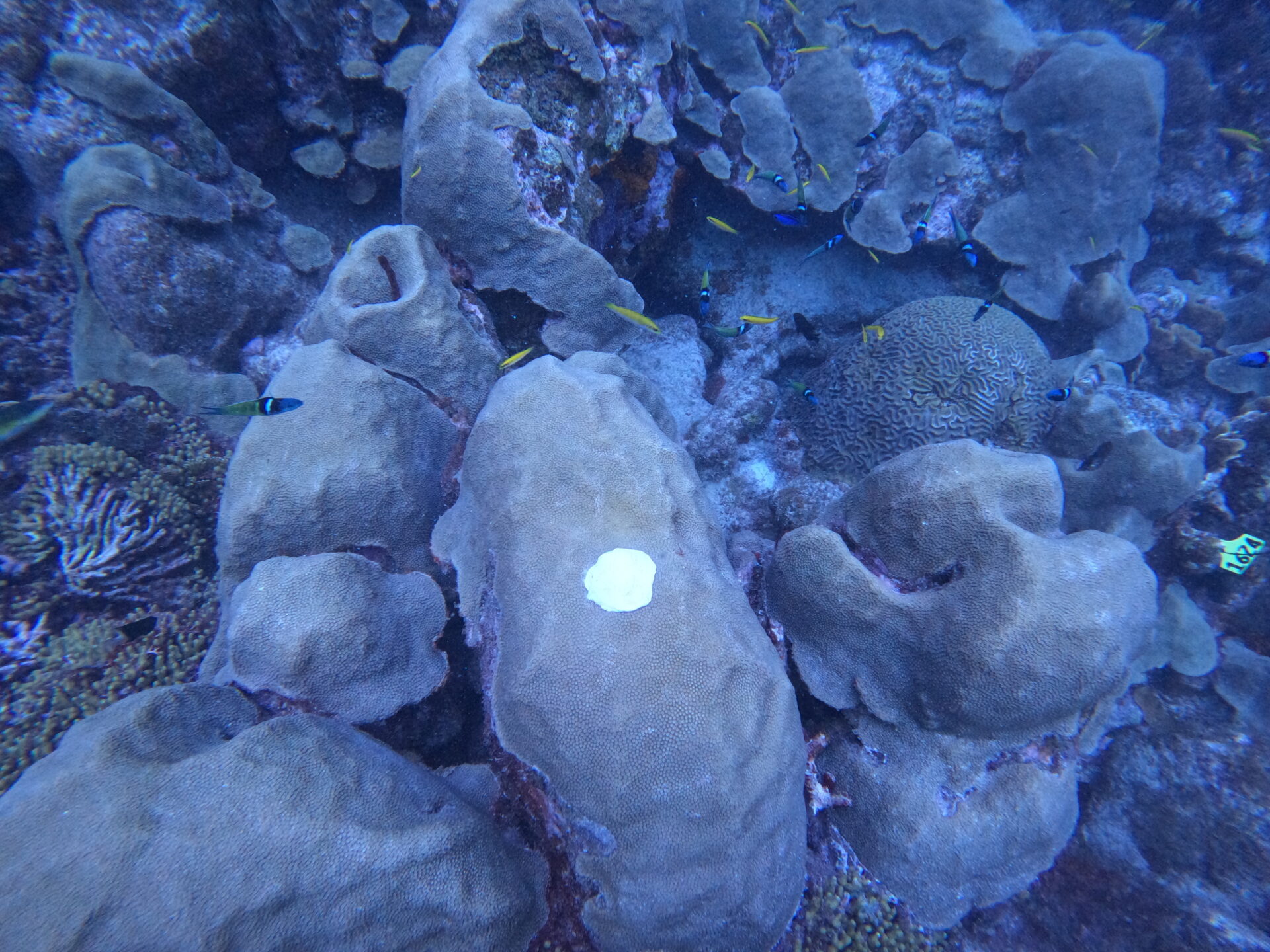
The study is grounded in an unusually deep historical record. To reconstruct past bleaching events, the team analysed skeletal cores from 44 massive reef-building corals collected from the reefs of Curaçao, in the southern Caribbean. When corals bleach, their growth slows and changes, leaving behind distinctive high-density stress bands in their skeletons and giving scientists a biological archive, readable through CT scanning.
The resulting record stretches 72 years, from 1950 to 2022, and revealed a striking pattern: significant bleaching on Curaçao began only around 1990, after ocean temperatures had already warmed substantially. Since then, bleaching has recurred repeatedly – and almost exclusively in years when the three climate modes align in ways that amplify regional heat stress.
The stakes for getting prediction right are considerable. Coral reefs across the Caribbean have declined sharply in recent decades, and for island communities like Curaçao – where reef-dependent tourism and fisheries contribute hundreds of millions of dollars annually to the local economy – the consequences of bleaching extend well beyond ecology. Reefs provide coastal protection, food security, and livelihoods. Losing them to repeated, unmitigated bleaching events is not an abstract risk.
“Existing global observing systems help provide critical data to climate prediction centres to monitor and skilfully predict these climate modes months in advance,” said co-author Caroline Ummenhofer, a climate scientist at WHOI. “Capitalising on these efforts, BEEP offers a novel tool to reef managers for risk mitigation.”
The development of BEEP draws on decades of foundational investment in climate science and Earth-system monitoring – satellite infrastructure, long-term data collection, and the open availability of that data to researchers. Without it, the tool would not exist.
“Our work shows how basic science can be rapidly translated into solutions for real-world challenges, but these breakthroughs don’t come from thin air,” said Anne Cohen, senior scientist at WHOI and co-author of the study.
“They’re built on decades of investment in fundamental research and continuous Earth-system monitoring, including satellites. And BEEP is only possible because the agencies that monitor our planet make that data freely available.”
For now, the system is focused on Curaçao, but the team believes the underlying framework could be adapted for reefs across the Caribbean and other tropical regions.
The ambition is a network of regional bleaching forecasts that would allow conservation groups, governments, and restoration programmes to plan interventions strategically – targeting protection where and when it is most needed.
“Coral reefs are among the most vulnerable ecosystems on the planet,” said Cohen. “Advances like this give us a better chance to protect them in a warming ocean.”


"*" indicates required fields
Printed editions
Current issue
Back issues




Enjoy so much more from Oceanographic Magazine by becoming a subscriber.
A range of subscription options are available.