Scientists' global call to save ocean’s hidden Marine Animal Forests
An international coalition of marine scientists is calling for global action to safeguard Marine Animal Forests (MAFs) - 'living architectures' that act as biodiversity refuges, nursery grounds for fisheries, and key players in carbon cycling and coastal protection.

An international coalition of marine scientists is calling for global action to safeguard one of the ocean’s most overlooked yet ecologically critical ecosystems, Marine Animal Forests (MAFs) – ‘living architectures’ that act as biodiversity refuges, nursery grounds for fisheries, and key players in carbon cycling and coastal protection.
The appeal – presented in Marine Animal Forests: A Manifesto – was released this week by a research team led by Spain’s Institute of Environmental Science and Technology of the Universitat Autònoma de Barcelona (ICTA-UAB) in collaboration with the Università del Salento, Italy.
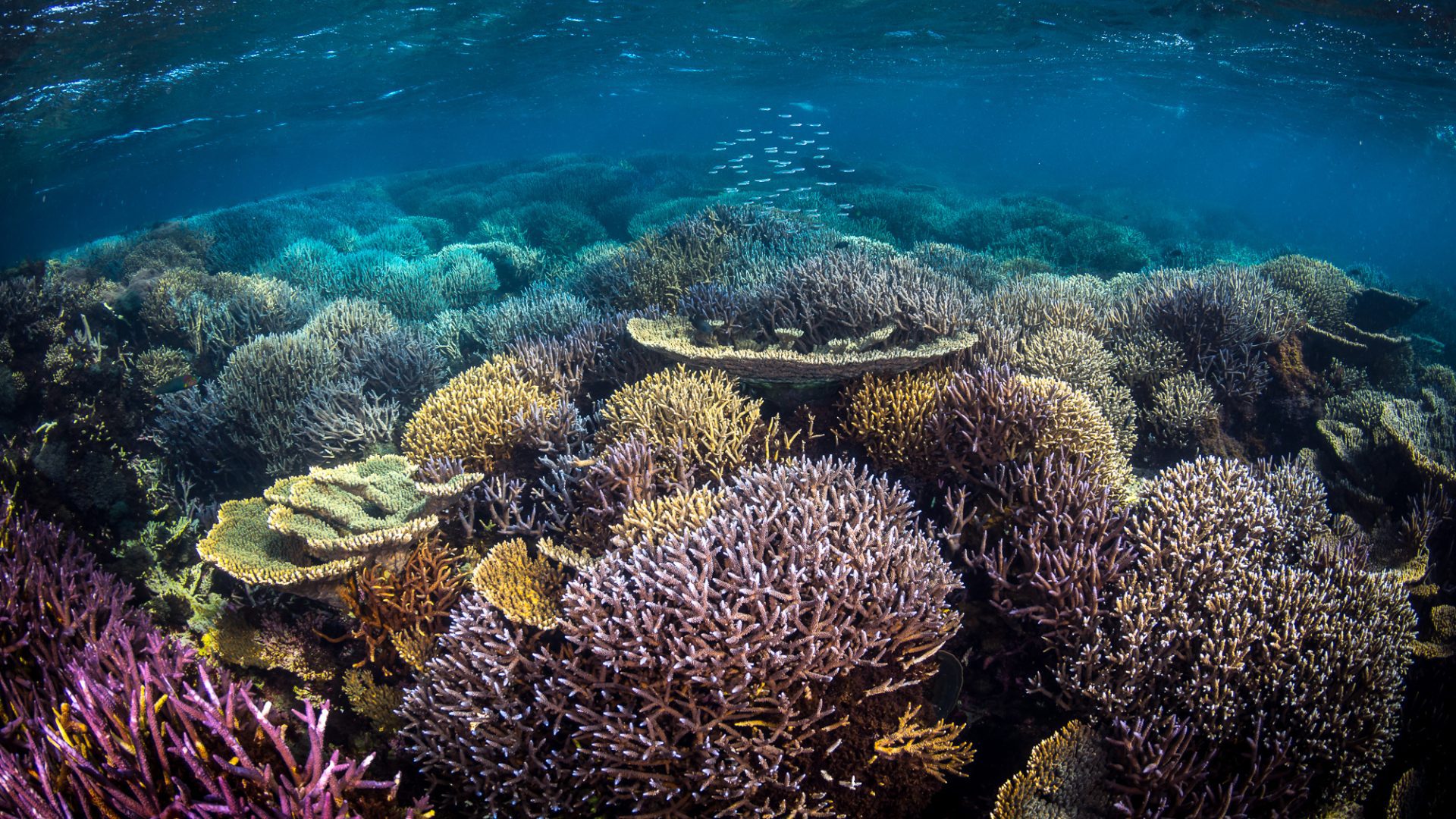
Stretching from sunlit tropical shallows to the cold, dim reaches of the deep sea, Marine Animal Forests are three-dimensional seafloor habitats built by corals, sponges, bryozoans, gorgonians, and other structure-forming organisms. They are critical in underpinning a healthy ocean environment and ecosystem. Yet despite their ecological weight, experts warn that MAFs remain both widely understudied and largely absent from conservation policy.
“The health of Marine Animal Forests is essential to the ocean’s resilience,” says Dr. Patrizia Ziveri of ICTA-UAB. “They are to the sea what tropical rainforests are to the land. Their degradation has cascading effects on marine biodiversity, food security, and climate stability.”
Dr. Sergio Rossi, professor at the Università del Salento, added: “We are losing an ally. The loss of Marine Animal Forests – and any forest – has severe implications, from coastal protection to carbon immobilisation, from fisheries to biodiversity.”
Coordinated under the MAF-WORLD COST Action, the Manifesto outlines mounting pressures on these underwater forests, including destructive fishing techniques such as bottom trawling, widespread pollution and microplastics, and escalating climate impacts like ocean warming and acidification. Some regions – particularly the Mediterranean – have already seen centuries of exploitation culminate in habitat decline or collapse.
In other news
Despite growing scientific insight into these ecosystems, the authors stress that Marine Animal Forests still lack formal recognition in international conservation frameworks. Many remain unmapped and unmonitored, and are routinely excluded from Marine Protected Areas (MPAs).
“We still have a long road to go in understanding the distribution, function, and health of most habitats that form the Marine Animal Forests,” says Rossi. “Losing the complexity of these forests means losing both their functionality and the biodiversity held within their canopy.”
The Manifesto therefore urges governments, international organisations, and the scientific community to make Marine Animal Forests a conservation priority. The authors of the report have therefore called for greater global mapping and monitoring to close those critical gaps in knowledge; formal recognition of MAFs as vulnerable habitats within national and international policy frameworks; strengthening MPAs and enforcing protections, particularly in deep and remote waters; and a restriction on destructive practices such as bottom trawling, curbing pollution, and sedimentation.
In additional, there is now a unified call for greater investment in the restoration of long-lived, habitat forming species; the incorporation of MAFs into carbon-sequestration and biodiversity credit systems; and a call to raise public awareness by emphasising the role of MAFs as ‘living blue forests.’
“Marine Animal Forests have been largely invisible to society and decision-makers,” said Ziveri. “Recognising them as living blue forests is essential to understanding their role in sustaining ocean life and mitigating climate change.”
The initiative unites researchers, policymakers, and conservation leaders through the MAF-WORLD network, aiming to catalyse international cooperation and elevate Marine Animal Forests within the global conservation agenda. The document aims to integrate current science into a policy-ready framework, calling for immediate action before further irreversible losses occur.
The release of Marine Animal Forests: A Manifesto marks a significant step toward bridging the gap between marine science and decision-making. Its authors hope their work will galvanise a global movement to recognise, restore, and protect these crucial underwater forests—before their silence becomes permanent.


"*" indicates required fields
Printed editions
Current issue
Back issues

Enjoy so much more from Oceanographic Magazine by becoming a subscriber.
A range of subscription options are available.
