Stranded sperm whales evidence of human impact on the ocean
Four stranded sperm whales found on the southeastern US coastline were emaciated and malnourished, with fishing gear discovered in two - pointing to a convergence of human pressures on the deep ocean.
A new study examining four sperm whale strandings on the southeastern US coastline has uncovered a troubling picture of malnourishment, ingested fishing gear, and the growing evidence of human activity on the deep ocean.
They are the largest toothed predators on Earth, capable of diving to extraordinary depths in near-total darkness, navigating by sonar through an ocean they have inhabited for millions of years. Yet between 2020 and 2022, four sperm whales came ashore on the coastlines of Florida and Alabama – each one emaciated, dying, and each carrying evidence of a sea increasingly shaped by human hands.
A new study published in the journal Diseases of Aquatic Organisms has pieced together the necropsies, histopathology and disease testing carried out on all four animals following their deaths, offering one of the most detailed comparative analyses of sperm whale strandings on record.
Three were male, aged 12, 17, and 28. One was female, aged eight. All were juveniles or young adults in a species that can live beyond 60 years.
While all four were severely emaciated, their stomachs told a complicated story. The whales had been eating – squid beaks were recovered in abundance, with two individuals containing well over 1,000 – but the squid themselves appeared to be smaller than average, raising questions about nutritional quality rather than quantity.
“A follow-up question to this study is whether there is something going on with the prey, where squid are smaller than they used to be and therefore not as nutritious?” said lead author Jennifer Bloodgood, assistant professor of practice in the Department of Public and Ecosystem Health at Cornell University’s College of Veterinary Medicine.
She added that more research is needed to understand if climate change is playing a role in squid size.
The problem, however, may not yet end with prey quality. Sperm whales are unique among large whales in their use of echolocation to hunt in the depths. It’s therefore possible that human activities in the Gulf of Mexico, including seismic surveys for oil and heavy shipping traffic, are interfering with that system, forcing animals to work harder for diminishing returns.
“It begs the question of whether sperm whales are having to work harder and expend more energy to find prey that may not be as nutritious,” Bloodgood said.

In other news
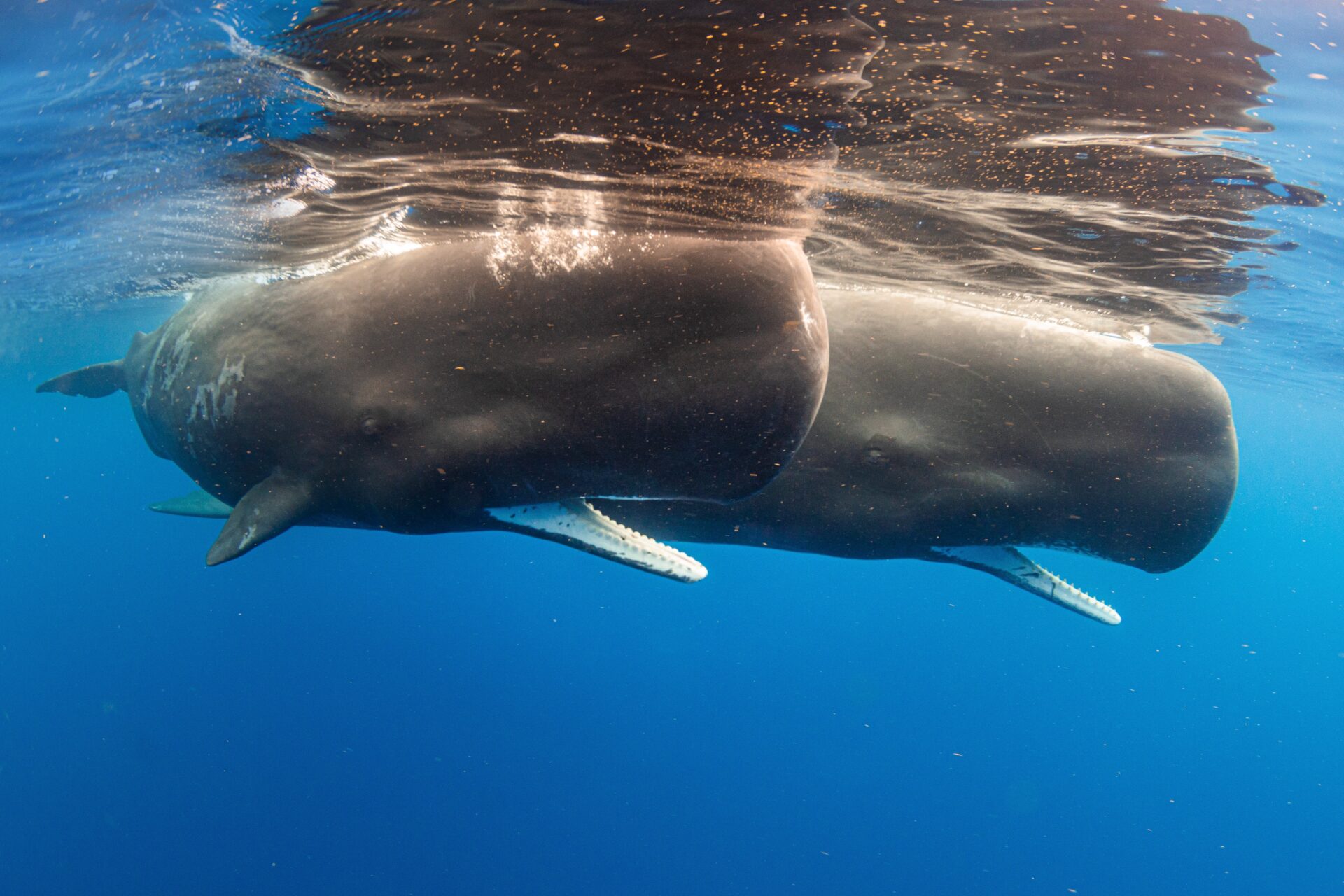
Two of the four whales were found to have ingested marine debris and fishing equipment. One had a length of gear wrapped around its jaw, trawl net lodged in its oesophagus, and additional fishing gear and plastic in its stomach. Another contained sections of gill net, trawl net and long-line gear – the latter including a minimum of 480 branch lines from a single segment alone.
“Derelict gear should not be out there in the first place, and there are new and better fishing technologies that could prevent entanglements and ingestion of fishing gear,” said Bloodgood. “We’re the ones causing many of these issues and many of them should be entirely preventable.”
The findings point to a convergence of pressures – degraded prey, acoustic disruption, plastic pollution and abandoned fishing gear – that together may be quietly undermining the health of one of the ocean’s most extraordinary animals.
“Many of the issues come back to potential human influences, things people are doing in the waters that are affecting these species that have been around for millions of years,” Bloodgood said.
Sperm whales are listed as endangered under the US Endangered Species Act. Their main threats include entanglement in fishing gear, vessel strikes, pollution and climate change – pressures that this latest study suggests are not abstract future risks, but present and compounding realities playing out on beaches today.
The research was funded through the Dauphin Island Sea Lab, the Gulf World Marine Institute, the Harbor Branch Oceanographic Institute and the Florida Fish and Wildlife Southwest Field Laboratory.


"*" indicates required fields
Printed editions
Current issue
Back issues
Enjoy so much more from Oceanographic Magazine by becoming a subscriber.
A range of subscription options are available.
