Tides off Patagonia are strongest they've been since the Ice Age
A new study reconstructing 21,000 years of tidal change across the Patagonian Shelf finds that tides are now among the strongest since the last Ice Age, with significant implications for carbon storage and coastal seas.
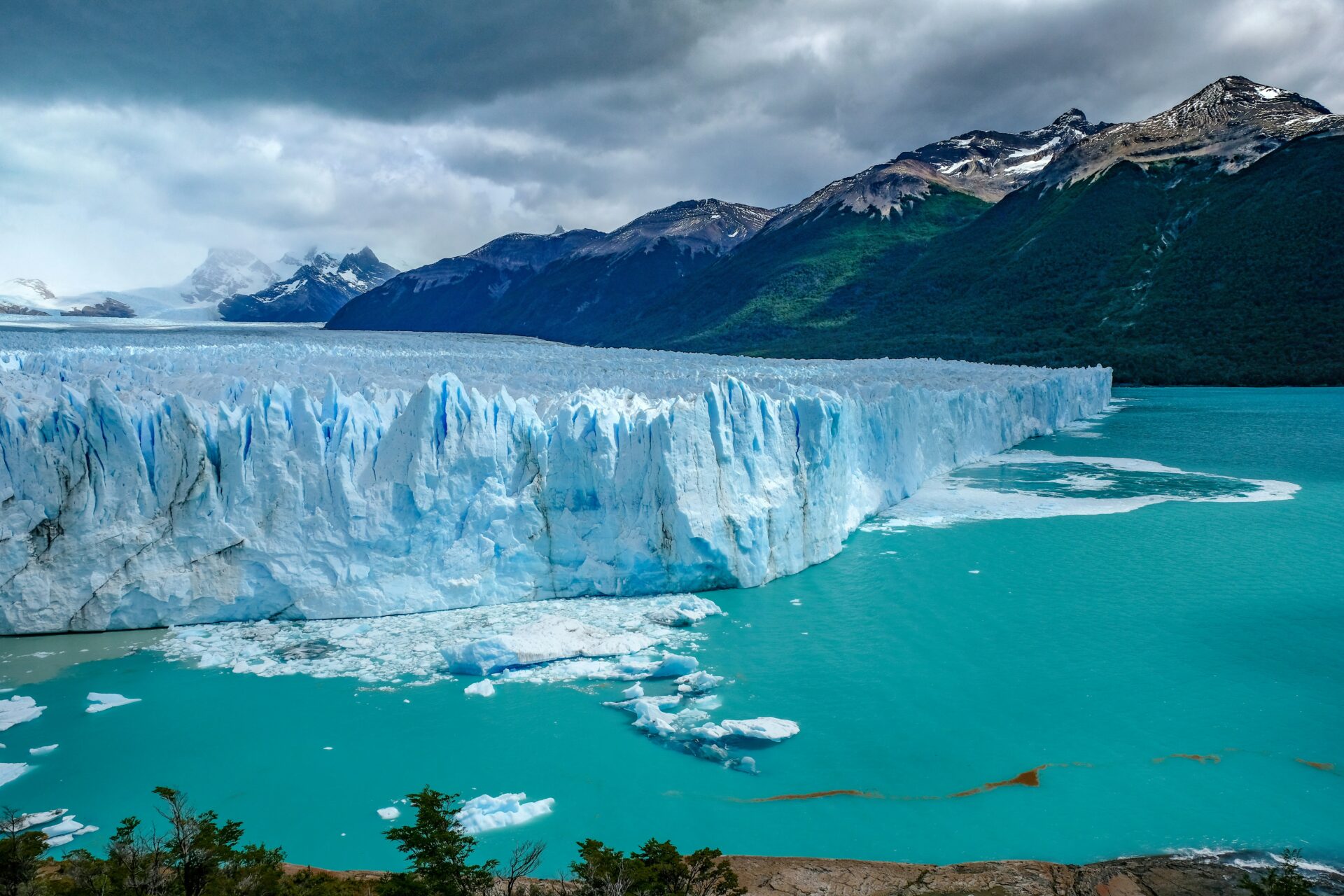
The tides sweeping across one of the world’s most powerful coastal seas are now among the strongest they have been in 21,000 years, according to new research that reconstructs how tidal energy across the Patagonian Shelf has shifted since the end of the last Ice Age – with significant implications for carbon storage, marine habitats, and our understanding of how ocean systems respond to rising seas.
The study, published in Paleoceanography and Paleoclimatology, was carried out by academics working on the Convex Seascape Survey – a five-year global ocean and climate research programme investigating how the seabed and continental shelf seas influence the Earth’s carbon cycle, implemented by Blue Marine Foundation, the University of Exeter, and Convex Insurance.
Using updated sea-level reconstructions and high-resolution tidal modelling, the team simulated tidal conditions across the Patagonian Shelf at 1,000-year intervals stretching back to the Last Glacial Maximum, when vast areas of today’s continental shelves were dry land and enormous volumes of water remained locked in global ice sheets. As those ice sheets melted and sea levels rose, the shape and position of coastlines changed – and with them, the behaviour of the tides.
What the researchers found was not a simple, steady increase in tidal energy as the sea rose. Instead, the shelf’s evolving geometry produced abrupt reorganisations in tidal behaviour. The dominant twice-daily tide – driven by the Moon’s gravitational pull – reached peak energy around 10,000 years ago, with dissipation running approximately 16% higher than today. A second tidal component proved even more sensitive to changing conditions, peaking at around 50% above present-day levels some 15,000 years ago.
The Patagonian Shelf is now, the research suggests, experiencing some of its most energetic tidal conditions since the Ice Age ended.
“Continental shelf seas are dynamic systems, and tides are one of the key forces shaping them,” said Dr Sophie Ward, lead author and physical oceanographer at Bangor University. “By reconstructing how tides changed across the Patagonian Shelf over thousands of years, we can see that sea-level change can reorganise tidal energy in complex and sometimes abrupt ways. This matters because tides influence sediment transport, habitats, coastal evolution and the processes that help lock organic carbon away in the seabed.”

In other news


The ability of seabed sediments to capture and store organic carbon is a critical component of the ocean’s role in regulating the global climate. Tidal energy influences how sediments move, where they settle and how effectively they can act as long-term carbon sinks. Understanding how tidal behaviour shifts in response to sea-level change is therefore not only a question of physical oceanography – it’s a question with direct relevance to climate science and to projections of how coastal seas will function as sea levels continue to rise.
Professor James Scourse, co-author at the University of Exeter and a member of the Convex Seascape Survey, said: “The Convex Seascape Survey is focused on understanding how continental shelf seas function as part of the climate system,” he said. “This study gives us an important long-term baseline for one of the world’s most energetic shelf environments. Looking back 21,000 years helps us understand how sensitive these systems are to sea-level change, and gives us better tools for thinking about how they may respond in the future.”
The model outputs point to the role of tidal change in shaping past ecosystems, driving sediment movement across archaeological landscapes now submerged beneath the sea, and influencing the long-term capacity of shelf seas to store carbon. All model outputs and derived datasets have been made openly available for use in future research.
The Patagonian Shelf has long been recognised as one of the most tidally energetic environments on Earth. What this study makes clear is that even this extraordinary system is not fixed – that relatively modest shifts in sea level can reshape tidal behaviour in ways that are complex, sometimes abrupt and consequential far beyond the immediate coastline.


"*" indicates required fields
Printed editions
Current issue
Back issues
Enjoy so much more from Oceanographic Magazine by becoming a subscriber.
A range of subscription options are available.
