Tracking data expose bycatch threat to endangered albatrosses
A new study combines satellite tracking, fishing vessel data and ocean science to identify high-risk zones where fishing threatens endangered Antipodean albatrosses, offering targeted solutions to reduce bycatch and improve seabird conservation.
A new international study is shining a spotlight on where commercial fishing and seabirds most often collide – and how ocean science could help prevent thousands of unnecessary deaths each year.
Every year, tens of thousands of seabirds are killed after becoming accidentally hooked or entangled by fishing gear as they forage behind commercial vessels. Globally, an estimated 50,000 to 75,000 seabirds die annually in longline fisheries alone, with around 170 million individuals exposed to bycatch risk worldwide.
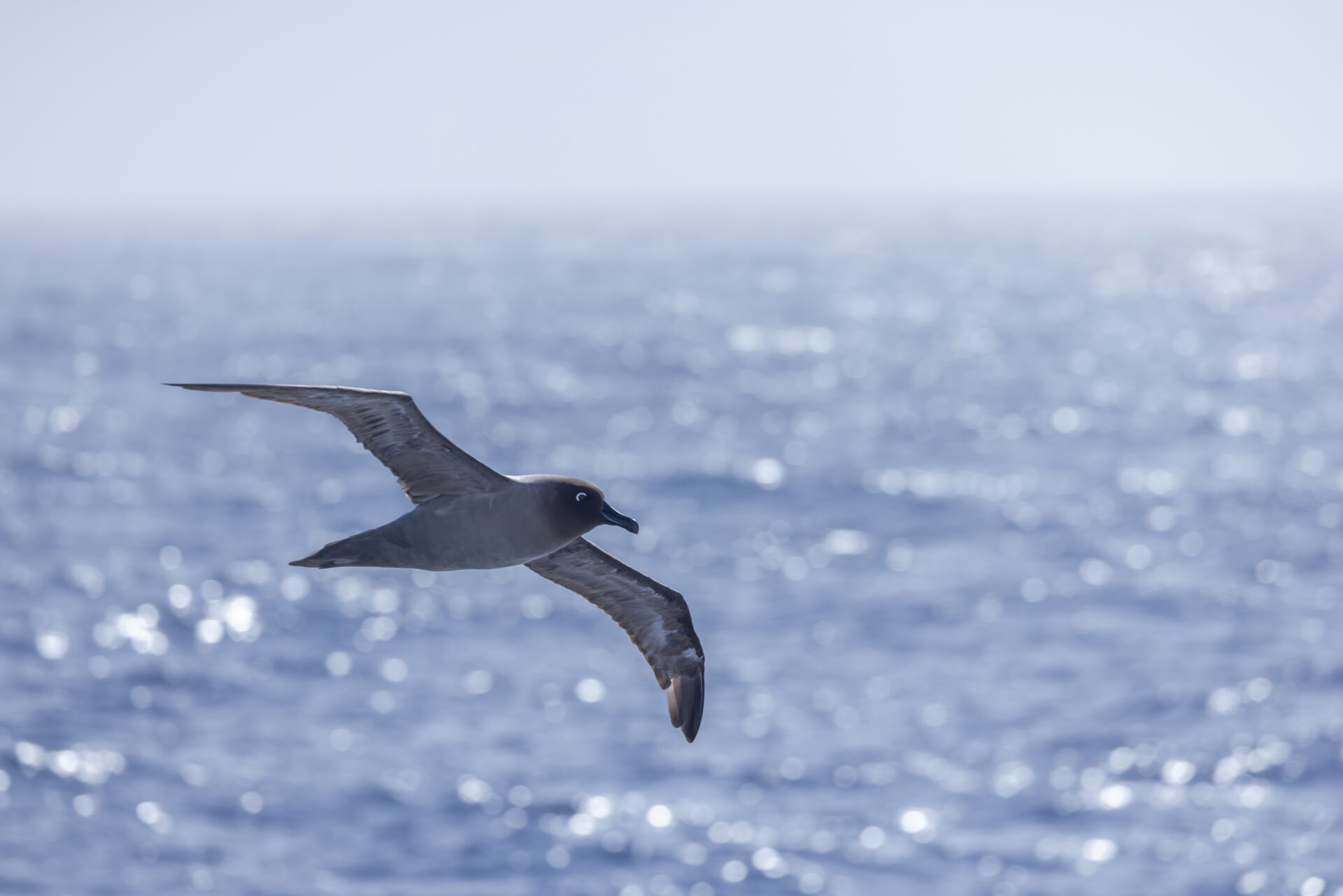
The toll is especially severe in the Southern Hemisphere, where roughly 40,000 albatrosses and petrels are caught each year. Nearly 90% of all albatross species are now threatened by fishing activity. Among the most vulnerable is the Antipodean albatross. Endemic to New Zealand, the species has a population of just 28,000 birds and is declining at an alarming rate of six percent per year. This is largely due to bycatch in high-seas longline fisheries.
With extinction risks mounting, scientists set out to pinpoint exactly where and when these fatal interactions are most likely to occur.
In a new study published in Biological Conservation, researchers from Plymouth Marine Laboratory (PML), the University of the Sunshine Coast and partner institutions in Australia and New Zealand tracked the movements of 192 Antipodean albatrosses. Birds of all ages, sexes and breeding statuses were fitted with miniature satellite transmitters, allowing scientists to map their journeys across the vast Southern Ocean.
These tracks were overlaid with detailed fishing vessel data from the Automatic Identification System (AIS), which monitors the location of commercial ships. The result was a map showing where birds and fishing fleets intersect – effectively a “collision map” of bycatch risk.
The researchers then added a crucial third layer: oceanographic data. Drawing on PML’s Earth observation expertise, the team analysed how physical ocean features influence where seabirds and fishing vessels converge. This was examined across both long-term seasonal patterns and shorter, month-to-month changes in ocean conditions.
Key features included thermal fronts, where warm and cold waters meet; turbulent mixing zones; and rotating ocean eddies that can span tens of kilometres. Together, these processes help concentrate marine life – and, in turn, attract both hungry seabirds and fishing boats.

In other news




The analysis revealed extensive bycatch hotspots across the Southern Ocean between 25°S and 40°S latitude, with risk levels fluctuating throughout the year. The danger peaks during Southern Hemisphere winter, and younger birds were found to be at the greatest risk.
At large spatial and temporal scales, the most dangerous areas consistently coincided with regions where thermal fronts frequently form. At finer, monthly scales, transient ocean eddies – known as “aggregative Lagrangian Coherent Structures” – created short-lived but intense risk zones where birds and vessels converged in search of prey.
PML Marine Earth Observation Scientist Dr Peter Miller, a co-author of the study, said the approach offers powerful new tools for conservation and fisheries management.
“Accidental catching of seabirds in fishing gear is the biggest threat facing Antipodean albatrosses and many other seabird species. Our research provides the information that fishing management organisations need to improve their current bycatch prevention rules and take targeted action to help save bird species from decline,” he said.
“We found that ocean patterns can predict where seabirds and fishing boats are most likely to overlap – and this works for birds of different ages and sexes. This approach could be applied to many other species and situations. Most importantly, we discovered that including ocean pattern data in prediction systems makes them more accurate, which means better tools for fishing industries, managers, local communities, and conservationists to make more informed decisions and protect seabirds.”
Lead author Ho Fung (Billy) Wong said the Antipodean albatross was selected as a case study because of urgent concerns for the species’ survival.
“These birds only breed every two years on small New Zealand islands and are already threatened by the effects of climate change and marine plastics.”
Based on the findings, the team recommends that seabird bycatch mitigation measures set by Regional Fisheries Management Organisations (RFMOs), including the Western and Central Pacific Fisheries Commission, be expanded to cover the high-risk zones identified in the study – particularly between 25°S and 30°S. Such measures include bird-scaring lines, weighted fishing lines and setting lines at night.
“Currently, only one of three mitigation measures is mandated in this zone,” Mr Wong said.
University of the Sunshine Coast Associate Professor Kylie Scales said the location of many hotspots raises additional concerns. “It’s of great concern that many of the interaction hotspots we identified between birds and fishing vessels are located on the high seas and therefore not under any individual country’s jurisdiction.
“However, we’re excited at the promise of this data-driven method for identifying and predicting hotspots of fisheries interaction risk. We hope it will prompt tighter controls in key fisheries to mitigate the threats to wildlife and make the industry more sustainable.”
The research was conducted in collaboration with the New Zealand Department of Conservation, Plymouth Marine Laboratory in the UK, The University of Queensland, Charles Sturt University, Halpin Wildlife Research in Canada, and South Africa’s Nelson Mandela University.


"*" indicates required fields
Printed editions
Current issue
Back issues


Enjoy so much more from Oceanographic Magazine by becoming a subscriber.
A range of subscription options are available.