Unexpected role of seabird guano in shaping coastal landscapes
New research shows seabirds nesting on remote barrier islands boost plant growth with nutrient-rich guano, helping dune-building grasses trap sand and stabilise fragile coastal landscapes threatened by erosion and rising seas.
Seabirds nesting on remote coastal islands may be doing far more than raising the next generation, new research suggest with findings that indicate they are also helping to build and stabilise the very landscapes they depend upon.
Utrecht-based earth scientist, Floris van Rees has discovered that birds breeding in vegetated coastal environments – including dunes and small barrier islands – can significantly influence plant growth through the nutrients they deposit in their droppings.
The work focused on five uninhabited islands in the Wadden Sea comparable to the barrier islands off North Carolina and in the Chesapeake Bay, revealing a powerful link between seabird colonies and dune formation.
“Plant species that retain sand better benefit from the presence of bird excrement, which in turn is beneficial for dune formation,” van Rees, from the University’s Department of Physical Geography, Faculty of Geosciences, added.
Scientists arrive at this conclusion at a time in which rising seas and coastal erosion are increasingly threatening the fragile habitats used by many coastal birds.
Seabirds transport nutrients over long distances, delivering them to nesting areas in the form of guano. On small, uninhabited islands where few other nutrient sources exist, this input can dramatically alter plant growth.
“In places where there is a lot of breeding, and where a lot of guano ends up in the soil, you see vegetation growing much faster than in other places,” van Rees observed from satellite images. “And so-called dune-building grasses such as marram grass and sand couch can retain sand well, so they are extremely important for dune formation.”
The nutrient boost also accelerates early-season plant growth in breeding areas, strengthening vegetation that traps and stabilises sand.
“And that also allows them to retain more sand,” said van Rees.

In other news

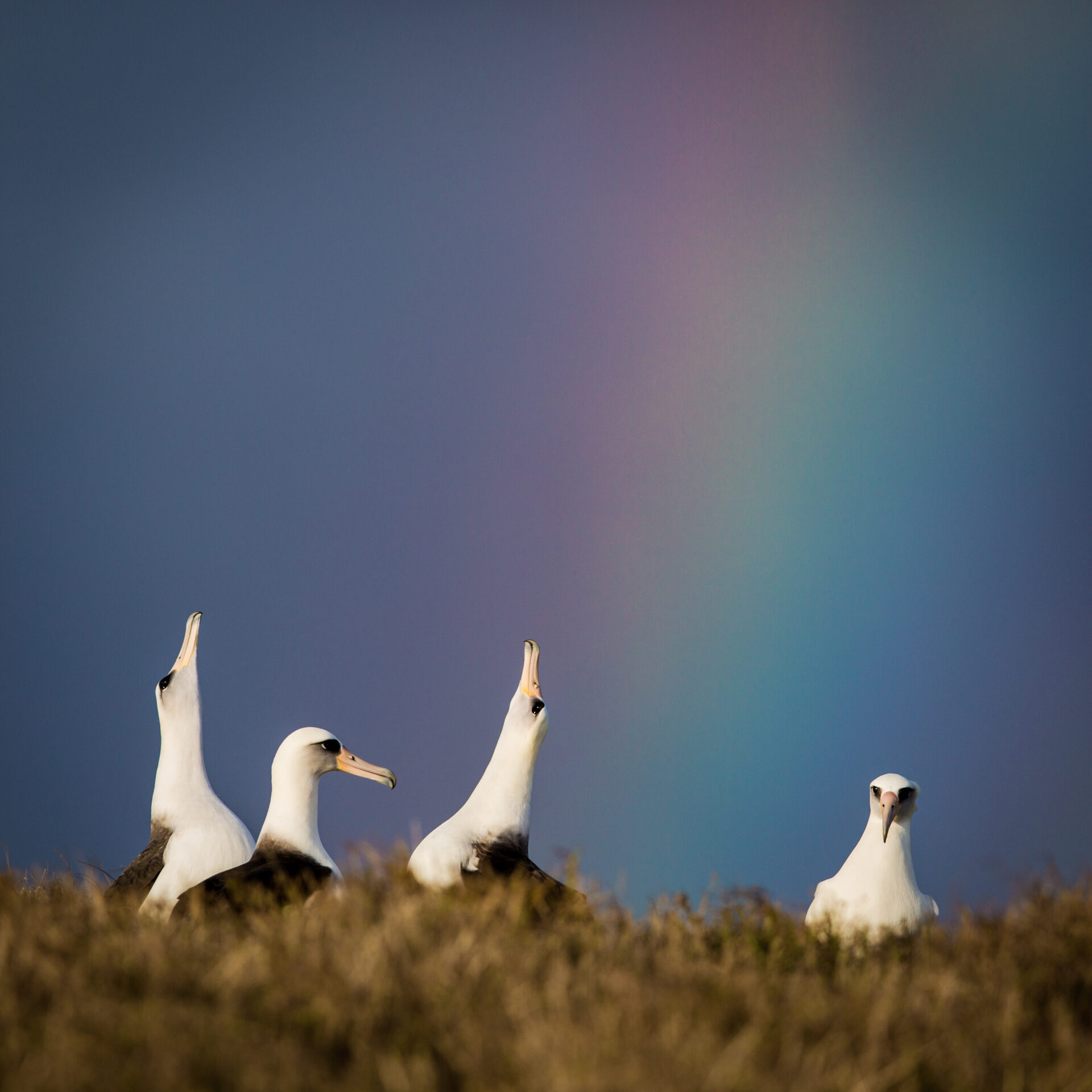
Beyond dune grasses, other plant species benefit from guano fertilisation. Annual herbaceous plants flourish in sandy soils, while richer soils support species such as sea couch and Atriplex in active breeding areas.
“In places where there is a lot of breeding, you see vegetation growing much faster than in other places.”
The findings highlight the dynamic nature of the Wadden Sea’s barrier islands – low-lying landscapes constantly reshaped by wind and waves.
“We are, of course, talking about low-lying islands that are vulnerable to high waves. Sometimes, after a storm, there is a temporary setback in the form of erosion, but nature is resilient: for example, you see faster greening in the spring at the breeding sites, which means that the landscape recovers more quickly,” said van Rees.
“If the number of breeding pairs changes, this can have consequences not only for the birds themselves, but also for the landscape in which they breed and rest.”
A key nutrient in guano is nitrogen, which can be traced through its isotopic signature.
“There are two variants or isotopes: a light and a heavier variant. Coastal plants are often full of the light variant; they obtain their nitrogen from the air and water. But plants can also absorb nitrogen via bird droppings, which mainly contains the heavier variant. And that is what we found in the vegetation on the islands.”
The process forms part of a natural nutrient cycle, distinct from human-driven nutrient enrichment that can harm ecosystems.
“This nutrient flow is part of a natural ecosystem process. Whereas a large-scale supply of nutrients in other nature reserves can lead to undesirable enrichment and loss of biodiversity.”
Van Rees, who grew up in the northern Dutch province of Groningen, has long been fascinated by the Wadden Sea. For his research with Utrecht University and the Royal Netherlands Institute for Sea Research (NIOZ), he examined vegetation on the remote islands of Rottumeroog, Rottumerplaat, Richel, Griend and Zuiderduintjes – locations normally inaccessible to the public.
The study combined field measurements, including plant growth and nitrogen sampling, with satellite imagery and elevation maps. Back in the lab, computer models were used to identify broader ecological patterns.
The islands themselves belong to a wider system of barrier islands – long, narrow ridges of sand that run parallel to coastlines. Unlike volcanic islands, these sandy formations are highly dynamic, constantly reshaped by tides, waves and wind.
Such landscapes occur not only along the Wadden Sea coasts of the Netherlands, Germany and Denmark, but also along the eastern seaboard of the United States, the east coast of Australia and parts of southeastern South America.
Across these sandy islands, millions of migratory birds breed or rest each year – and, as the research suggests, they may also be quietly engineering the landscapes beneath their nests. Protecting both the birds and their fragile breeding grounds could therefore be key not only for biodiversity, but also for the resilience of coastal ecosystems themselves.


"*" indicates required fields
Printed editions
Current issue
Back issues

Enjoy so much more from Oceanographic Magazine by becoming a subscriber.
A range of subscription options are available.
