US officials seize 50,000 smuggled shark fins, exposing trafficking network
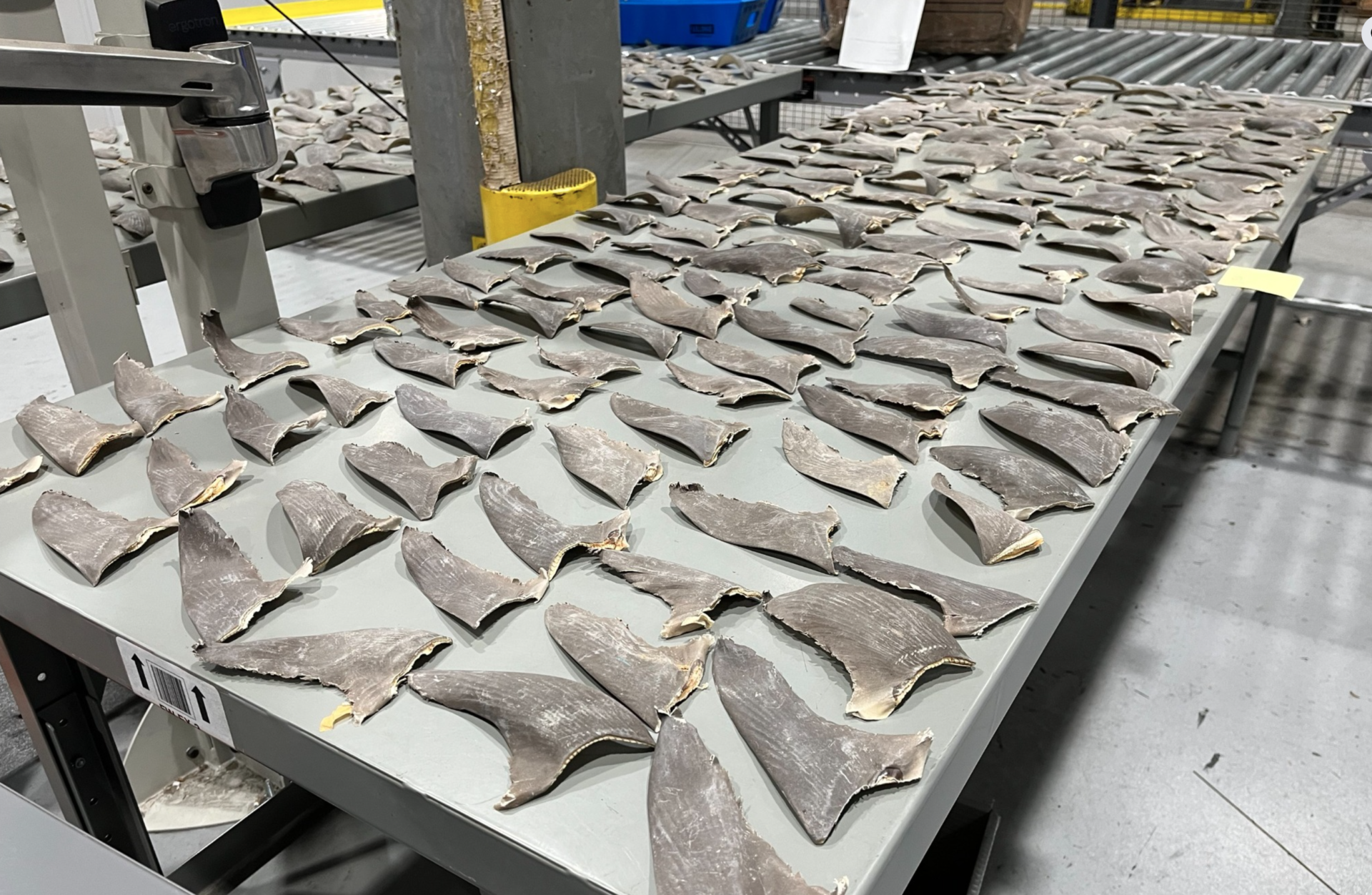
Roughly 50,000 dried fin sharks, worth over $1 million, have been seized in a spree of confiscations across multiple different US ports and have been found to be linked to a larger trafficking network.
The fins were predominantly identified as being from silky sharks and bigeye thresher sharks, both protected under the Convention on International Trade in Endangered Species of Wild Fauna and Flora (CITES).
Disguised as car parts, they were discovered by The United States Fish and Wildlife Service in Alaska in October 2025 as part of Operation Thunder, the global effort to combat illegal wildlife trade.
It also comes amid tightening US restrictions, following the 2023 Shark Fin Sales Elimination Act, which largely bans the possession, transport, and sale of shark fins in the United States.
This sparked a wider investigation which led to the interception of additional shipments in Anchorage, Alaska; Louisville, Kentucky; and Cincinnati, Ohio while they were transiting from Mexico to Hong Kong.
Shark finning is widely considered cruel, and global bans have progressively been implemented since the start of the 21st century.
The fins of the animals are removed while still alive. The wounded sharks are then thrown back into the ocean, where unable to swim, they die – either from blood loss or they are eaten by other predators.
Removing apex ocean predators is also environmentally problematic: when top predators are removed, the mid-level consumers they usually eat explode in population, which in turn wipes out lower-level species, such as herbivores, that are crucial for maintaining habitat health.

In other news





In the US the Shark Finning Prohibition Act was signed in 2000. In the EU, initial bans began in 2003, with the EU strengthening rules in 2013 and the UK passing the Shark Fins Act in 2023.
The fins that US investigators discovered were destined for the high-end markets of Hong Kong, where such a haul could have been sold to wholesalers for upwards of $1,000 per pound.
Hong Kong is the largest shark fin importer in the world, and responsible for about half of the global trade.
In Hong Kong, the sale and consumption of shark fins are not universally banned. While the city is the world’s largest trade hub for these products, the market is strictly divided between legal and illegal inventory based on species and international regulations.
It is a serious crime in Hong Kong to import, export, or possess fins from highly endangered species without a license from the Agriculture, Fisheries and Conservation Department (AFCD).
Silky and big eye thresher sharks are now on the CITES Appendix II, due to their declining numbers. Requiring bulky paperwork to prove that fishing both species will not cause population damage.
In 2026, Hong Kong’s AFCD (Agriculture, Fisheries and Conservation Department) has increased inspections specifically for these two species because they are being overfished so rapidly.
On the next steps of the investigation, the US Fish and Wildlife Service said: “Our attaches collaborate closely with foreign law enforcement authorities and other partners to disrupt transnational criminal networks tied to wildlife trafficking.”


"*" indicates required fields
Printed editions
Current issue
Back issues

Enjoy so much more from Oceanographic Magazine by becoming a subscriber.
A range of subscription options are available.
