Why the return of Galapagos' giant tortoise is good ocean news
The release of the tortoises back into the wild is part of an ambitious Island-Ocean connection Challenge, which is aiming to restore 40 globally significant islands from ridge-to-reef by 2030

For the first time in 180 years, giant tortoises are once again roaming the Galápagos, as 158 were released in Floreana Island this month – which conservationists say will strengthen the island’s land-sea ecosystems.
The Floreana juvenile giant tortoises were released into their ancestral habitat by the Floreana Ecological Restoration Project, led by the Galápagos National Park Directorate. It is part of a wider Island-Ocean Connection Challenge – an ambitious campaign to restore 40 globally significant islands from ridge-to-reef by 2030.
After the reintroduction of the giant tortoise, the Floreana Racer snake, the Vermillion Flycatcher, the Galápagos Rail, the Galápagos Hawk, the Lava Gull, the Floreana Mockingbird and five species of Darwin’s Finches are also expected to be reintroduced.
As keystone species, these tortoises are expected to help the island’s habitats flourish, driving natural regeneration processes that support a wide range of native plants and animals.
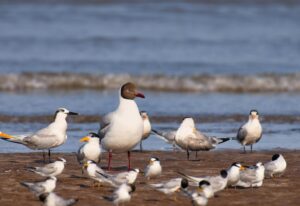
In particular, these slow-moving land animals have a symbiotic relationship with seabirds on the island. Researchers have said they create improved nesting and feeding conditions for seabirds – especially those slated for reintroduction like the Lava Gull. Healthy seabird populations in turn contribute to nutrients that support surrounding marine ecosystems, including coral reefs and fisheries.

In other news

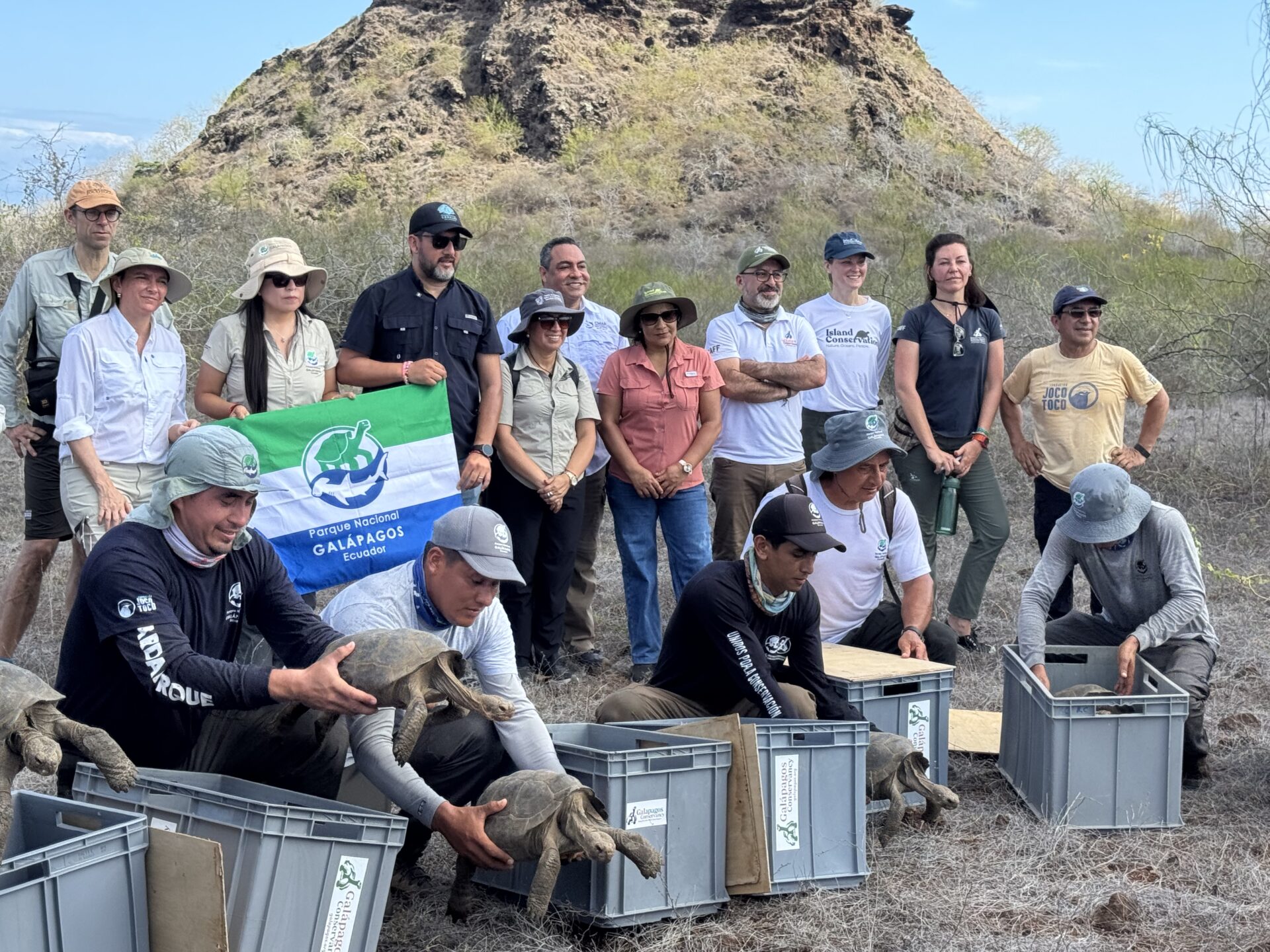
These tortoises were driven to extinction in the mid-1800s largely due to whalers, who would call into the port in search of food, and eat the turtles in their thousands. Conservationists have called their return a “hugely significant milestone”.
It was discovered in the early 2000s that some tortoises living on Wolf Volcano, to the North of Isabela Island, carried ancestry from Floreana. Through a breeding programme, these tortoises were raised to form a population that is genetically as close as possible to the original Floreana giant tortoise.
Slightly ironically, it transpires that the very same whalers who took so many animals from Floreana in the early 19th century unloaded some of them on Isabela island, and were thereby responsible for their revival.
“Habitats are the foundation for biodiversity; the home that allows species to move, live and evolve naturally over time,” said Rakan Zahawi, Executive Director of the Charles Darwin Foundation.
“Giant tortoises are a critical part of this system. By dispersing seeds, shaping vegetation, creating micro-habitats such as their well-known wallows, and influencing how landscapes regenerate, they help rebuild ecological processes that many other species depend on,” he added.


"*" indicates required fields
Printed editions
Current issue
Back issues
Back Issues
Issue 43 Sir David Attenborough’s ‘Ocean’
Enjoy so much more from Oceanographic Magazine by becoming a subscriber.
A range of subscription options are available.