Sea Shepherd targets krill super trawlers in Antarctic mission
Sea Shepherd has launched its 2026 Antarctic campaign to document industrial krill fishing near key whale feeding grounds. The mission will gather independent scientific data, increase public scrutiny and inform international policy amid growing pressure on the Southern Ocean ecosystem.

The steel hull of the Sea Shepherd Global vessel Allankay cut through the Beagle Channel on 10 February, departing Ushuaia and setting a southerly course for the krill-rich waters of the Antarctic Peninsula. With that departure, the NGO formally launched its 2026 Operation Antarctica Defense campaign – a mission it says comes at a pivotal moment for the Southern Ocean.
Last season marked a first: the industrial krill fishery reached its seasonal catch limit early, triggering an unprecedented premature closure. For campaigners and scientists alike, the event signalled intensifying pressure on krill stocks within an ecosystem already destabilised by climate-driven sea ice loss.
Industrial krill super trawlers operate primarily between the South Orkney Islands and the Antarctic Peninsula – waters widely regarded by marine scientists as one of the most important whale feeding grounds on Earth, and a region long proposed as a Marine Protected Area (MPA).
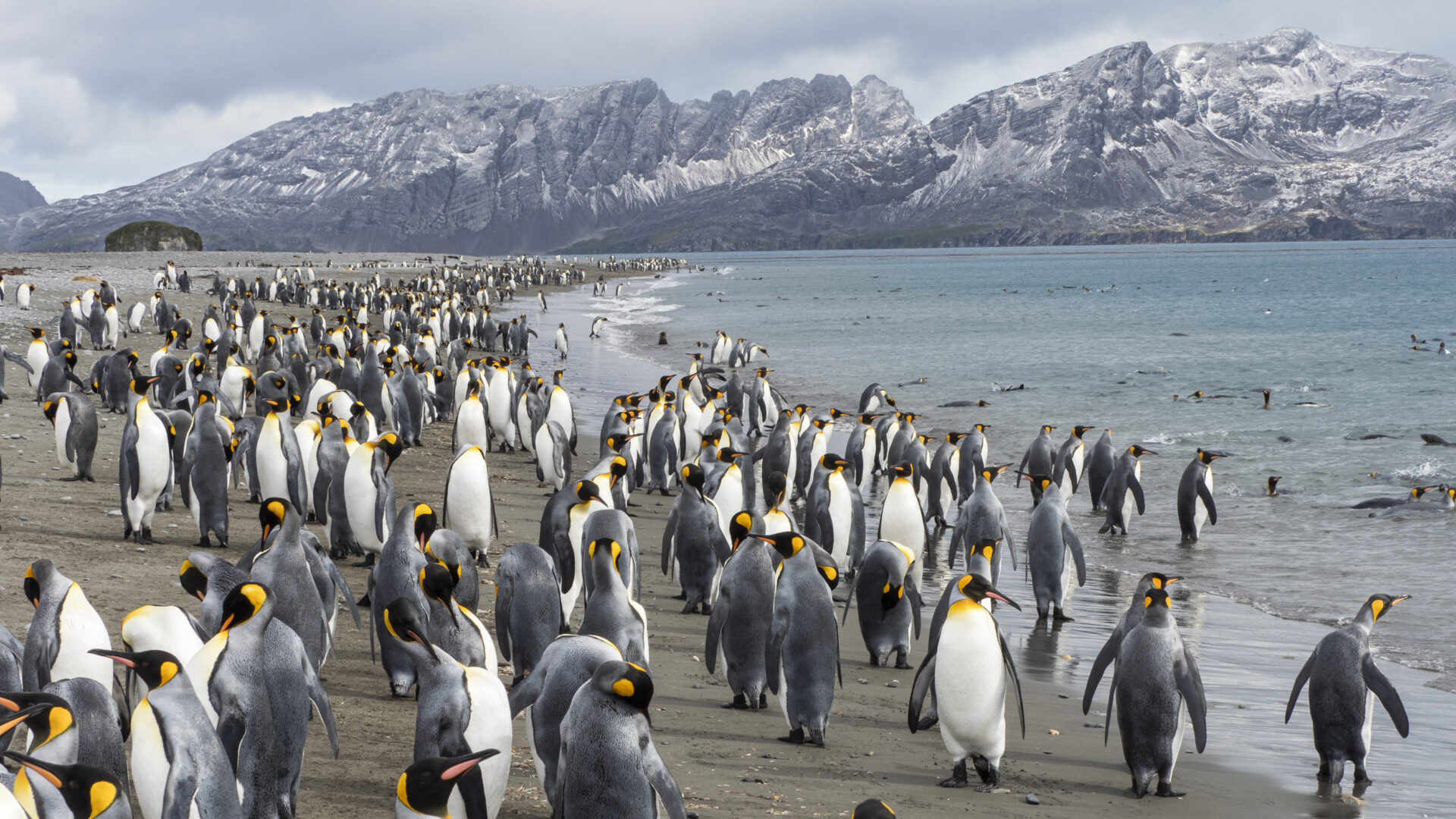
Krill, the shrimp-like crustaceans that swarm in vast shoals, form the foundation of the Antarctic food web. Whales, penguins, seals and seabirds depend on them as a primary food source. Without reliable access to krill, these predators struggle to feed, reproduce and recover from historic population declines.
On its first day back off Coronation Island, Sea Shepherd reports documenting super trawlers hauling nets amid actively feeding whales, with visible blows and flukes rising alongside fishing operations – a juxtaposition campaigners describe as emblematic of mounting ecological conflict.
Reportedly, crew members also observed vessels conducting refuelling and transshipment operations at sea, a practice that enables fleets to remain on the fishing grounds for extended periods rather than returning to port. In remote polar waters, any fuel spill or pollution event would be exceptionally difficult to detect and contain.

In other news
Scientists have increasingly warned that industrial-scale krill extraction, combined with accelerating sea ice decline, is amplifying stress across the Antarctic marine ecosystem.
Sea Shepherd says its previous three Antarctic campaigns have already yielded measurable impact. In 2025, heightened global attention surrounding krill fishing – bolstered by on-the-ground documentation – contributed to British retailer Holland & Barrett announcing it would stop selling krill-based products from April 2026.
Operation Antarctica Defense 2026 centres on three core objectives: documenting krill super trawlers in Antarctic waters while facilitating independent media access aboard Allankay; hosting leading scientists to address critical knowledge gaps through at-sea research; and increasing economic pressure on the krill industry by encouraging retailers to discontinue krill oil supplements and related consumer products.
Independent scientists onboard will conduct line-transect surveys, drone-based measurements of distances between whales and super trawlers, passive acoustic monitoring and photo-identification studies. The ambition is to generate multi-year, peer-reviewed datasets on whale presence and behaviour in areas where the industrial fleet concentrates its effort.
These findings are intended to inform deliberations at the Commission for the Conservation of Antarctic Marine Living Resources (CCAMLR), the international body charged with managing Southern Ocean fisheries.
CCAMLR has yet to designate the long-proposed MPAs in the Antarctic Peninsula region. Moreover, a previous requirement to distribute krill catches more evenly across subareas was not renewed in 2024, enabling fishing activity to become increasingly geographically concentrated.
“Most people assume Antarctica is untouched. In reality, industrial extraction is increasing in key wildlife feeding grounds. This campaign is critical to document what is happening, support independent science, and ensure policymakers and the public understand what is at stake,” said Peter Hammarstedt, Campaign Director for Sea Shepherd Global.
Sea Shepherd says it will provide regular updates throughout February and March as Allankay continues operations in the Southern Ocean – a region where the balance between conservation ambition and commercial extraction is under intensifying scrutiny.


"*" indicates required fields
Printed editions
Current issue
Back issues
Enjoy so much more from Oceanographic Magazine by becoming a subscriber.
A range of subscription options are available.
