World's first Indigenous-led ocean reserve a step closer to reality
The initiative will be the world’s first Ocean Reserve to be led and governed entirely through Indigenous knowledge, blended with modern science and regional political leadership, operating across multi-national Exclusive Economic Zones.

A project to develop the world’s first Indigenous-led marine protected area operating across the Solomon Islands, Papua New Guinea, Vanuatu, and New Caledonia is one step closer to reality, with resources now committed to the development of the Melanesian Ocean Reserve.
The initiative will be the world’s first Ocean Reserve to be led and governed entirely through Indigenous knowledge, blended with modern science and regional political leadership, operating across multi-national Exclusive Economic Zones.
When complete, it will span more than six million square kilometres of ocean and islands – an area as vast as the Amazon rainforest – all designated to safeguard some of the most biologically rich and culturally diverse seas on Earth.
The intention to form the Reserve was announced earlier this year by the Prime Minister of the Solomon Islands, Jeremiah Manele at the United Nations Ocean Conference in Nice, France. It came with the promise to ‘redefine what ocean governance looks like’, marking what Manele called a “turning point in history.”
“Never before have countries united across entire EEZs to enshrine Indigenous governance, constitutional authority, and ancestral stewardship as the foundation of large-scale ocean protection,” said Manele. “The ocean has always been our garden, our market, and our home. Today, we take steps towards making that truth the law.”
A key part of the latest developments has been the establishment of a Ministerial Platform which will assist with advancing discussions with partner nations on the Melanesian Ocean Reserve Declaration and to engage with development partners for financial support. It’s a key part of the process to ensure the Reserve is not only declared, but delivered – embedding Indigenous knowledge at its core, Manele has said.
In other news
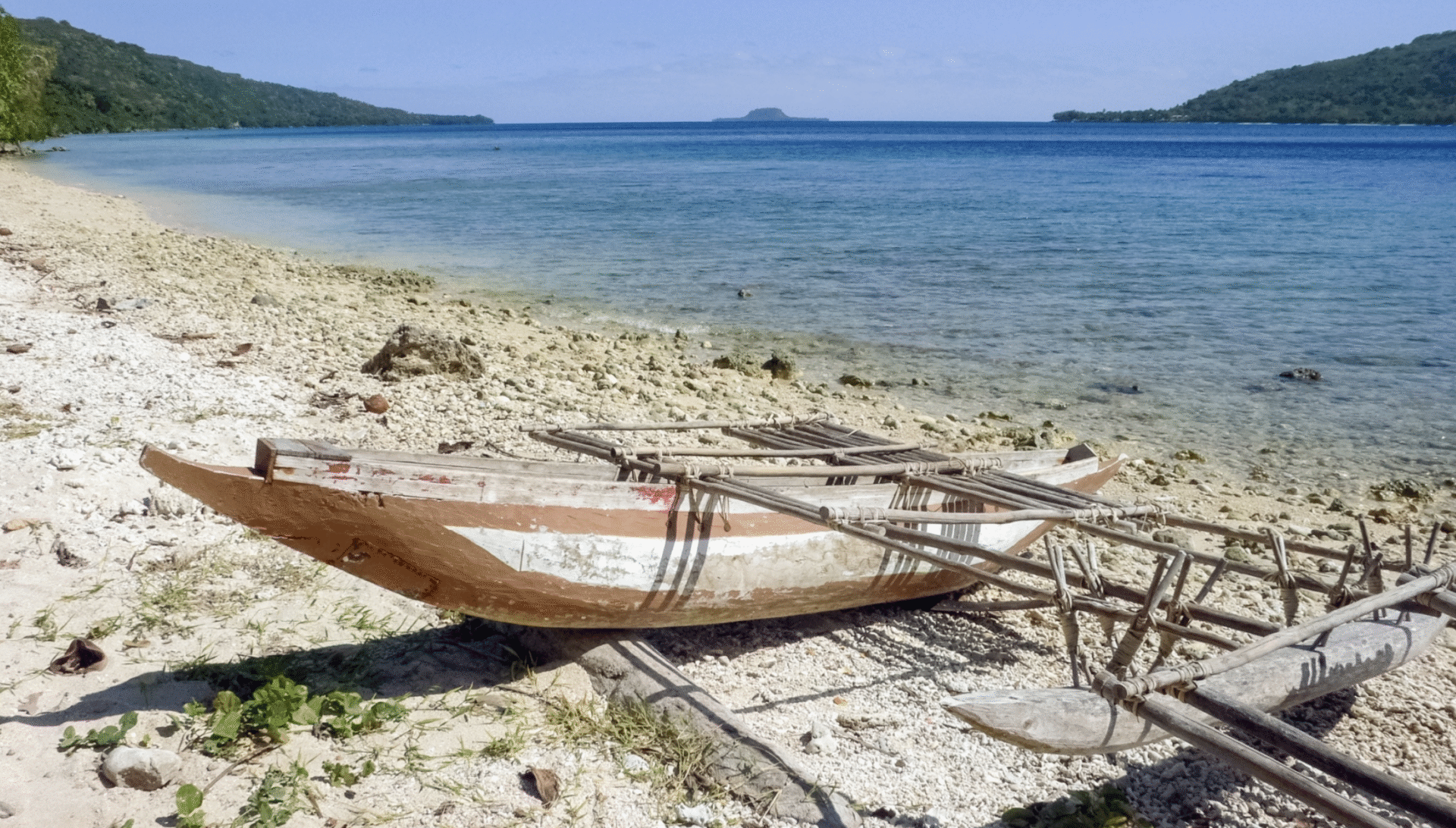
Alongside the establishment of that Ministerial Platform, Four Paddles (core pillars to the development of the Reserve) have also been announced. These include monitoring and managing the ocean, Indigenous-led investment in sustainable ocean economies, sustainable transport and reconnection of island peoples, and deepening knowledge through the integration of modern science with customary wisdom.
“We eat from and live in the ocean, but we have been retreating from it as other ways of life start to dominate,” said the Solomon Islands’ Minister for Environment, Climate Change, Disaster Management, and Meteorology, Polycarp Paea.
“Melanesian Ocean Reserve is a unifying approach that makes sense of the different ways of protecting our ocean. The paddle for knowing the ocean uses science and research to build from our existing ancestral knowledge, rather than replacing it. The transport and reconnection paddle will ensure that our people return to the ocean for transport and movement, filling it up with our life and our attention.”
Meanwhile, the Solomon Islands’ Minister for Fisheries and Marine Resources, Bradley Tovosia has described the significance of the Reserve as an organising framework for realising a sustainable ocean economy.
“Through the ocean transparency paddle, we aim to observe our full ocean space, so we can see who is doing what and leverage our population across the islands in monitoring and reporting. With the Indigenous investment paddle, we look forward to our indigenous Solomon Islands becoming direct participants in the fisheries value chain, instead of being spectators.”


"*" indicates required fields
Printed editions
Current issue
Back issues
Enjoy so much more from Oceanographic Magazine by becoming a subscriber.
A range of subscription options are available.
