Capturing emotion: Ocean Adventure Photographer of the Year, Ben Thouard
Ben Thouard is a French underwater and ocean photographer with a keen focus on capturing the energy and action of ocean adventure found in surfing. A celebrated photographer, Thouard has just produced his third book of photography, a collection in which his winning image features.
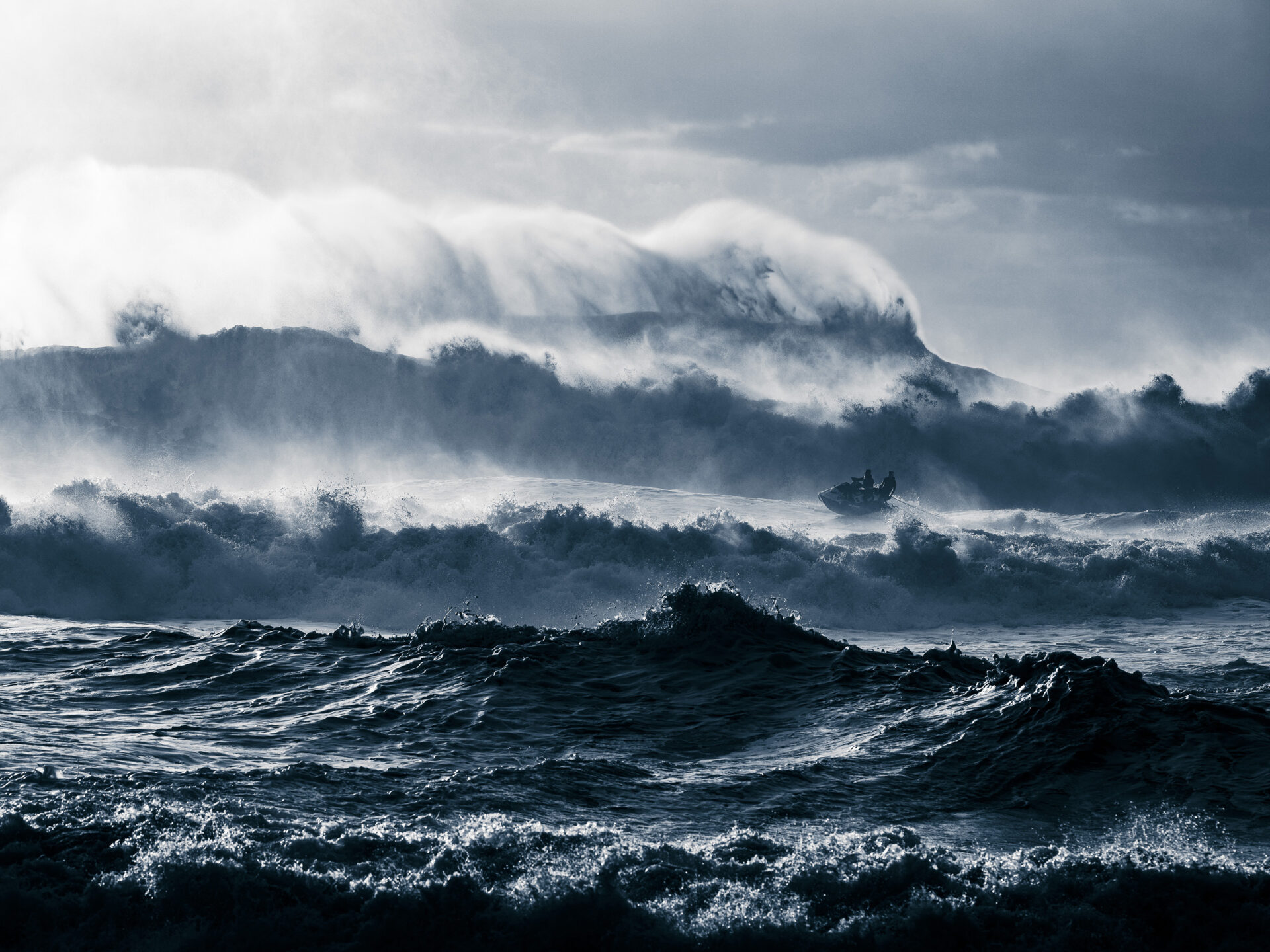
On the shores of Nazaré in Portugal, the French photographer Ben Thouard faced the ocean and started shooting. Waves fifteen metres high threw up seaspray as the light sat behind wall after wall of oceanic energy. Thouard knew he was capturing something special – a moment when both the beauty and brutality of the ocean came together. And out amongst it, a pair of surfers – seeking adventure.
It was the moment that won Thouard the Ocean Adventure Photographer of the Year 2025 – an image celebrated for not only capturing so well the thrill of ocean-going but the vulnerability it has the immense power to leave us all exposed to.
A surfer himself, Thouard has grown up in and around the ocean. We catch up with the talent behind the lens to learn more about his deep connection to it.
OCEANOGRAPHIC MAGAZINE: Hello Ben and huge congratulations on your success in this year’s Ocean Adventure Photographer of the Year. Just to kick off just a bit of reflection piece on when did you first connect with the ocean?
BEN THOUARD: Thank you, Rob. It all started very early for me. My dad had a sailboat and I grew up living on the coast, so I would be sailing with my parents most weekends and holidays. It’s how I became passionate about the ocean. Spending time out at sea on a boat as a child, it teaches you patience and you learn to observe.
Later on, when I was about six or seven, I started surfing with my older brothers and that just made my connection with the ocean all the stronger. I was raised in Toulon on the southeast coast of France so I would see the ocean from my classroom and observe it every day. I found that I needed to have it in my life every day.
As a teenager, I discovered an old camera from my father at home. And for some reason, I got really curious about it. My grandfather was always taking photos, but I had never experienced it myself. When I picked up that old camera, I got really interested in it. I bought a few rolls of film and started taking photos of random things, just learning how the camera worked. Very soon after, I took it to the beach, on the sailboat, and started shooting my friends surfing.
I knew that I wanted to go in the direction of becoming a photographer.

OCEANOGRAPHIC MAGAZINE: Ah wow, so was your grandfather an experienced photographer? Was he photographing the ocean?
BEN THOUARD: No, no, he was just passionate about photos. He’s not a professional photographer but had a passion. It was a long time ago, but I would always see him with a camera and I would always see a camera around… but I’ve never touched it.
OCEANOGRAPHIC MAGAZINE: I like that, the subtle influences that set our course in life… So, with your photography – how would you describe your approach?
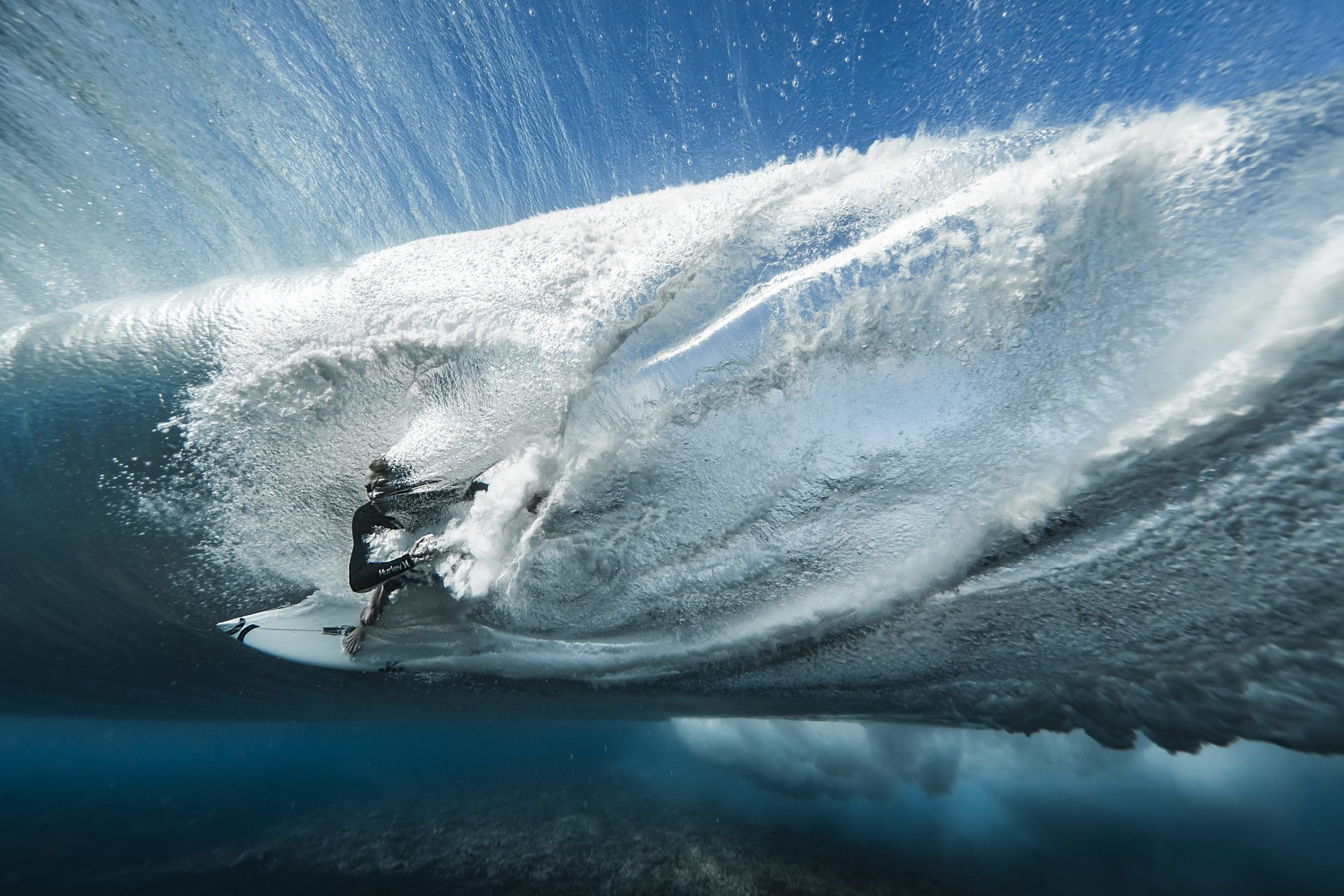
BEN THOUARD: I was really interested in action sports photography at first. I started shooting windsurfing and surfing, and then I moved to Hawaii to start shooting surfing. Then work brought me to Tahiti. That’s how I fell in love with the place and decided to stay there. But I was really attracted by the performance of the athletes and the action and really nailing that moment of the performance. It’s what drove me for the first ten years of my career.
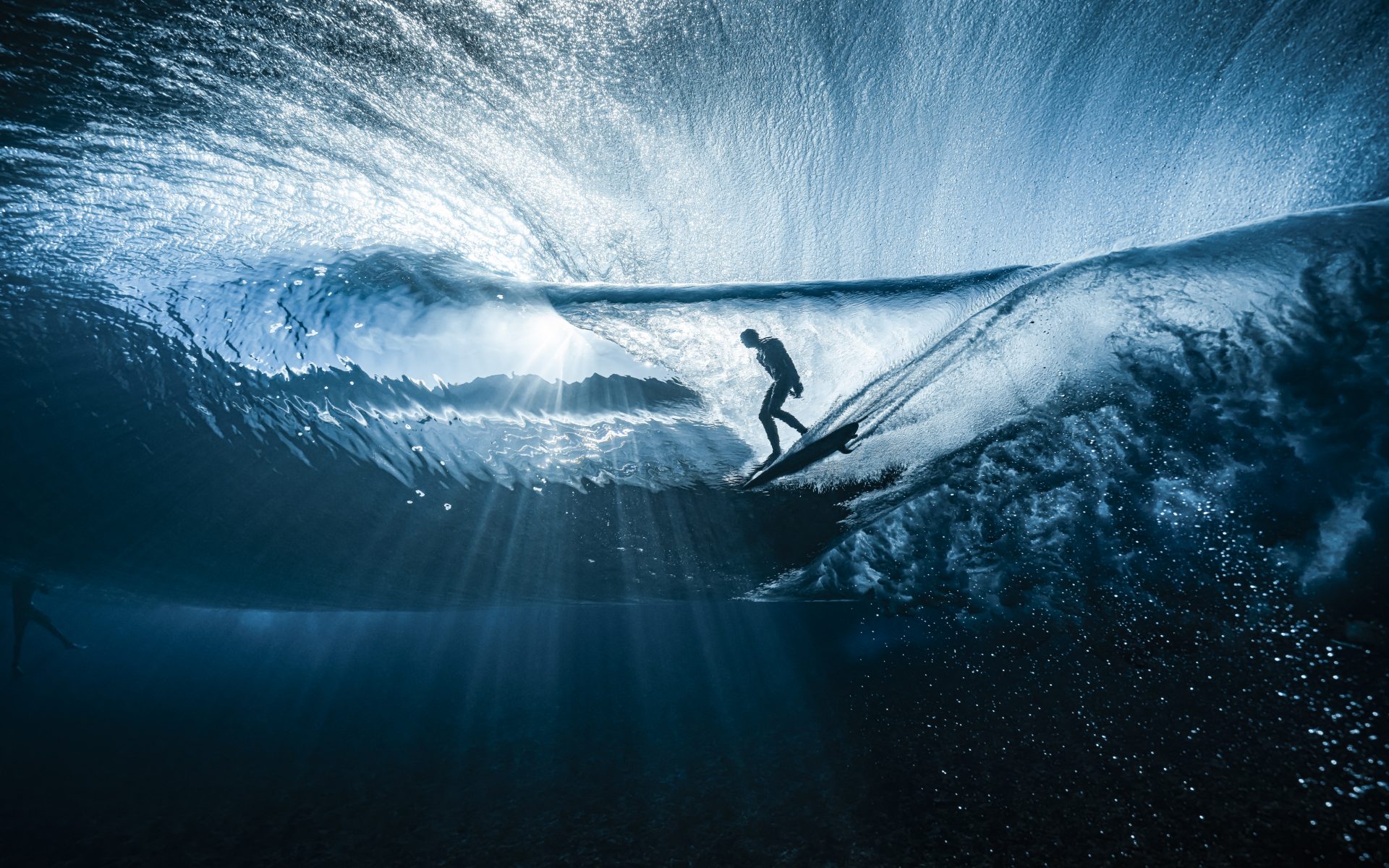
But after a while, something was missing in me. I did a lot of painting when I was young – painting the waves and the ocean. That process of painting and then putting something on the wall was something I really appreciated. And I was missing that in photography. By this time, photography was not being printed that much anymore – it was all digital and website photography. I was missing print and the artistic approach to photography. That’s when I decided to work more and more on my personal project of just shooting waves and water all for the aesthetic.
I started running an online store to sell prints and eventually this all evolved into producing a couple of books. I released my first book Surface in 2018 and the whole thing was a big revelation for me: the process of shooting the whole thing, selecting the photos, designing the book, printing the book, promoting the book, and then getting it into an art gallery in Paris.

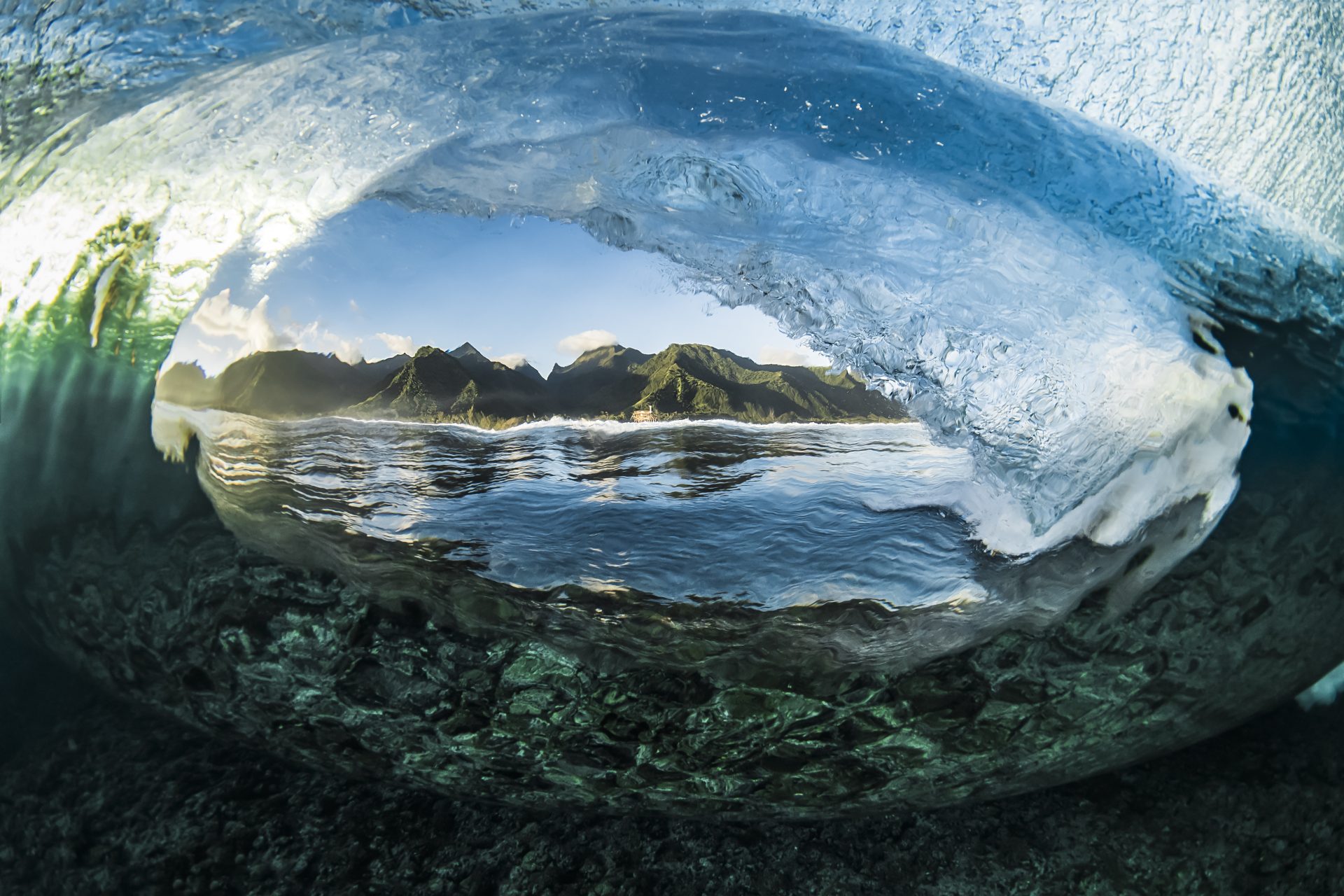
OCEANOGRAPHIC MAGAZINE: That’s very inspiring, and I now have a thousand questions to ask you. But let’s start by asking what that transition then from sports photography to your more artistic approach felt like for you?
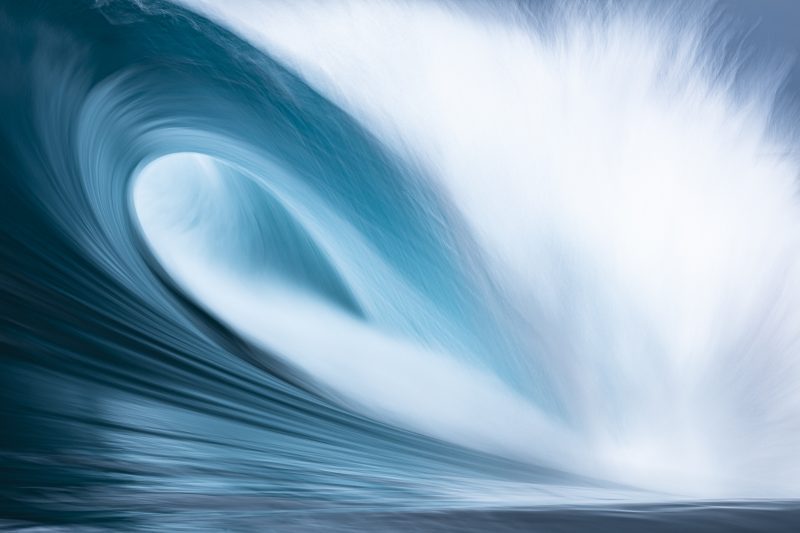
BEN THOUARD: Shooting surfing – or water sports in general – when I started photography taught me all the tricks in photography: observing the light and how you use your different setups to photograph the action. Do you want to freeze it? Do you want to make it live through your photograph, and do like a speed blur effect? Or how do you want to treat the light in your photograph? These are all photographic skills I learned when shooting surfing. Having learned all these techniques, I am now able to use them as I want to really capture the emotion of what I like in the ocean.
That’s what happened in this photograph, my OPY25 winning photograph. I was in Nazaré – which is very famous for big wave surfing. The waves that day were probably around 15 metres high. Justin and Erik, the two surfers in the photograph, were out in the surf and I was shooting from up the cliff. It’s an amazing spot because you have a very beautiful point of view on the waves.
Because it was so bumpy, it wasn’t very aesthetic. But the light was amazing. So I decided to go down to the beach and face the light more. It’s not an ideal point to shoot from because you’re very low and close to the water so you can’t see the horizon and you can’t really see surfing because – as you can see on the photograph – there’s a lot of spray from the wind and the waves. But, facing the light and with this big wind putting the salt water in the air – it creates this beautiful atmosphere. Then I was just lucky enough for Christine and Eric to show up on their jet ski at that time… and that created that photograph.
OCEANOGRAPHIC MAGAZINE: And it’s such a cool photograph, definitely one of my favourites. On the night, Laurent Ballesta – one of the judges this year – talked through the emotions he got from the image, and he used the word ‘vulnerability’. What story are you telling with this photograph?
BEN THOUARD: To me, this photograph shows how adventurous surfing can be. It shows how chaotic surfing can be because of all these layers of whitewater. Having those two people on the jet ski navigating through that chaos is a showcase of the skill you need to be amongst these waves. But it’s also about the beauty of the ocean. Those layers of white water, the salt in the air, the wind; everything together is a mix of beauty and adventure in one frame.
I have a few images of the same scene without the jet ski there, and they are just as beautiful but I do think the presence of the jet ski adds to the composition and shows the scale the whitewater, adding to the depth and the sense of energy.
OCEANOGRAPHIC MAGAZINE: And that all totally comes across in that photograph. I wonder, what impact do you want your photography to have? What’s the message you want audiences to come away with?
BEN THOUARD: To me, it’s really about emotions and beauty. It’s how I feel when I’m out there either swimming or on the beach like that in Nazaré. What drives me to take a photograph is just how amazing a place can be, and how the light can transform a place and the emotions you have for it.
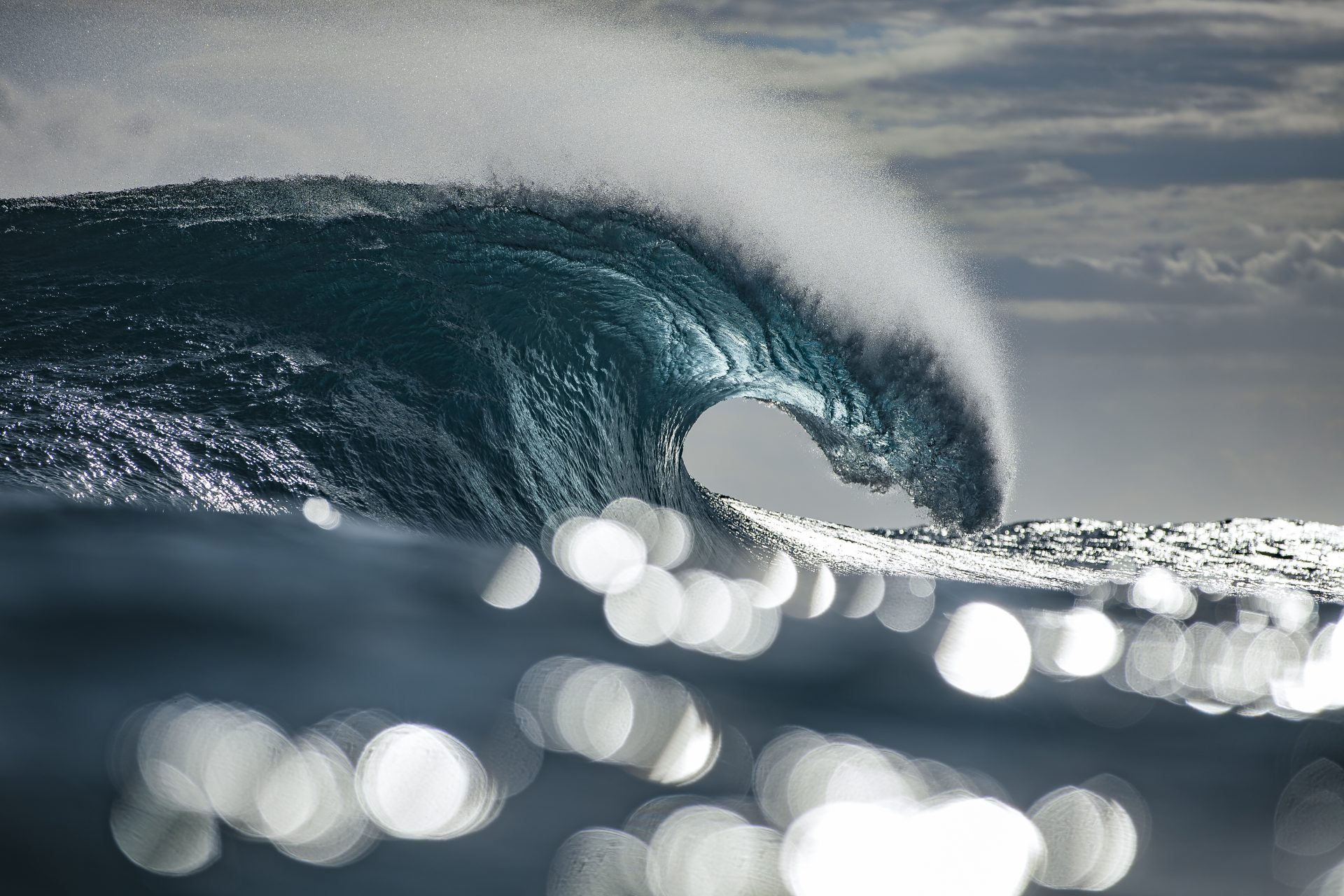
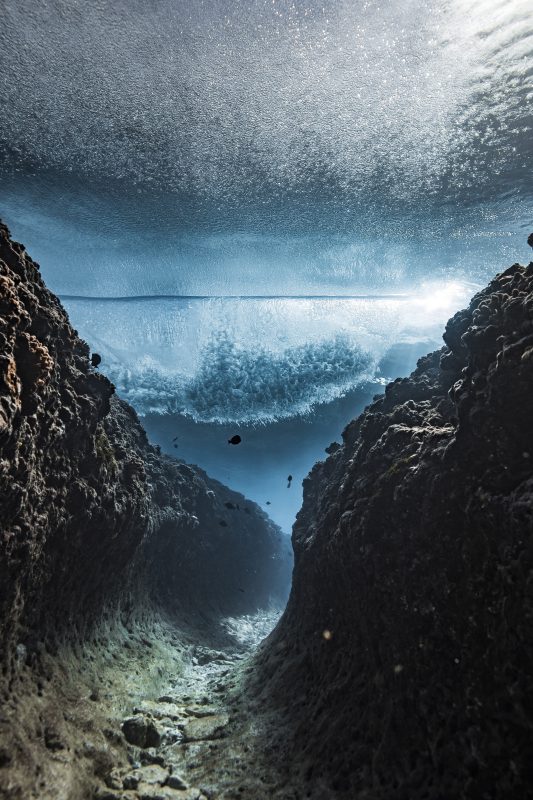
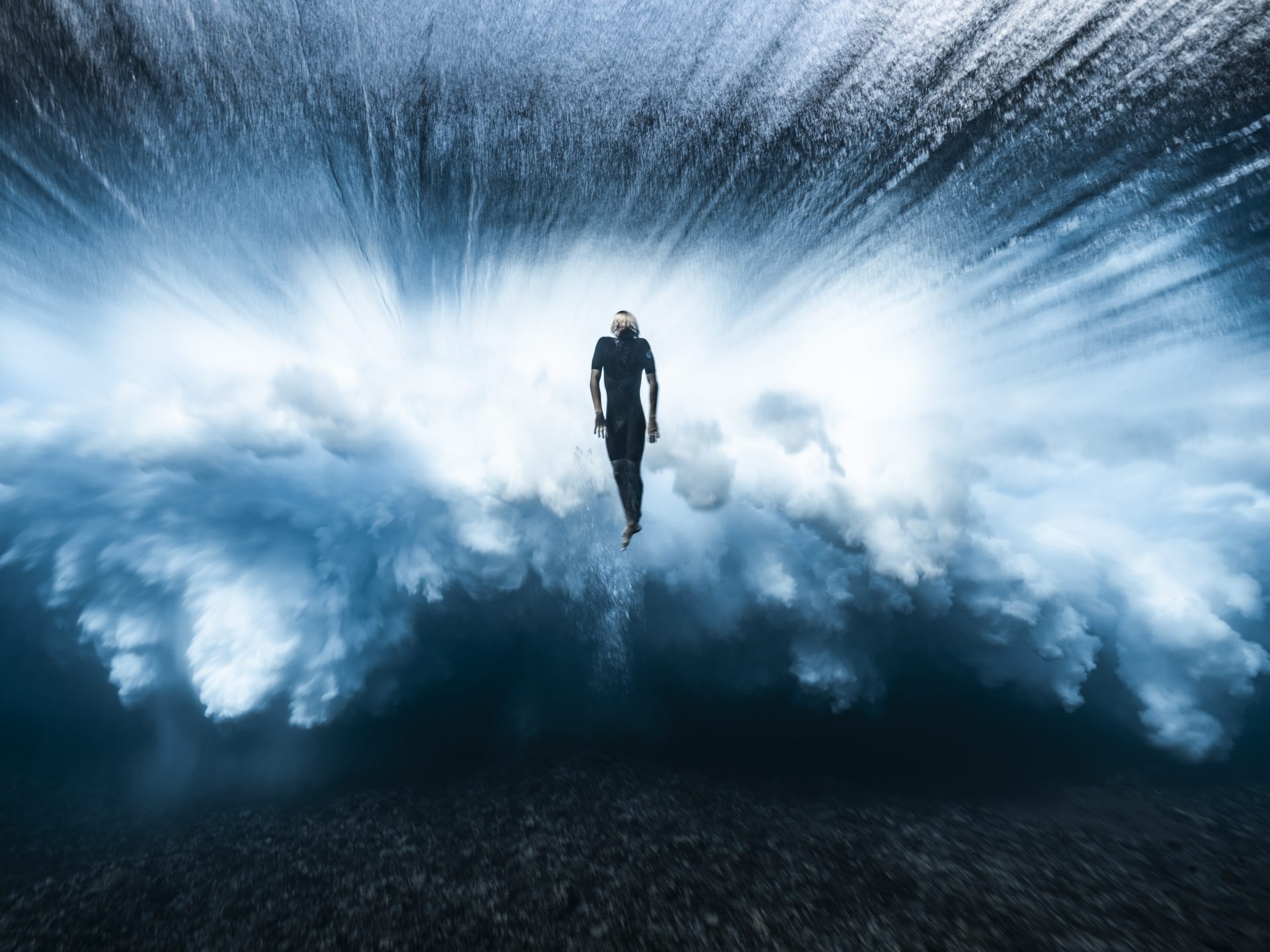
OCEANOGRAPHIC MAGAZINE: So, you have four published books now; three of your own and one published with National Geographic. What is the power of a printed, published book of photography versus someone seeing your photography on a platform like Instagram?
BEN THOUARD: That’s a very good question actually. I think social media is a very good tool to show your work and put your work out there. But showing a book is more like showing a body of work – more than just a single photograph. For me, it’s years of work. But again, it’s more than that – it’s a narrative that you build using different photos – and not necessarily your best photos from the years but those that create and build the story you are telling. My last book, for example, is all about textures and light and I think creating a book forces you to work out the direction you want to take.
For my last book, I wanted to create a blue and white style of photography. It’s not black and white and it’s not colours. So, I have only used custom blue inks to create the whole thing. I’ve put aside all the photos that were maybe shot at sunset or sunrise and have those warmer tones, to work only with white and blue. You don’t have the distraction from the colour. You only focus on the light.
OCEANOGRAPHIC MAGAZINE: Oh, I love that. I must get my hands on your books! In terms of the power of photography then, do you see this as an effective way to engage people with the ocean and encourage them to start protecting it?
BEN THOUARD: Absolutely, yes. Protecting the ocean starts by loving it and loving it only starts when you know it. So photography is a great way – not the only way – but a great way to educate, inform, and show people the beauty of it. And if people fall in love with the ocean, eventually they will be sensitive about it and want to protect it.
I don’t consider myself as an environmentalist, I’m just a photographer doing this for the love of the ocean and the beauty of it. But I think eventually photography can foster that education.
OCEANOGRAPHIC MAGAZINE: We have got to talk about your OPY25 win, congratulations again on your success in the Ocean Adventure category. What does the win mean to you?
BEN THOUARD: Well, it’s so amazing because for me to have won with a photo from my personal work from my very last book that just got released – is very rewarding. You spend so much time and energy working on it, having one of the photographs receive that level of recognition is a very rewarding feeling.
More than this, it allows you to show your work to a wider audience too. I have my audience from the surfing community, from maybe the art community with my gallery, but this allows you to take the work to an even wider audience – people passionate about the ocean.
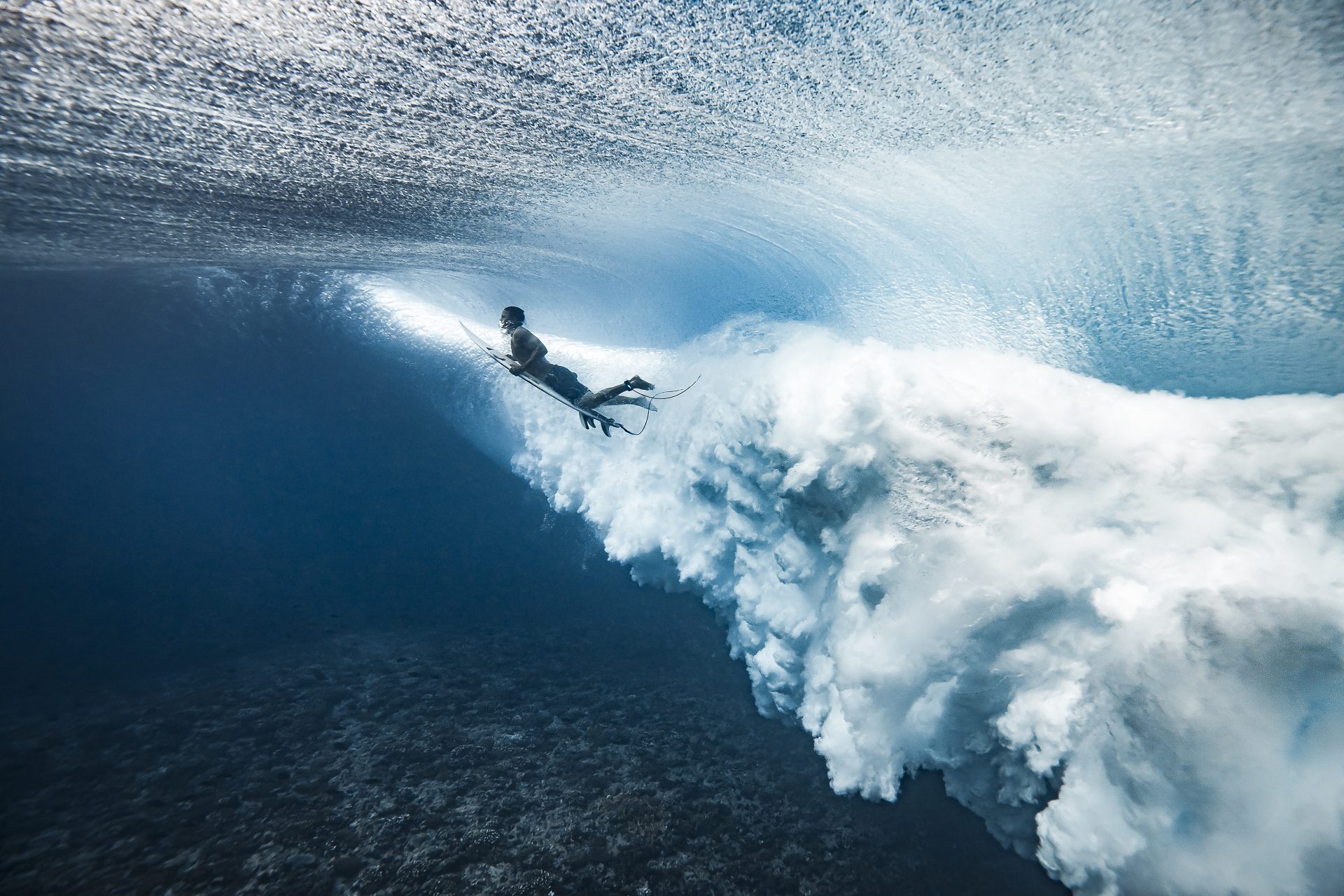
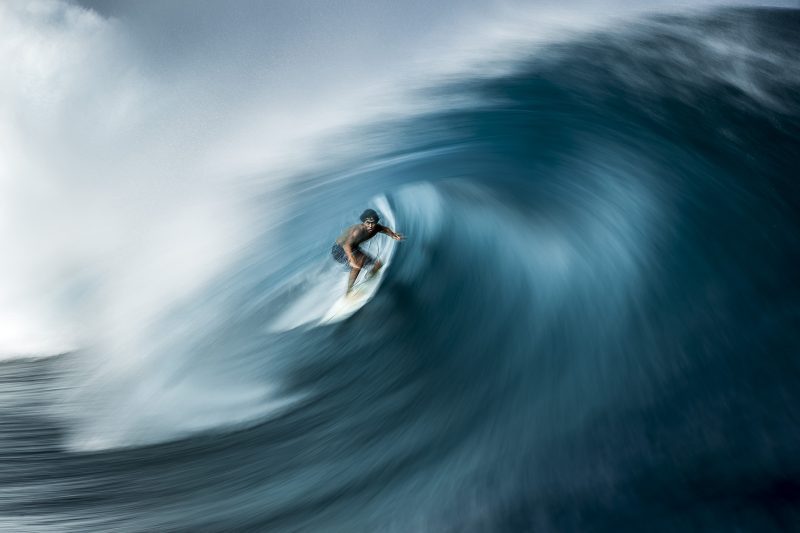
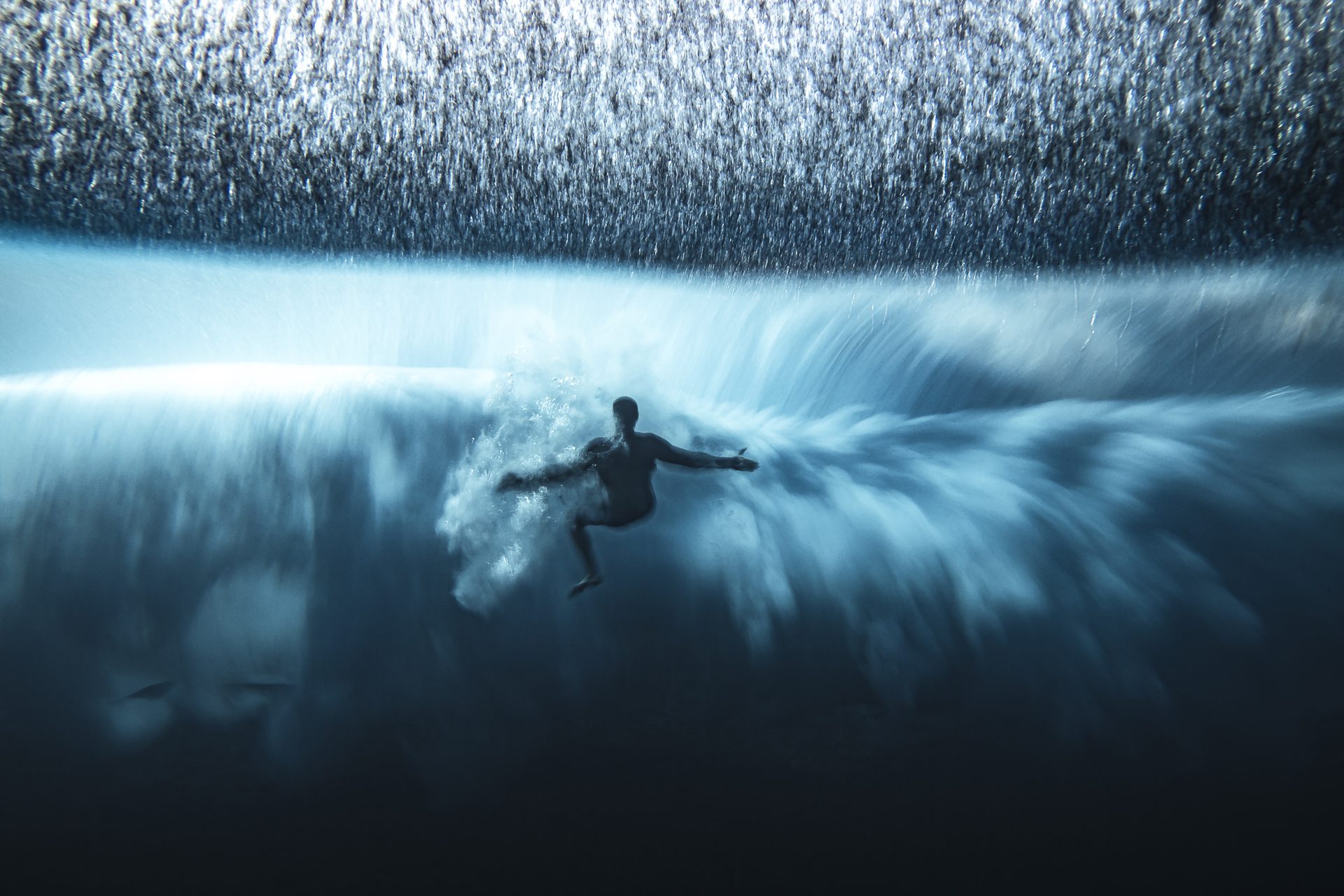
OCEANOGRAPHIC MAGAZINE: Well, you have the award win under your belt and the launch of a new book supported by the gallery exhibition in Paris… You’ve been busy! What’s next for you?
BEN THOUARD: Yes, I feel like these three books are making a whole series – a triptych in Surface, Turbulences, and Aqua Obscura… so I think I will have to find a new way to reinvent myself. I want to keep shooting for books and exhibitions because that’s what I like the most. But I’ll need to find a new subject. That’s why I love photography, because I don’t really enjoy shooting things twice or over and over again. I think this can be something of a strength because it forces you to be curious and dig even deeper to create something new.
OCEANOGRAPHIC MAGAZINE: That’s really interesting. So what is it that keeps you creative or re-energises you creatively? Are there other photographers, other artists that influence you?
BEN THOUARD: I really look up to other photographers in general. I have a few that I really admire. And I really like to buy a lot books. I really enjoy being inspired by someone else’s work. I think it recharges your power of creating.
But just as important is being curious and always going deeper or pushing the boundaries of photography; using different lenses, different techniques, and different approaches. At least, that how these last three books came to be created.
OCEANOGRAPHIC MAGAZINE: And are there any names that you’d like to drop now, as those sources of creativity in you?
BEN THOUARD: There are a lot, but I’ve been really amazed by Ernst Haas – a photographer from the 1950s and ‘60s. He worked with a lot of black and white photography, with slow shutters and transmitting a lot of movement into his work. He has a body of work that is all about colours – which is quite amazing. His subjects are always interesting. But the techniques he was using, back in the ‘60s before digital – I have always been in awe of that.
But there are many talented young photographers today. And pretty much every day of my life I am looking at someone’s work on social media and feeling very inspired by it.
OCEANOGRAPHIC MAGAZINE: Okay, so two questions off the back of that. Is it harder or easier today to do something new – to find a new edge to something? And the second question is, what really captures your attention today?
BEN THOUARD: I get a lot of questions from young photographers asking me how I got started? What can they do? Asking me for advice, and honestly… it’s hard to give them a response. It was very different when I started. When I started, it was the very beginning of digital; I was still shooting on film for a strong magazine industry. I would go out, shoot my photo and then present my ten best to magazines. Then I would get cover, or one spread, or one single page – and you would get paid for that.
It doesn’t happen like this anymore. I think it’s harder to start as a professional because the way the landscape has changed so dramatically. But then again, there are a lot of new tools to use to put your work out there and reach out to companies, athletes, or artists. So, I feel it’s easier to show your work, but harder because there are so many people doing exactly that.
Also, before you used to have art galleries and magazines with photo editors and art directors who would curate photographers and works. Now, this kind of job seems to have disappeared. It’s for everyone now to make their own judgment. Which is great for accessibility… but the landscape is very different today.
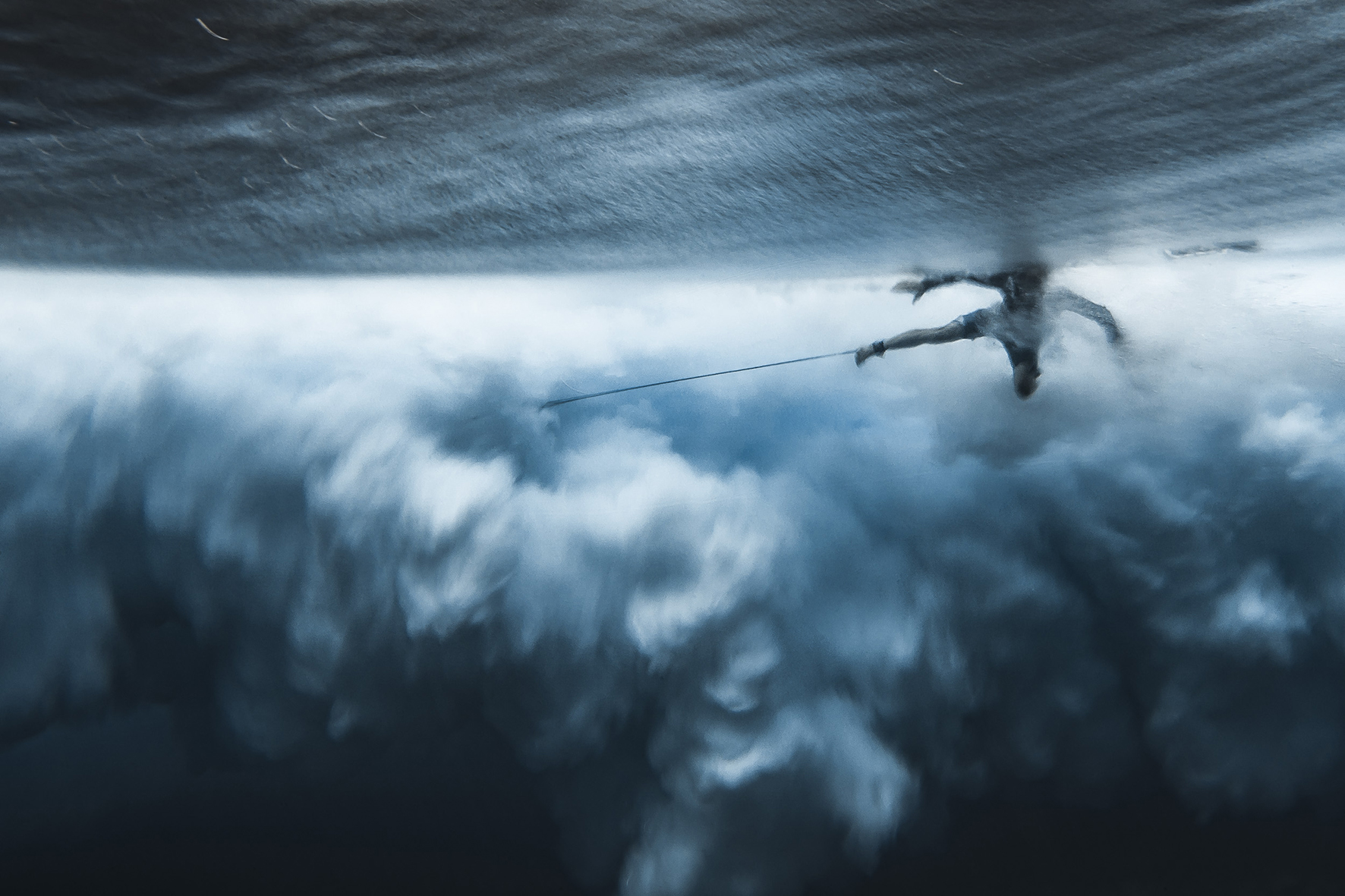

OCEANOGRAPHIC MAGAZINE: And what jumps out at you as something to take notice of today, amid all that noise?
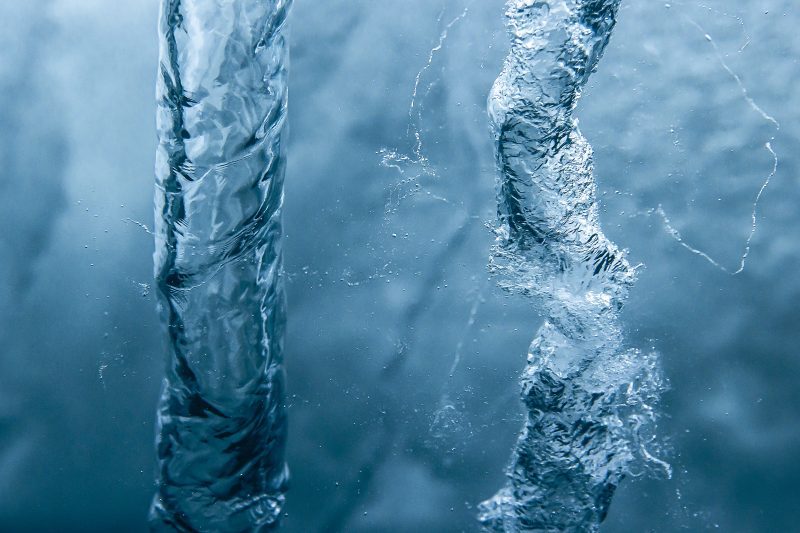
BEN THOUARD: I think it’s really about emotion. It’s really that first look and that first emotion that grabs you. Whatever the technique that’s been used, or whatever the subject is – it can be the most simple of things – there’s a magic with photography that means it doesn’t have to be the most incredible moment in history to be worthy of our time and energy. It’s sometimes very simple. Simple things are amazing.
OCEANOGRAPHIC MAGAZINE: I completely agree. And in fact, all it takes is shifting perspective and you can look into an entirely new world. Just as with ocean photography, it forces you to look at something from a new angle.
BEN THOUARD: Yes, that actually is part of my first book, Surface. There’s a very simple photograph that I took with my camera just below the surface, so you don’t see above. You only see the surface on the top part of the frame, and then all the light rays coming down in the ocean that goes into the deep blue. It couldn’t have been a simpler photograph… but the moment the light pierced the ocean, it brought an entire complexity of emotions, which made it one of the most popular photos in that run.
I remember these moments spent out in the ocean. It’s what you see. It’s how you feel when you’re in the ocean. Being amazed by the water.
OCEANOGRAPHIC MAGAZINE: Ben, that feels like a wonderful sentiment to finish on. Thank you so much for your time.

Printed editions
Current issue
Back issues
Enjoy so much more from Oceanographic Magazine by becoming a subscriber.
A range of subscription options are available.
