Storyteller in Residence 2026: Meet Francesca Page
Francesca Page is a multi-disciplinary visual artist, ocean explorer, and conservation storyteller. Merging underwater photography, photojournalism, filmmaking, and illustration, her work uncovers the overlooked, untold stories of the natural world. She travels the globe documenting vital wildlife stories to inspire positive change and deepen the connection between humanity and the sea.
How excited to have been chosen as Oceanographic’s third Storyteller in Residence?
This is actually my third time applying for the grant, so to say I was excited would be an understatement. At the time, I was in Cornwall on a camping trip with my partner, Liam. We’d travelled down after hearing reports of an octopus bloom, and I had just completed my very first dive with a wild UK octopus. As I climbed back into the van, I received the call.
I think my exact words were, “Holy crap!” I completely lost the ability to speak. It was one of those rare moments when reality takes a second to catch up with you.
With each previous rejection, I chose to use the experience as motivation to grow. Along the way, I sought mentorship from National Geographic photographers Brian Skerry, Amy Vitale and Shane Gross, whose guidance has profoundly strengthened my storytelling skills. Looking back, I genuinely believe everything happens for a reason. This opportunity feels as though it has arrived at exactly the right moment in both my career and my journey as a storyteller.
The moment I hung up, I burst into tears – happy tears, I’d like to add. We celebrated in the only way we knew how, by heading straight back underwater for another octopus-filled dive. It honestly felt as though the ocean was celebrating with us.
What makes this position the dream role or experience for you?
Communicating important ocean stories through visual storytelling has been at the heart of my work for more than a decade, and the Storyteller in Residence grant offers a rare opportunity to do exactly that. Opportunities like this are becoming increasingly uncommon within the industry, which makes it all the more special.
The chance to fully dedicate an entire year to documenting and sharing important ocean stories from around the world, supported by meaningful and incredibly generous funding, is extraordinary. It genuinely doesn’t get much better than that. It is something that you rarely see, so it’s an opportunity you have to jump on!
I’m incredibly excited to continue developing my storytelling skills and, most importantly, to dedicate my time to documenting the ocean stories I’ve dreamt of capturing for so long. The ocean needs storytellers now more than ever, and this opportunity feels like far more than an exciting career milestone. It feels like a responsibility to tell these stories and connect people with the wonders, challenges and importance of our blue planet.
Related features
Can you tell us a bit more about your background in ocean storytelling so far?
It’s definitely not been a linear journey, and it’s been messy, but the main theme has always been my curiosity, my want to learn, my obsession with the ocean, and my need to communicate and capture.
I’d say that my background is very unconventional compared to most people in the industry. I didn’t study marine biology; I studied art and instead taught myself the weird and wonderful world of marine life. Due to my dyslexia, I was told for most of my childhood that I would never even make it to university. Well, I found out that my neurodivergent mind was actually my superpower. I see the world differently to most, and I hope this inspires more people with neurodivergent minds to see that we can go on to do whatever our minds set out to do.
I actually had an intense phobia of the ocean when I was younger, to the point where I wouldn’t even go in a swimming pool because I believed a shark would literally come and gobble me up. I have always been obsessed with nature, though, and I spent most of my childhood drawing tigers and apex predators. Now you’ll see that all I draw is sharks.
When I was 13, my dad got me scuba diving lessons in a swimming pool for my birthday. That moment completely changed my life. Underwater, I felt weightless, peaceful and calm. For the first time in my life, I didn’t feel like I was being judged by the world. When you’re underwater, it is this magical place where you can just be you. You can be your authentic self. That experience led me to eventually dive in the ocean for the first time, and that was really the start of my obsession and hyper-fixation with the ocean.
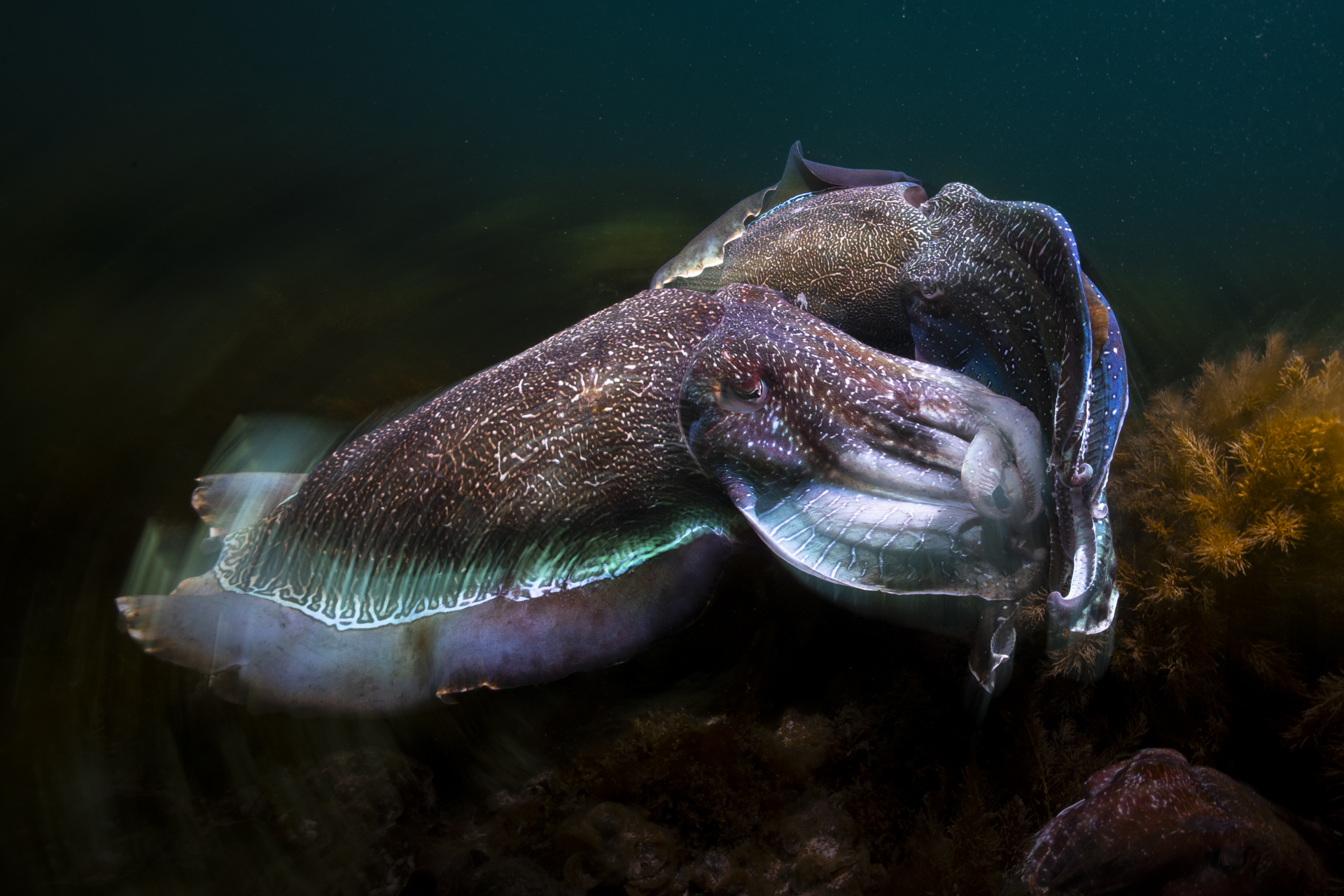
I then went on to study illustration at Camberwell College of the Arts in London, where I specialised in visual communication and how art can help save our changing planet. After I graduated, I saved up all my pennies and went to Indonesia, where I did my divemaster and became an open water scuba diving instructor. This was quite a pivotal moment for me. I bought an Olympus TG-5 because I really wanted to take photos of fish so I could draw them – I’d grown frustrated with the images I’d found on Google or in textbooks – and it led me down this very slippery slope of obsession, of love, of realising that I can create art above and below the waves.
Over the past couple of years, I’ve dived deeper into my photography journey. I worked as an underwater photographer in Ningaloo Reef in Australia, which was quite a pivotal moment in my journey. It allowed me to actually get in the water most days, to practise my skills. This led me to start pursuing a serious career as a photographer and photojournalist, and since then, I have been very lucky to travel the world capturing important ocean conservation and wildlife stories for NGOs and other magazines, which then led me to the stage in my career that I am at now.
What about the ocean has compelled you to tell its story?
I feel compelled to tell the ocean’s story, partly because I have experienced an intense phobia of it. I used to have such a misunderstanding of the ocean, and I feel like this is something incredibly relatable to so many people on this planet.
I’m in an ocean bubble now, and a lot of my friends love the ocean, but sometimes I pop that bubble and step out into the general public. I realise that some people are still terrified of sharks and the ocean, and think that UK waters are barren, which makes me realise that the ocean needs us more than ever before.
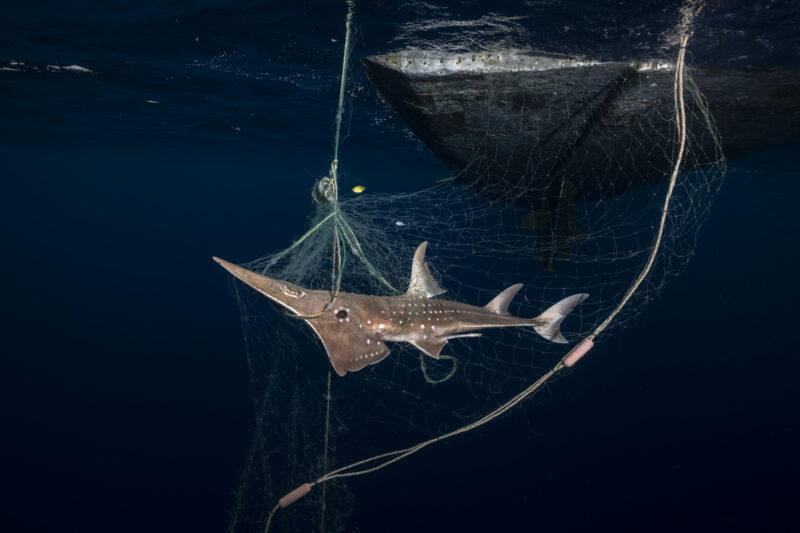
Every second breath we take comes from the ocean. It is vital to our survival on this planet. While most people probably view the ocean as this vast blue desert, there is an incredible world below the waves, and more than ever before, it is our duty as storytellers to shine a spotlight on it. That means shining a light on the beauty below the waves, but also, at the other end of the spectrum, the destruction that is taking place.
What do you think is important in storytelling?
When I’m out in the field, I always ask myself the question: how is the story making me feel? How is this moment making me feel? I often lean on my skillset as an illustrator to inject that feeling into my storytelling. An illustrator’s job is to take complex information, data, storytelling and feeling, and turn it all into one single drawn image. That skill has come in handy while out in the field.
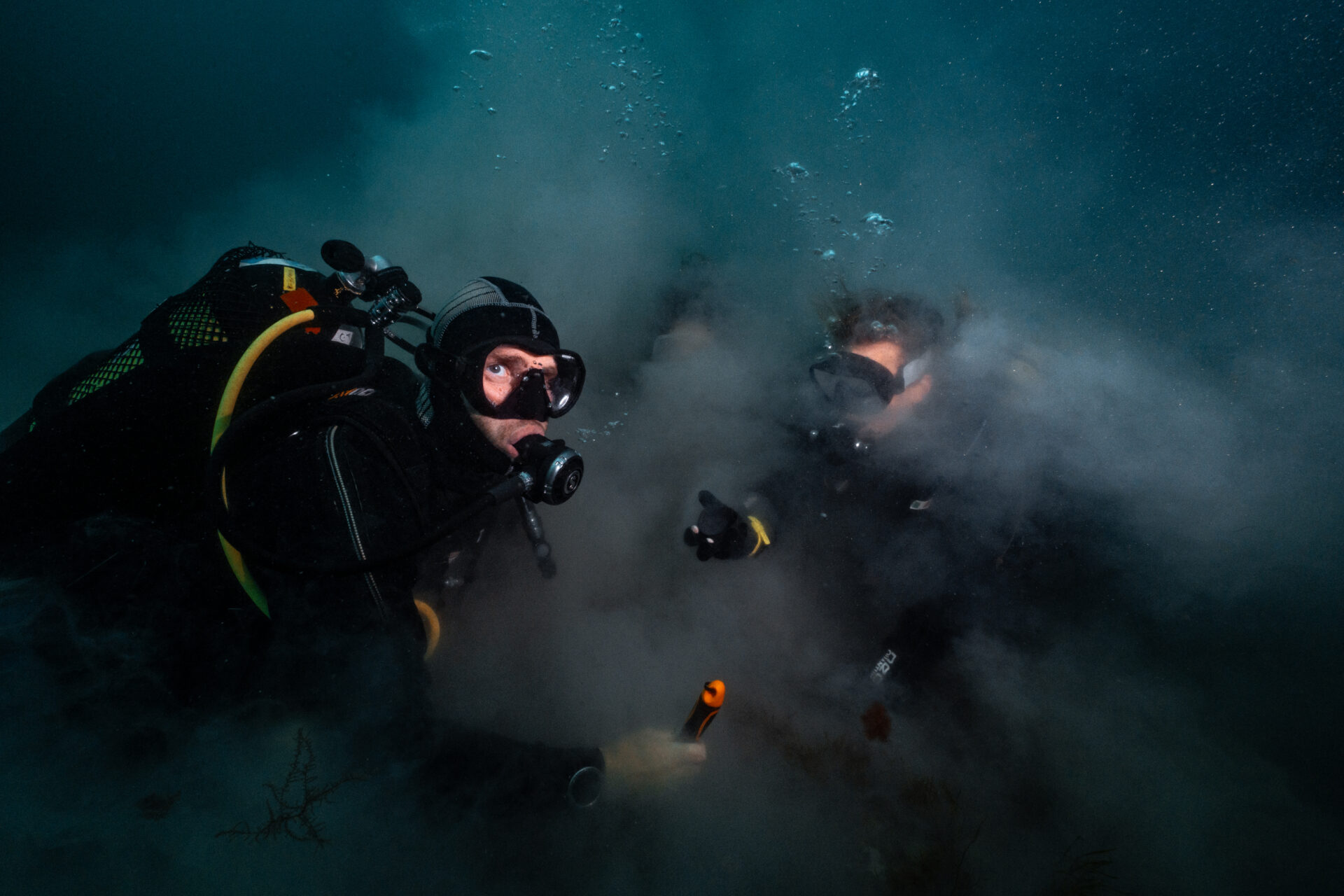
When I was capturing Blue Marine Foundation’s Convex Seascape Survey, I had to capture a subject that is impossible to photograph. Blue carbon is invisible, and mud is the most unsexy subject matter; however, this is a challenge I was excited to take on. If my work could make someone want to learn more about the wonders of carbon stored at the bottom of the seafloor, then I have done my job as a storyteller. So I remember asking myself the question: okay, if I was to illustrate this, what would I do? Well, I’d take the sediment and I’d draw blue coming out of it to represent blue carbon, quite literally an invisible element. And for my photography, I chose to use light painting, using long camera exposures and moving light sources to “draw” light patterns.
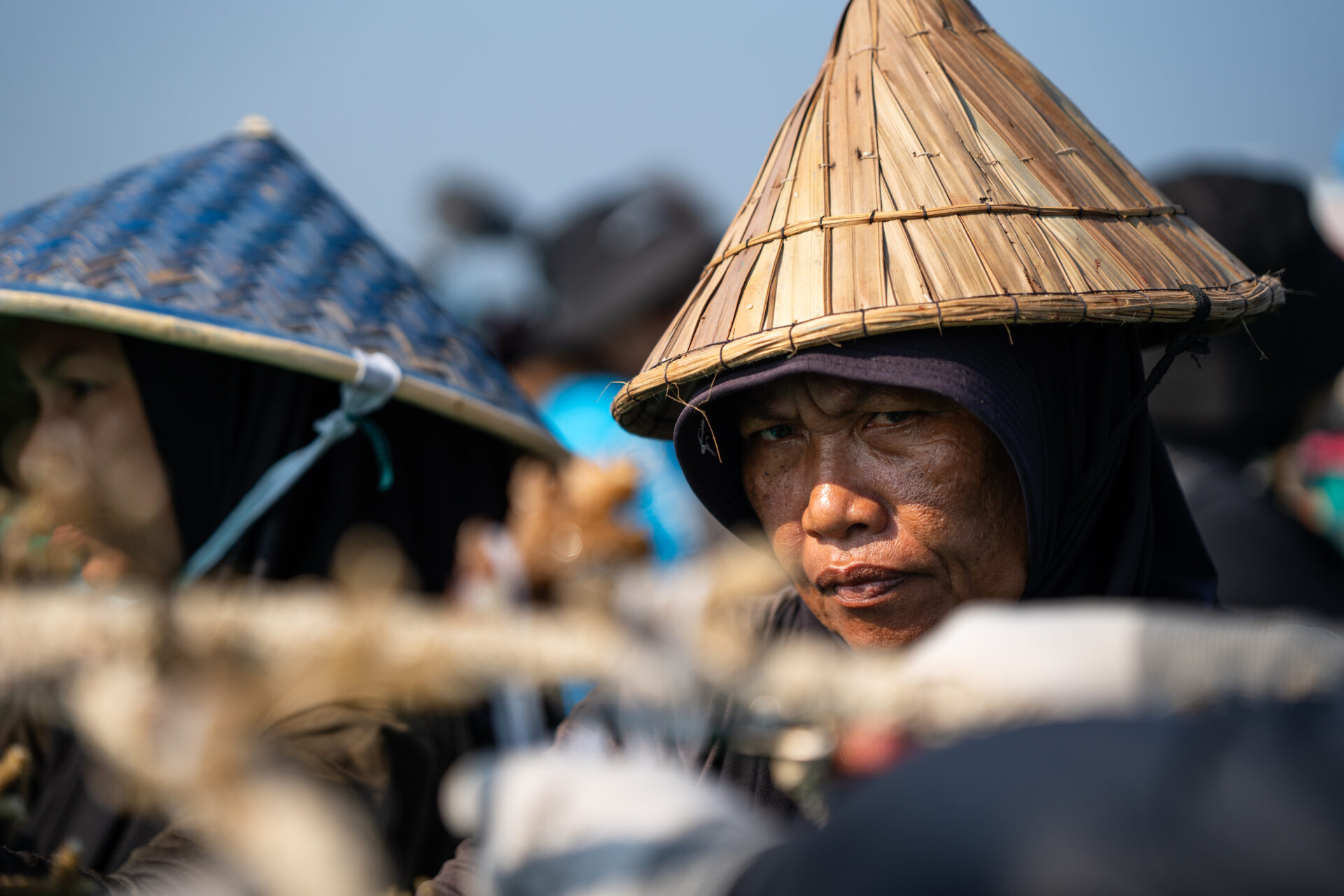
I also think the humans on the frontlines of conservation are important characters in helping people feel connected with conservation, and so that’s something I’ve been really exploring with my work over the years, putting a lot more of a spotlight on the human side of the story.
I do believe that what makes me different from a lot of other conservation photographers is my artistic and visual communication background. I see everything from outside of the box, and through years of practice have got to a point where I can take complex information and turn it into something visually exciting, and I hope imagery that makes someone excited, ignites curiosity, and educates people about important stories and topics. I have an immensely creative mind, and I’m able to use a lot of different tools and mediums to bring a story to life and make people feel something. My creativity is something that I am very proud of; it is my superpower!
Without giving too much away at this early stage, what can readers expect from you over the coming 12 months?
It is going to be one wild year, and I am very excited to bring people along with me. I have some epic and important stories planned. I am especially excited to meet the people on the front lines of conservation doing the hard work, those who are out there day in, day out, risking their lives, giving their time, and dedicating themselves to protecting habitats, species and communities. I’m very, very excited to connect with more people around the world.
From the stories I’ve covered in the past, I often set out to focus on a species but come away with the human stories. That is what resonates with me most deeply. At the end of the day, people connect with people, and it is through human connection that I believe we have the greatest chance of saving and protecting species.
I also have an obsession with migration. I find it fascinating that animals gather, sometimes for reasons we don’t yet fully understand but also for communication, relationships, reproduction, protection and feeding, among others. I want to explore why they do this, and document these migration patterns and mass congregations.
Nothing is set in stone, and as is often the case in this line of work, plans can change. One potential location is the Azores, which I genuinely believe is one of the most beautiful, magical places on Earth. It is a string of volcanic islands where the soil is black, the water is an intense blue, and visibility can exceed 100 metres. It is also home to some of the ocean’s most incredible apex predators. As a huge elasmobranch enthusiast, to me the Azores is elasmobranch heaven, and I’m hoping to encounter blue sharks, mako sharks, mobula rays and whale sharks, among others.
As many people in this field will know, things don’t always go to plan, so I’m also curious to see how the year unfolds, the highs and lows, the challenges and the unexpected moments of magic. It is going to be a wild journey, and I look forward to bringing people along with me.
What kind of an impact do you hope your work will have?
I’ve been thinking an awful lot about this, especially since finding out that I’ve been awarded the SIR grant. I don’t want to just take beautiful photos for the next year. That’s great and would of course look fantastic in the magazine, but it’s not my end goal.
I am more focused on: would my work be able to allow funding to happen for a project? Would my story be able to show a government in a particular country why we need to create a Marine Protected Area? I hope that my work can also shine a light on the stories and voices from around the world that need that spotlight; on the people who are not Instagram famous, who are not singing and shouting every day about the amazing work they’re doing, but are just quietly working away behind the scenes.
I also hope to create images that make people stop in their tracks, inspire curiosity, and make people start a conversation. If someone can look at my images, go home and have a conversation with their family at dinner, that’s how the ripple of change happens, the butterfly effect.
While I’m out in the field, that question of impact will run through everything I do. I will constantly be looking for those moments: those nuggets of information, those snapshots that I feel are going to help change mindsets, or shine a spotlight on a misunderstood creature, habitat, person, or NGO project.
Francesca, we are so excited to have you on board as our Storyteller in Residence and cannot wait to follow your adventure.

Printed editions
Current issue
Back issues
Enjoy so much more from Oceanographic Magazine by becoming a subscriber.
A range of subscription options are available.