Bubble-net feeding, the humpbacks' "very particular set of skills"
Light shed on the biomechanics behind bubble-net feeding strategy reveals that among the seven species of baleen whales alive in the ocean today, only the humpback is capable of the "high-performance" turns the signature feeding method requires.

Eyebrows have been raised and light has been shed on the biomechanics behind the iconic bubble-net feeding strategy to reveal that among the seven species of baleen whales alive in the ocean today, it is only the humpback capable of the “high-performance” turns the signature method of feeding requires.
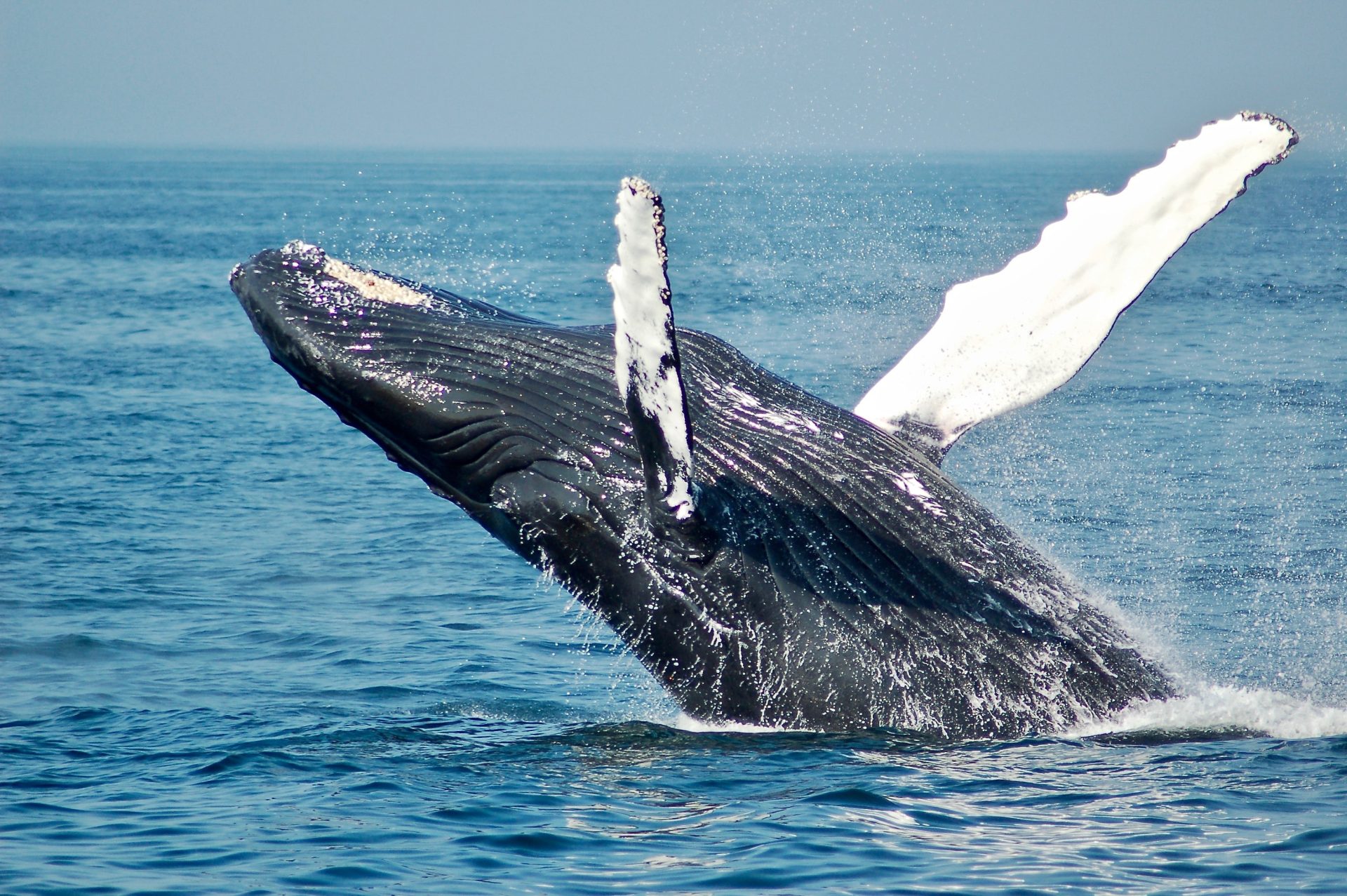
Led by the recent University of Hawai’i at Mānoa graduate, Cameron Nemeth, the new study has revealed that it is by making use of their unique pectoral flippers, that humpback whales can adopt the feeding strategy.
Solitary bubble-net feeding is a complex foraging strategy by which humpback whales release bubbles in a ring to corral prey. By combining data from drones and non-invasive suction-cup tags, Nemeth and a team of researchers from UH Mānoa Hawai’i Institute of Marine Biology’s Marine Mammal Research Programme were able to accurately quantify the turning performance required for this manoeuvre.
“The fact that humpback whales’ pectoral flippers enhance their manoeuvrability wasn’t the most surprising part of our study, as there have been previous studies on the morphology of these flippers,” said Nemeth. “However, it was shocking to discover that among thousands of turns from a variety of behavioural states, no other species of whale examined were achieving the turning performance required to create a bubble-net.”
The research indicates that the humpback whale’s large pectoral flippers can generate nearly half of the force needed to turn, making them highly efficient at this feeding strategy. Other whale species, even if physically capable of similar turns, would need to expend significantly more energy, likely making the strategy energetically impractical.
However, the humpbacks’ special body shape allows them to successfully hunt smaller or scattered groups of prey.
“This is a great example of a collaborative research project that took advantage of datasets from 28 different research organizations across six countries,” said Lars Bejder, research professor at HIMB, principle investigator of MMRP, and co-author of the study. “These sorts of initiatives are able to address questions that otherwise would be very difficult to answer.”
In other news


This research is significant for Hawaiʻi, as humpback whales fast while in the islands, relying on the energy reserves they build up on Alaskan feeding grounds. Understanding the efficiency of their foraging techniques is crucial for assessing their overall health and energetic needs, which will ultimately impact their stay in Hawaiian waters.
Nemeth led this large-scale project during his final semester as an undergraduate student at UH Mānoa. He will be continuing his research with the MMRP, transitioning to a PhD program in fall 2026 to lead the lab’s ongoing humpback whale project in Maui.
In a move to increase the availability of scientific literature in the Hawaiian language, Nemeth also worked with the journal to include a Hawaiian-language abstract for the paper. He translated the abstract himself and worked with a Hawaiian language professor to edit the text, setting a precedent for future publications from the lab.
Funding for this study was provided by UH Mānoa, the Omidyar Ohana Foundation, and the Lindblad Expedition–National Geographic Fund. Equipment was provided through a Defense University Research Instrumentation award from the U.S. Department of Defense.
The research paper – The key to bubble-net feeding: how humpback whale morphology functionally differs from other baleen whales – has been published in the scientific journal, Journal of Experimental Biology.


"*" indicates required fields
Printed editions
Current issue
Back issues

Enjoy so much more from Oceanographic Magazine by becoming a subscriber.
A range of subscription options are available.
