Whale communication has parallels to human speech, study finds
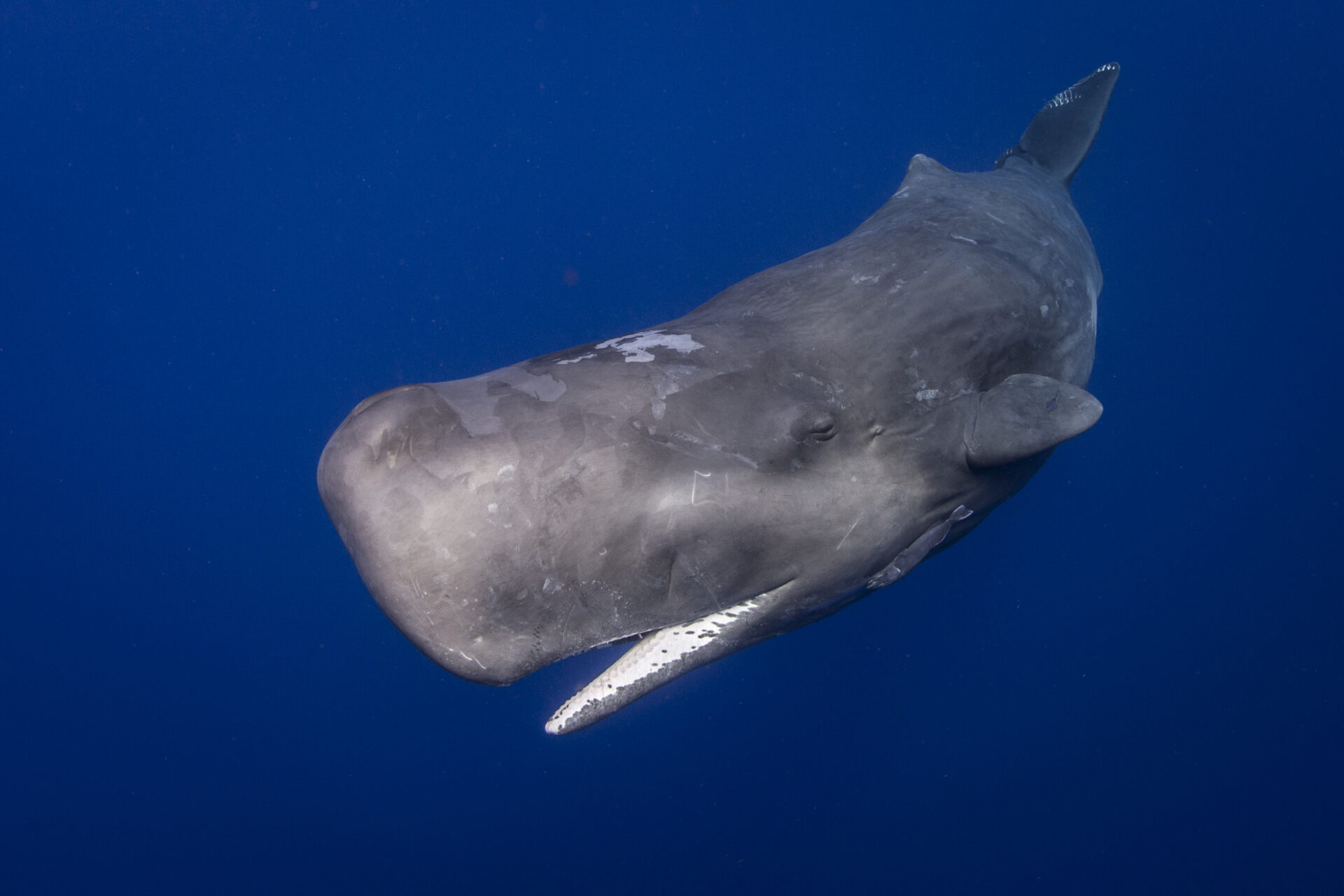
Whale communication might sound worlds apart from humans, to our ears the powerful clicks they use sound more like repetitive mechanical taps rather than discernible conversation. But scientists have discovered that their pattern of language is much more similar to our own than we once thought.
Scientists at Project CETI (standing for Cetacean Translation Initiative), have been studying whales off the coast of Dominica in an attempt to find out what they are saying.
They previously found that their sperm whales’ clicks, known as codas, resemble human vowels acoustically, and this new research suggests that how they organise these codas has parallels with human speech.
Details of their work are published in a paper in the journal Proceedings of the Royal Society B: Biological Sciences.
The team studied nearly four thousand codas from a huge dataset of whale sounds. They focused on 15 female and young sperm whales off the coast of Dominica in the Caribbean. Mature males were excluded because they tend to live alone.
They then looked at the shape of the structure of these clicks, the shape of the sound waves, the frequency of peaks in the sound spectrum and measured the timing between every single click.

In other news




They found that sperm whale codas have five features similar to human patterns and organisations of speech.
They identified a-codas – which are naturally longer – and i-codas, which can be both short or long.
They also found that when a whale moves from one coda to the next, the first click of the new sound sometimes matches the sound quality of the previous or following coda.
This is similar to coarticulation in human speech, where our mouths prepare for the next sound while still finishing the current one.
For example, when saying the word “spoon,” a human’s lips will begin to round for the “oo” sound while they are still pronouncing the “s,” physically blending the two sounds together.
Individual whales also have their own unique timing, meaning some click faster, and some click slower, than others.
Whales can create thousands of possible combinations of these features scientist identified, suggesting a rich communication system.
The impact of this discovery could be enormous.
Project Ceti has set a goal of being able to comprehend 20 different vocalised expressions, relating to actions such as diving and sleeping, within the next five years.
The more we learn about whale communication, the closer we might be to being able to decipher their clicks and understand what these deep-sea giants are saying to each other.
Click here for more from the Oceanographic Newsroom


"*" indicates required fields
Printed editions
Current issue
Back issues


Enjoy so much more from Oceanographic Magazine by becoming a subscriber.
A range of subscription options are available.
