Diet plan? For the great hammerheads, it's shark-eat-shark
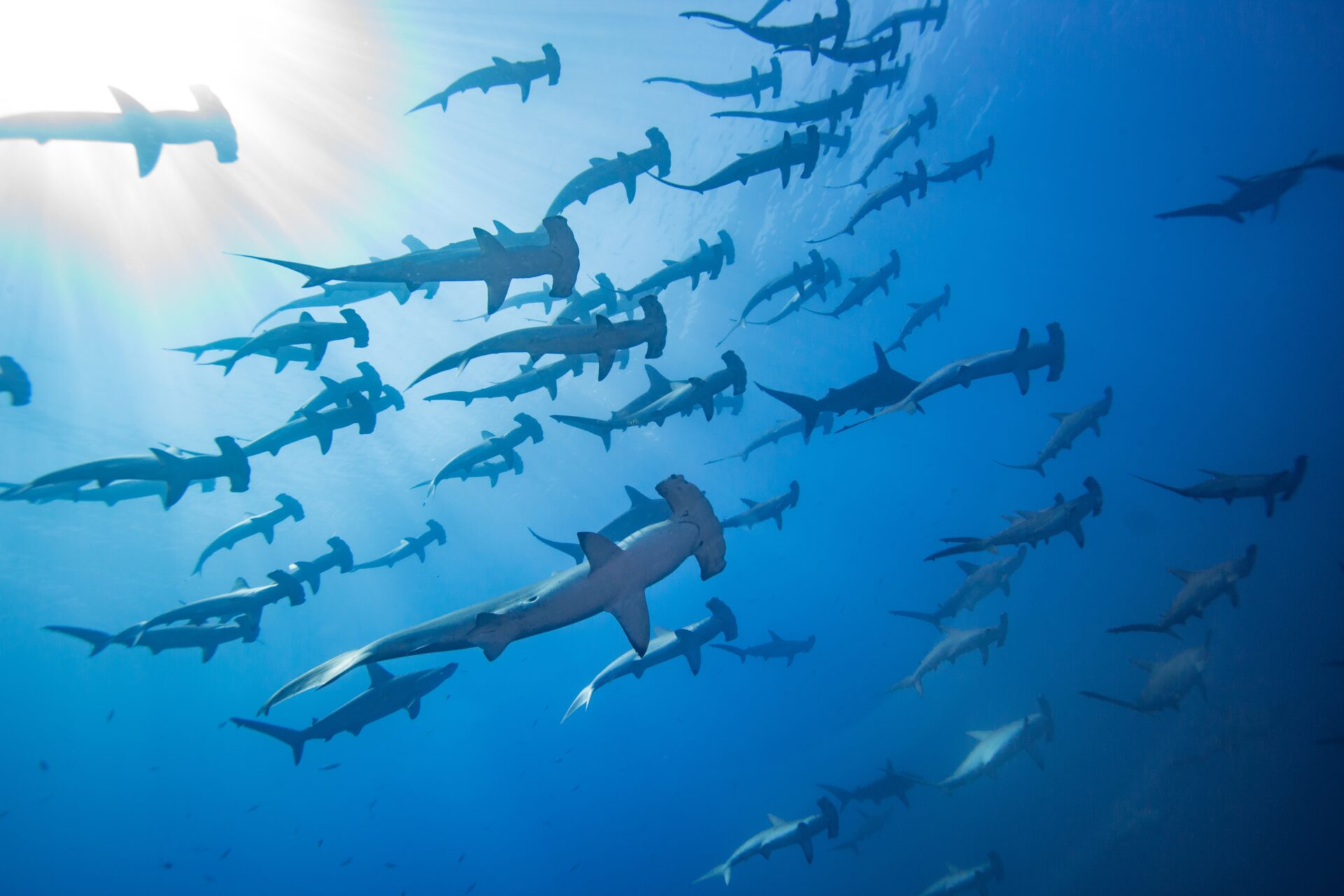
The great hammerhead’s approach to feeding time is high-risk but high reward. While many sharks hunt for small, abundant prey when looking for a meal, the great hammerhead tends to go supersize - preferring the taste of other sharks, including blacktips.

When it comes to the great hammerhead, it’s a shark-eat-shark world; a dietary preference among the species which, while it has – for a long time – been observed by marine biologists, has been little understood. Until now.
The great hammerhead’s approach to feeding time is high-risk. While many sharks hunt for small, abundant prey when looking for a meal, the great hammerhead tends to go supersize – preferring the taste of other sharks, including the aggregations of blacktips during their seasonal migrations off Florida. But with risk comes reward.
New research in the journal Oecologia reveals great hammerheads may gain significant energetic advantages by preying on large targets like large fish, rays, and other sharks.
It’s according to the paper’s lead author, Erin Spencer of Florida International University, that by consuming a whole blacktip shark once every three weeks during those periods of blacktip abundance, the great hammerhead would then have the energy to survive the two-month period of low blacktip density without starving to death.
“In order to help protect critically endangered species like great hammerheads, we need to understand their underlying biology and how they interact with their environment,” said Spencer. “It’s important that we continue to study these big questions, especially in the face of a changing ocean.”
Spencer conducted the research alongside Florida International University’s Yannis Papastamatiou, one of the world’s leading shark behavioural ecologists as well as a team of international researchers. They used advanced biologging technology to better understand the foraging behaviours of great hammerhead sharks – a species known not only for their distinctive hammer-shaped heads but also their impressive size. Some adult great hammerheads have been recorded to reach as much as 20 feet in length.
By mounting data-collecting devices on these hammerheads, the scientists were able to record speed, sonar, and video data to reveal the swimming speeds, metabolic rates, and prey encounters of the sample sharks.
This data was then used to build detailed computer models, comparing the energetic costs and benefits of hunting different prey types. It was these results that the researchers found most striking.
In other news



The models predicted that a 250-pound great hammerhead would only need to consume one 55-pound blacktip shark roughly every three weeks to meet its energy demands. This single large meal could sustain the hammerhead for up to two months during periods when blacktip shark populations are scarce.
In stark contrast, if the hammerhead were to rely on smaller reef-associated fish, it would need to catch one or two 2.2-pound fish every single day to sustain itself.
“Animals must make careful decisions regarding how and what to hunt,” said Papastamatiou. “Do you go after large prey and have more energy but are harder to catch? Or should you just go after any potential prey you encounter?
“Here we apply these ideas to an incredible predator, the great hammerhead, and provide insight into why they might target large prey like other sharks or rays.”
Facing threats from overfishing and habitat loss, the great hammerhead shark is classified as critically endangered globally by the International Union for the Conservation of Nature. Knowing their specific dietary needs and preferred hunting grounds is vital for developing effective conservation strategies that ensure their long-term survival.
This study has also gone lengths to showcase the power of modern biologging and modeling techniques in studying large, difficult to observe marine animals.
The research ‘Energetic benefits of prey choice for a shark-eating shark’ is now published in the scientific journal, Oecologia.


"*" indicates required fields
Printed editions
Current issue
Back issues



Enjoy so much more from Oceanographic Magazine by becoming a subscriber.
A range of subscription options are available.
