Do whales grieve? Rare humpback observation offers first clue
Griffith University and Sea World Foundation researchers document a humpback whale mother's prolonged attendance to her deceased calf off the Gold Coast, offering rare insight into grief in baleen whales.
Humpback whale mothers may experience grief when their calves die, according to a rare research observation led by Griffith University and Sea World Foundation.
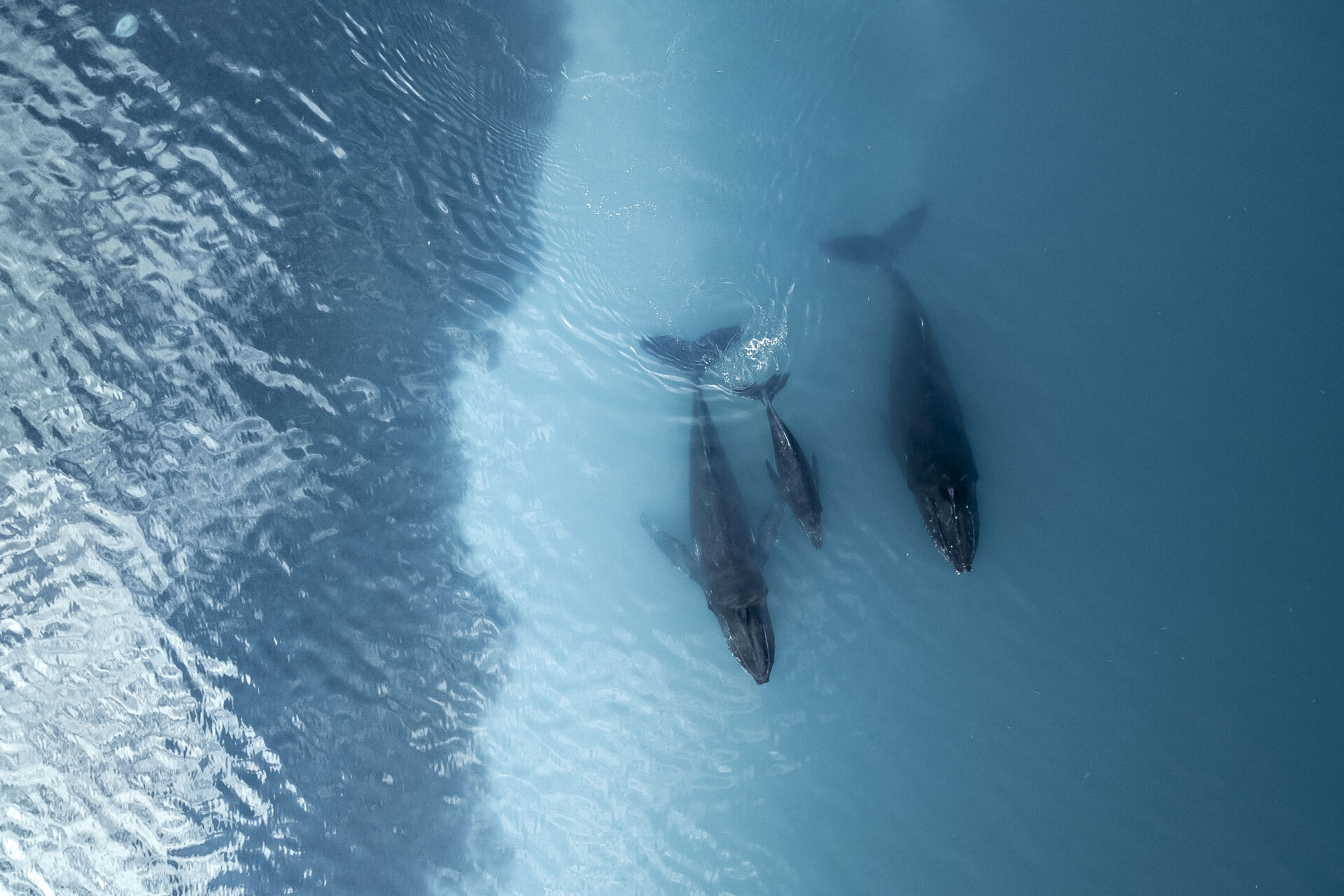
It was in 2025 that a female humpback whale – accompanied by an escort whale – was observed off the southern Gold Coast attending to a presumed deceased calf, remaining with it for several hours and possibly even days after an apparent stillbirth.
Dr Olay Meynecke, from Griffith University’s Whales and Climate Research Programme, said post-mortem attentive behaviour in cetaceans has been documented predominantly among toothed whales and dolphins, known as odontocetes, but has remained largely absent from published research on baleen whales such as humpbacks.
“Unlike reports of toothed whales where mothers have been observed lifting their dead calves to the surface, this humpback whale mother showed prolonged post-mortem behaviour and attention towards her deceased calf under the surface,” said Dr Meynecke.
“She remained close to the calf, maintaining eye contact and positioning herself next to her calf over several hours and maybe even days. These observed behaviours were consistent with care-giving or nurturing actions and post-mortem attentive responses documented in socially complex mammals.”
Crucially, Meynecke added, the observation indicated an “inherent, strong maternal attachment to the calf.”

In other news

Cetaceans are among the most charismatic marine species, drawing regular, widespread public attention. Rescue Boat Captain Andrew Mulville, from Sea World Foundation, witnessed the event firsthand.
“When I actually worked out what was happening, I was totally surprised,” he said. “At first sight, I thought it was just two whales resting on the surface, but their behaviour was unusual. It was definitely not what I was expecting to see out at sea that day.”
Dr Meynecke has said that this observation – along with others involving deceased calves – is incredibly sad but rare, and adds to the limited current understanding of the cognitive and emotional dimensions of death-related responses in baleen, or filter-feeding, cetaceans.
“This case study highlights the need for continued systematic documentation of rare neonatal mortality events to better understand the cognitive, emotional, and evolutionary significance of post-mortem behaviour in large whales,” said Meynecke.
“Understanding how non-human animals respond to death provides insight into their emotional lives, social bonds, and cognitive capabilities.”
The study, ‘First documentation of humpback whale post-mortem attendance of a still born’ has been published in Discover Animals.


"*" indicates required fields
Printed editions
Current issue
Back issues

Enjoy so much more from Oceanographic Magazine by becoming a subscriber.
A range of subscription options are available.