Indigenous shell-scattering technique shields marine life from acidic seas
Crushed shells mixed into coastal sand neutralise acidic waters and erase genetic stress in young shellfish study finds, validating long-standing Indigenous stewardship.
For millennia, Indigenous peoples along the Pacific coast of North America have added crushed shells to productive clam gardens to keep the ecosystem healthy. It’s a practice founded in generations of experience and keen observation.
Now, new scientific research from the University of California has dug into the biology behind why this practice is so effective, and how the technique could be used to safeguard against an increasingly acidic ocean.
As the ocean absorbs more excess carbon dioxide, it also becomes more acidic. This lower pH depletes the carbonate ions used by marine creatures like clams, cockles and mussels, creating more difficult conditions for them to grow, and causing negative impacts on their genetic development, growth and ability to produce shells.
To investigate whether crushed shells counter this damage, marine scientists at the UC Davis Bodega Marine Laboratory monitored young Pacific littleneck clams across over 90 days. They observed seawater both with and without shell hash being added, and discovered that adding shell hash fundamentally altered the growing conditions at a microscopic level.
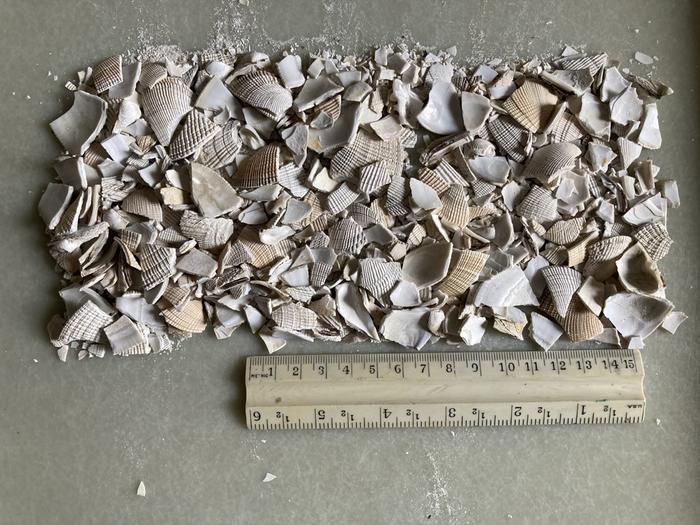
According to the findings, adding crushed shells – also known as ‘shell hash’ – to beach sediment creates a very localised buffer against rising seawater acidity, allowing young shell-making animals to survive more acidic growing conditions.
At the microscopic level, the shell neutralises the acidity of the water that fills the tiny gaps between sand particles, creating a much more hospitable environment for the young clams to grow.
This meant, the baby clams reared in acidic water with shell hash added developed much larger shells than those in untreated environments. The benefits also helped the clams at the cellular level.
“Adding crushed shells removed the negative genetic changes that occur when young clams are raised in acidified water,” said the study’s corresponding author David Gold, an associate professor of earth and planetary sciences at UC Davis.

In other news
Study co-author Tsim Schneider, an associate professor of anthropology at UC Santa Cruz, said there is significant evidence from traditional ecological knowledge that shell hash is beneficial to the health of shell-making animals.
“For me, one of the interesting aspects of this research is the potential to engage more fully with tribes on designing projects that promote their long-standing expertise and Indigenous science,” said Schneider, who is also affiliated with the National Science Foundation’s Center for Braiding Indigenous Knowledges and Science.
“If there’s a history of adding shell hash to clam beds in California, for example, western science might be able to better support communities interested in reawakening dormant cultural knowledge and coastal stewardship practices,” he added.


"*" indicates required fields
Printed editions
Current issue
Back issues

Enjoy so much more from Oceanographic Magazine by becoming a subscriber.
A range of subscription options are available.