First new penguin species in a century found on Kerguelen Islands
Genomic analysis has split the gentoo penguin into four species, including the first newly named penguin in over a century, with three island-dwelling species facing habitat loss as the climate warms.
A population of gentoo penguins on the Kerguelen Islands has been identified as a distinct species, making it the first new penguin species to be named in more than 100 years.
The birds live on the Kerguelen Islands, known in French as the Desolation Islands, nearly 2,000 miles from any permanently inhabited landmass. An international team led by researchers in Chile and at the University of California, Berkeley, has now described them as the southeastern gentoo penguin, Pygoscelis kerguelensis.
The findings were published earlier this year in Communications Biology.
Genetic evidence shows that what scientists once treated as a single, widely distributed gentoo species is in fact four. Three populations previously classified as subspecies were found to be genetically different enough to be recognised as full species.
While Antarctica’s Emperor penguin may be the best known member of the family, 17 other penguin species live across the Southern Hemisphere, many on isolated islands that are difficult for scientists to reach.
It’s this remoteness that may help explain how an entire species evaded recognition for so long.
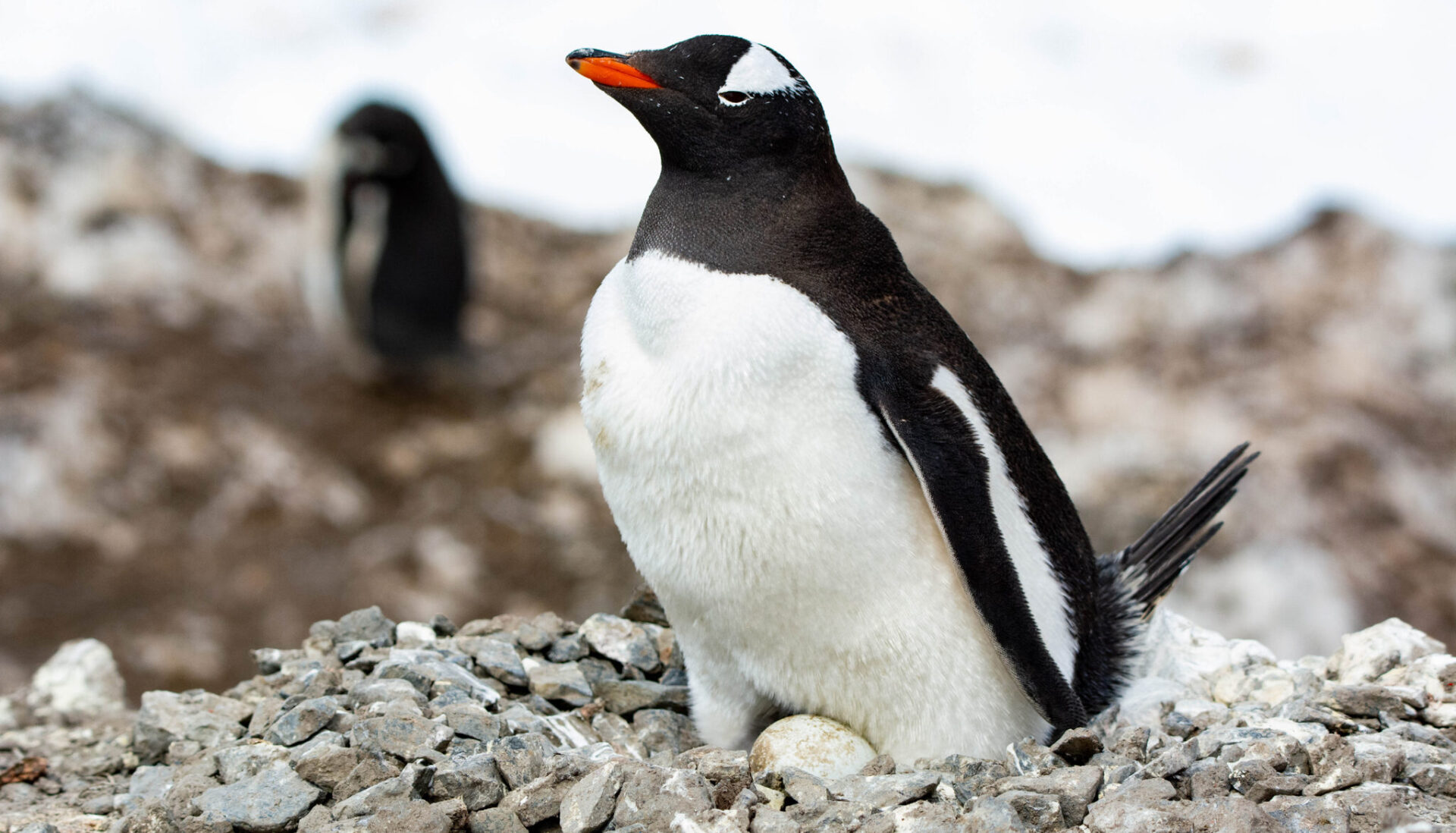
Apart from subtle differences in body size and vocalisations, the new species closely resembles other gentoos, with the familiar white underside and black back that help penguins avoid predators and hunt prey in the ocean. Genetically, however, it is distinct. Scientists call this a ‘cryptic species’.
As global warming reshapes the Antarctic and sub-Antarctic regions, the southeastern gentoo already faces an uncertain future, while two of the other newly defined species could also be vulnerable. Only one of the four, the southern gentoo, now known as Pygoscelis ellsworthi, lives in Antarctica. Climate projections suggest it may be affected relatively little and could even expand its range.
“In Antarctica, of course, other species, not the gentoo, are threatened by climate change,” said Juliana Vianna, one of the paper’s senior authors and a professor of ecosystems and environment at Andrés Bello National University in Santiago, Chile. “But the gentoo is of most concern in the sub-Antarctic region,” an area of widely separated islands north of Antarctica governed by numerous countries, including Chile, South Africa, France, the Netherlands, Australia and New Zealand,
“It’s very important that conservation institutions in all the different countries involved recognise and take appropriate action to save these three gentoo penguin species,” she added.

In other news


To resolve long-running disagreements over gentoo classification, Vianna joined forces with co-senior authors Rauri Bowie, a professor of integrative biology at UC Berkeley, and Elie Poulin, a professor at the University of Chile in Santiago.
Previous researchers had proposed as many as six gentoo subspecies, but there was no universal agreement. The new work is a consensus built from whole-genome sequences of 64 penguins collected from 10 breeding colonies. For the first time, sampling covered nearly the entire geographic range of the gentoo. The team also compared coloration, calls, breeding schedules, diet and feeding behaviour.
“There’s probably no species of penguin where the taxonomy has been more debated than the gentoo penguin,” said Bowie, a curator in UC Berkeley’s Museum of Vertebrate Zoology. “For over 100 years it’s been controversial as to how many species or how many subspecies there are. What this paper does is try to address that question using cutting-edge integrative approaches.”
In 2019, Bowie and Vianna published research indicating that penguins originated near Australia and New Zealand roughly 22 million years ago. Emperor and King penguins later split from other lineages, the Emperor becoming associated with Antarctica and the King with the sub-Antarctic. Around 12 million years ago, the development of the circumpolar current helped other groups spread through the sub-Antarctic, colonising remote islands and archipelagos and reaching as far north as Africa and South America.
The four gentoo species diverged much more recently, within the past 300,000 to 500,000 years. Geographic isolation played a major role, as did the Antarctic Polar Front, a boundary in the Southern Ocean where water temperature and salinity shift sharply and which can restrict the movement of marine animals.
North of the front, where waters are warmer and saltier, the eastern gentoo, Pygoscelis taeniata, is found on the Crozet, Marion and Macquarie Islands. The northern gentoo, Pygoscelis papua, is restricted to the Falkland/Malvinas and Martillo Islands in South America.
The newly described southeastern gentoo lives near the Polar Front. This relatively small population evolved on Kerguelen Island and probably nearby Heard Island. Farther south, the most numerous lineage, the southern gentoo, inhabits the Antarctic Peninsula, coastal Antarctica and South Georgia.
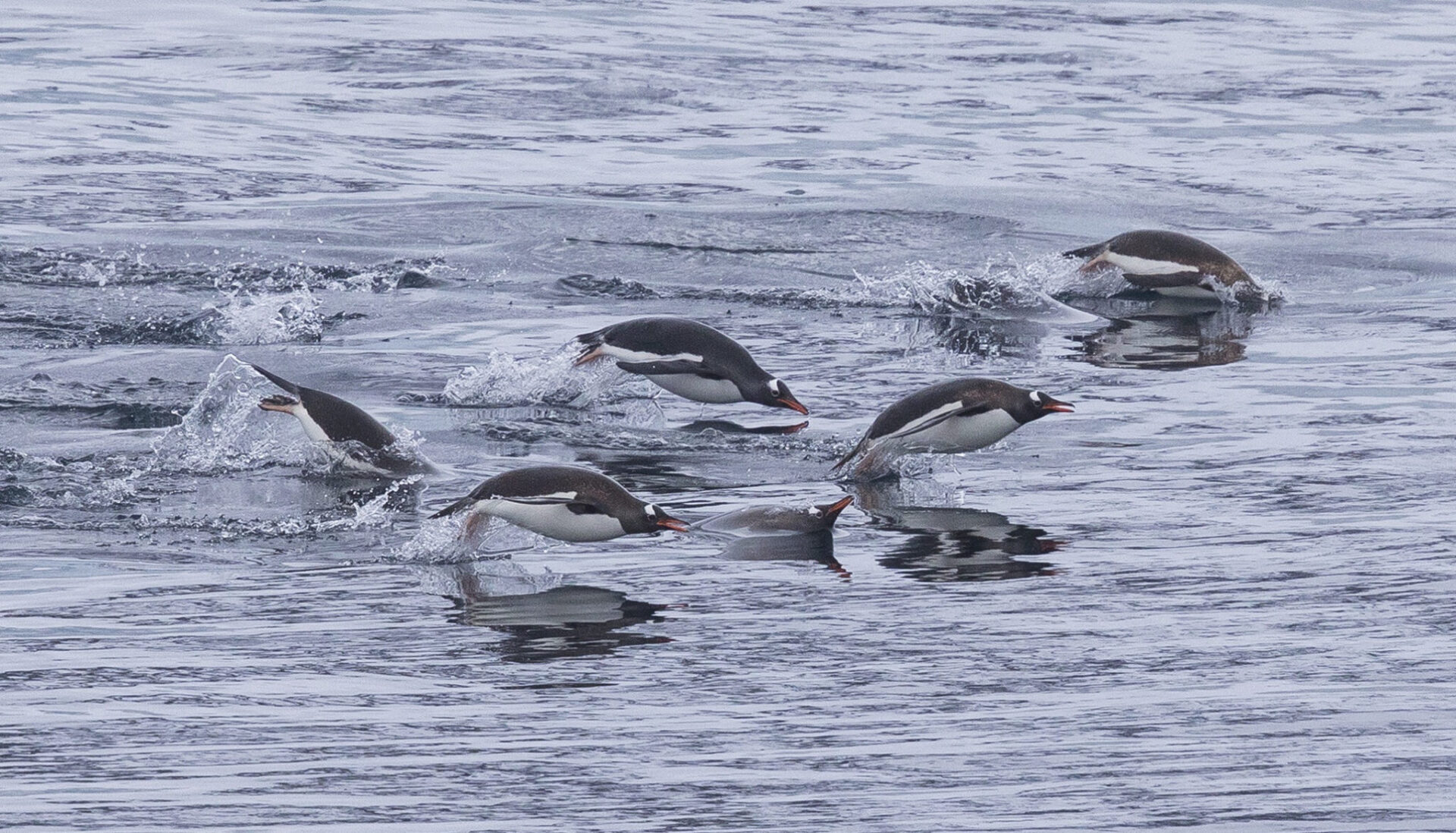
The genomic analysis was led by University of Chile graduate student Daly Noll, the paper’s first author. The southern gentoo, which is thriving in Antarctica, carries genetic changes associated with life in extreme polar conditions. The team found more genes linked to heat production, fat and lipid storage, and light perception.
The eastern gentoo has more genes associated with efficient carbohydrate metabolism and stronger diving performance, including genes involved in oxygen transport and use, blood vessel formation, mitochondrial activity and lung development. Together, these traits may allow the birds to stay underwater longer while foraging in oceans with relatively low biological productivity.
The northern gentoo of South America showed a different pattern. Its genome is enriched with genes involved in digestion, heart contraction and muscle excitation, which may support the sustained physical effort of prolonged underwater feeding.
Climate models suggest that by 2050, under a moderate warming scenario, the island-dwelling sub-Antarctic gentoos could lose suitable habitat on every island they currently occupy, with few or no nearby alternatives to move to. The Antarctic gentoo may fare very differently, with its suitable range projected to extend farther into the continent, even as Emperor, Adélie and chinstrap penguins decline with the loss of sea ice and the krill that grow beneath it.
Vianna noted that climate change is not the only threat to penguins outside Antarctica, which also face warming oceans, habitat destruction, predation by rats and dogs, competition with commercial fisheries and accidental capture in fishing nets.
“In terms of climate change, island species that have really low population sizes could be compared with the sub-Antarctic gentoo penguins,” she said. “Galapagos and other island penguin species, because they’re endemic to these islands, will find no place to go after a change in their environment. Those islands are very isolated, and these penguins cannot adapt easily to colonise any other region.”
The large and diverse dataset assembled for the study could prove valuable far beyond penguin classification, Bowie said. Vianna is already examining penguin genomes for genetic differences associated with survival from avian influenza, which is currently affecting penguin, bird and mammal populations around the world. Identifying traits linked to resistance or vulnerability could help conservationists work out which populations face the greatest danger.
“Whole genome sequencing has transformed our ability to not only look at adaptation from a perspective of how things diversify, but it has really important conservation value,” Bowie said.
In addition to Bowie and Vianna, the study includes biologists from Australia, Spain, Venezuela, South Africa, the United Kingdom, France, Argentina, Monaco and Brazil.


"*" indicates required fields
Printed editions
Current issue
Back issues
Enjoy so much more from Oceanographic Magazine by becoming a subscriber.
A range of subscription options are available.
