Warming seas are reshuffling plankton and the marine food web
Researchers are now using AI to track plankton as warming seas reshuffle the base of the marine food web, with fish possibly getting less food and food of lower quality.
Fish may be getting not only less food as the ocean warms, but food of lower quality, according to researchers studying how plankton communities are changing, and artificial intelligence is helping them track it near real time.
Plankton form the base of the marine food web and can be divided into two main groups: phytoplankton and zooplankton. Phytoplankton are microscopic, single-celled organisms – such as green algae or cyanobacteria – that drift in the water and use sunlight to produce their own energy through photosynthesis.
Zooplankton, meanwhile, are microscopic, animal-like organisms that feed on phytoplankton and other tiny organisms. Together, they underpin both marine and freshwater food webs.
“Two groups of plankton form the foundation of the marine food web, and they are so closely linked that a change in one can be profoundly felt by the other. As the ocean warms, both are changing,” said researcher, Lauriane Ribas-Deulofeu at Nord University.
“My research asks how they are changing, in terms of which species are present and how their abundance shifts over time, and what that means for the rest of the food web. If our hypothesis is correct, fish may be getting not only less food, but food of lower quality.”

In other news





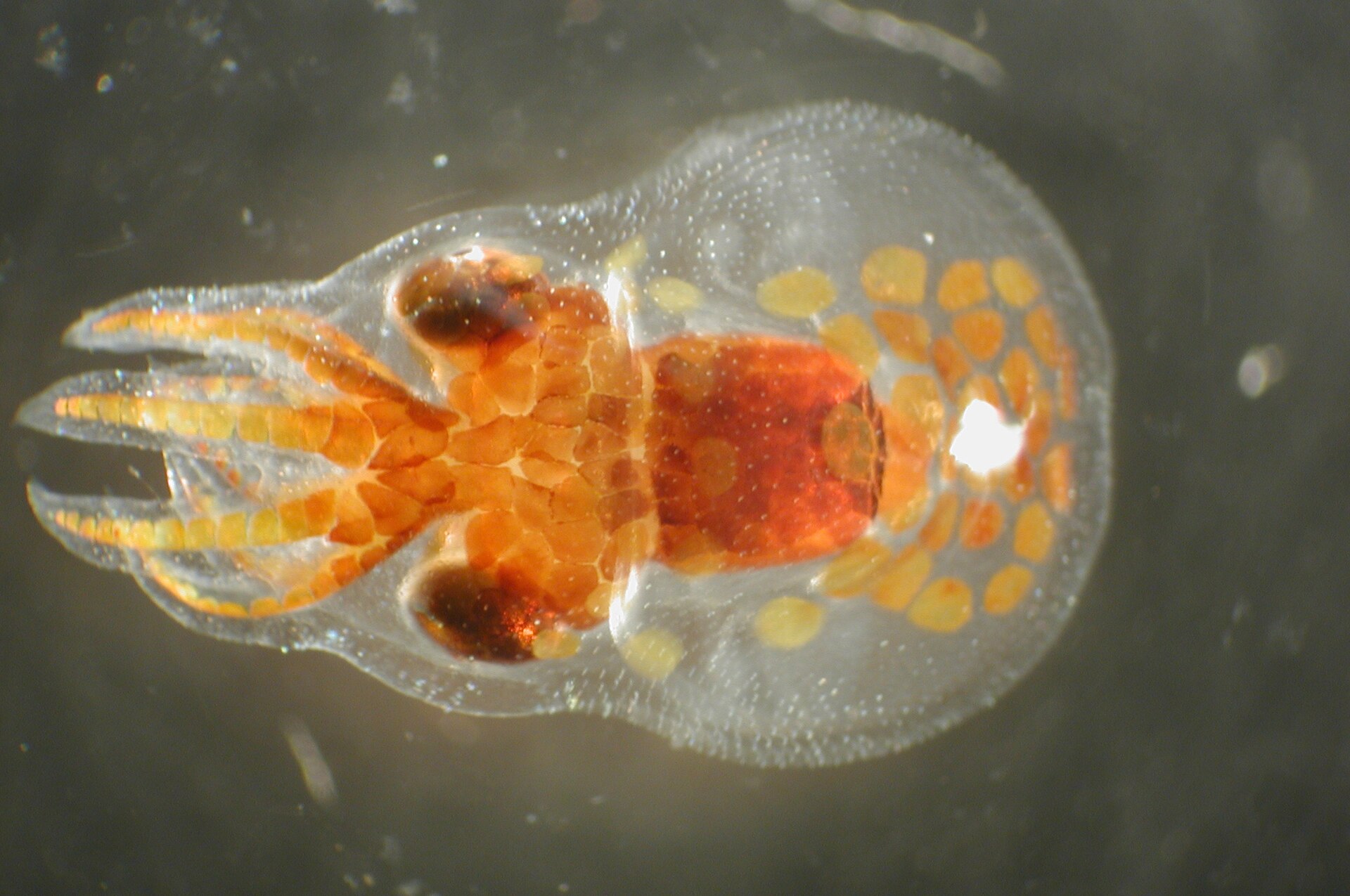
Phytoplankton produce most of the organic matter that sustains life in the ocean using little more than sunlight, carbon dioxide and nutrients. They are eaten by zooplankton, which in turn are eaten by fish and other marine animals. If phytoplankton populations decline, or even if their species composition shifts, the effects could ripple throughout the food web.
“Phytoplankton are not going to vanish, but which species dominate is changing as is how much biomass they produce. We are also investigating whether bloom timing is shifting and how predators respond. Any of these changes could ripple through the ecosystem, reaching the fish stocks people depend on,” Ribas-Deulofeu continued.
The stakes extend beyond fisheries. Plankton also play a crucial role in regulating the Earth’s climate. Phytoplankton absorb carbon dioxide and release oxygen through photosynthesis, and some of the carbon they capture sinks to the deep ocean, where it is stored for centuries.
“That is why it is so important to monitor plankton and understand how they are affected by climate change,” she says.
Monitoring is a painstaking business. A single plankton sample contains thousands of individuals, and working through a season’s samples under a microscope takes months. Ribas-Deulofeu uses AI to classify and measure them instead.
This process allows scientists to monitor more sites more often, and get results to environmental managers and policymakers in near real time rather than years later.
“I have thousands of images that need to be analysed and classified. AI can help with this process, but first I had to train the system to recognise the different organisms. That has required numerous hours of work, because distinguishing between the groups is not always easy,” she added.
Researchers across Europe are now working together to better understand changes in marine ecosystems.
“We are building a research network across Europe where we share data, knowledge and equipment. Our EU-funded project BioBoost+ brings together eight institutions across seven countries. In addition, we contribute to a network of around 50 partners across Europe standardises the use of AI for microplankton image analysis,” Ribas-Deulofeu finished.


"*" indicates required fields
Printed editions
Current issue
Back issues



Enjoy so much more from Oceanographic Magazine by becoming a subscriber.
A range of subscription options are available.
