Healthy, sustainable climate 'is a human right', rules UN court
The International Court of Justice has published a landmark legal decision today that "a clean, healthy, and sustainable environment" is a human right, confirming that polluters must scale efforts to address climate change under international law.

The International Court of Justice (ICJ) – recognised as the world’s highest court – has published a landmark legal decision today that “a clean, healthy, and sustainable environment” is a human right, confirming that big polluters must scale up efforts to address climate change under international law.
This landmark advisory opinion was delivered earlier today (Wednesday) and denotes a turning point in international climate law.
The result of a multi-year campaign led by communities enduring unprecedented sea level rise, storm surges, and extreme heat amongst many other climate impacts, the decision places high-emitting states as well as the companies they are obliged to regulate officially on notice: “that polluting with abandon comes with a high moral and legal price,” says Client Earth.
“The consequences of climate change are severe and far-reaching: they affect both natural ecosystems and human populations. These consequences underscore the urgent and existential threat posed by climate change,” said the ICJ president, Yuji Iwasawa.
The ICJ was instructed to produce this document by the UN back in 2023, following years of campaigning led by a group of Pacific Island law students and diplomacy led by the Pacific Island nation of Vanuatu. Jotham Napat, the prime minister of Vanuatu has said this “was a turning point in the fight for climate justice.”
“This process has elevated the voices of climate-vulnerable nations, driven global awareness, and set the stage for stronger climate action,” said Napat. “This ruling will give us a foundation to build upon, and this moment will inspire continued efforts for stronger action and accountability, inspiring bold efforts to protect our planet.”
While advisory opinions are not actually legally binding, they are considered authoritative because they summarise existing law rather than create new law.
In other news





ClientEarth lawyer Lea Main-Klingst said: “The world’s highest court has affirmed what millions of people all over the world have said time and time again: climate change threatens our very survival – and high-emitting states can and must be held accountable for the damage they’ve done.
“The judges have also sent a clear message to corporate and financial giants: the age of producing and bankrolling fossil fuels with abandon is over.”
In its decision, the judges of the ICJ declared that governments and parliaments that fail to curb the production and consumption of fossil fuels, approve fossil fuel projects, and roll out public money for fossil fuels could be in breach of international law.
It also upheld that historical emitters have a greater responsibility to address the climate crisis and limit global warming to 1.5 C. It also concluded that a healthy environment is the foundation for human life and human rights protected by international law.
“This new-found clarity will equip judges with definitive guidance that will likely shape climate cases for decades to come,” continued Main-Klingst. “And outside the courtroom, this result is a powerful advocacy tool. Each and every one of us can use this decision to demand our governments and parliaments take more ambitious action on climate change to comply with both the Paris Agreement and other applicable international laws.
“We are immensely grateful to the Pacific Island Students Fighting Climate Change (PISFCC) for bringing these vital legal questions from the classroom all the way to the International Court of Justice – and to all those who supported their tireless work.
“It’s now up to civil society and legal advocates everywhere to pick up this new tool and use it, including both in the lead-up to and during upcoming climate negotiations at COP30.”


"*" indicates required fields
Printed editions
Current issue
Back issues
Back Issues
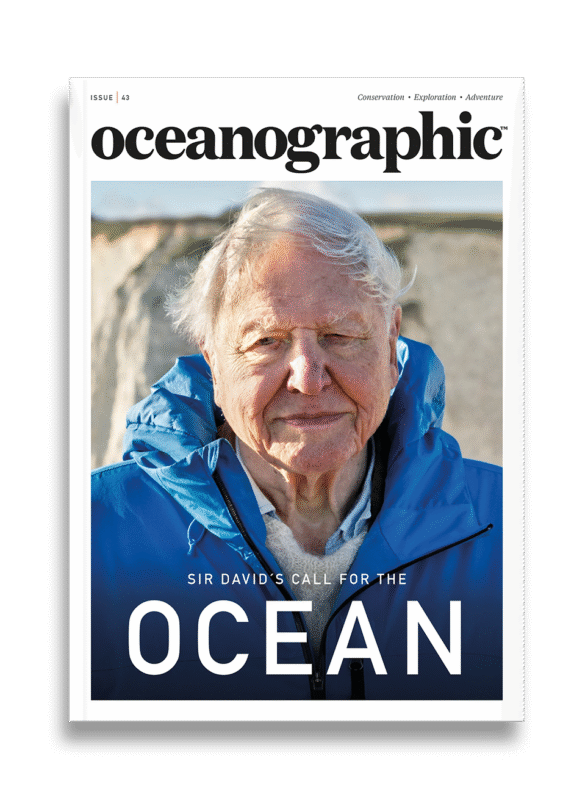
Issue 43 Sir David Attenborough’s ‘Ocean’
Enjoy so much more from Oceanographic Magazine by becoming a subscriber.
A range of subscription options are available.