Hexacorals bend laws of evolution across Atlantic and Indo-Pacific
Researchers discover hexacorals known as zoantharians remain genetically and visually similar across the Atlantic and Indo-Pacific, revealing exceptional ocean dispersal and slow evolution while offering new insight into how reefs may transform as climate change reshapes coral ecosystems.
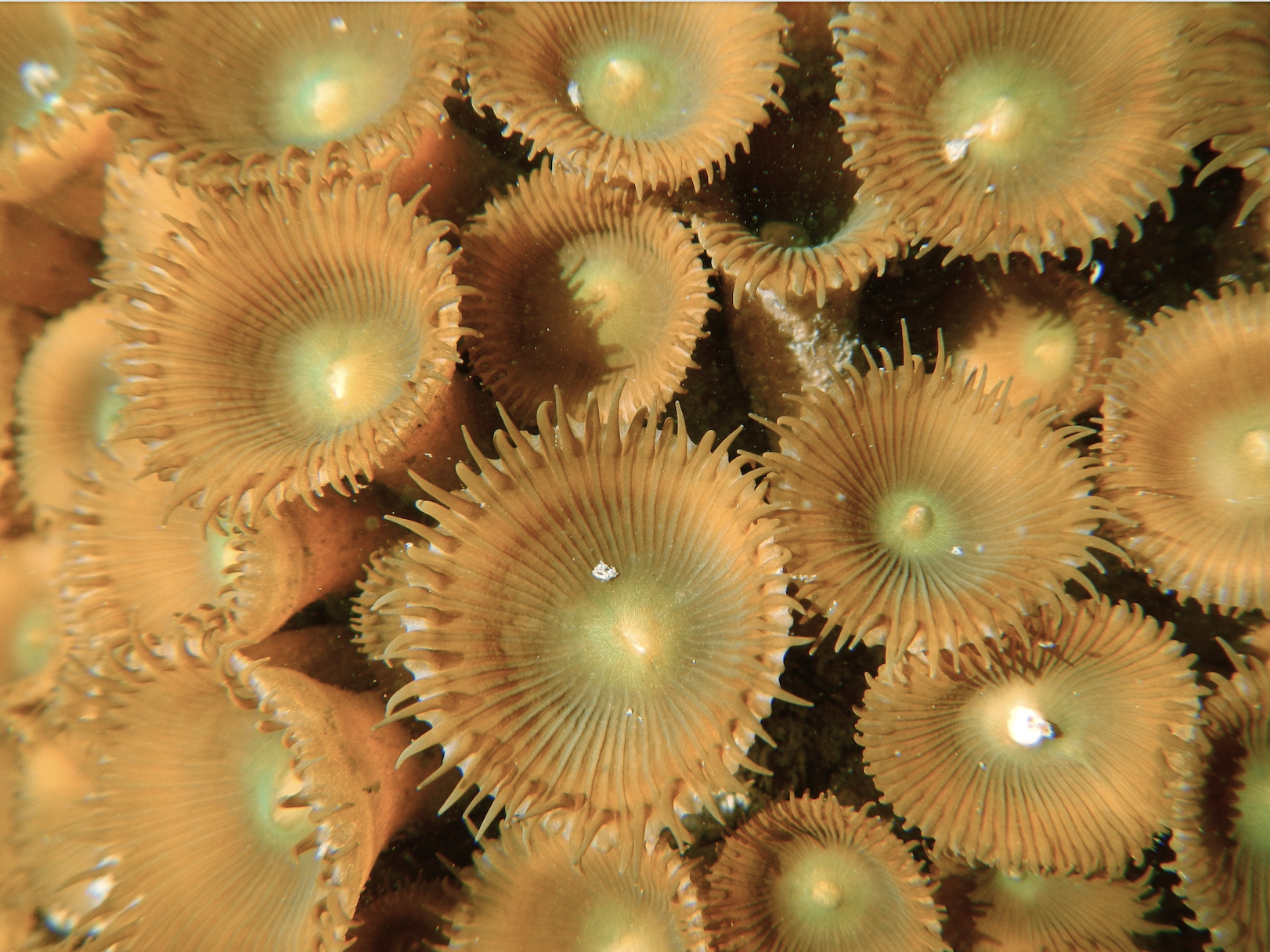
Scientists may have to start rethinking some of their longest-held assumptions about how species diverge across vast ocean basins, with thanks to new research into a group of colourful hexacorals that has found the species “virtually identical” across both the Atlantic and Indo-Pacific oceans.
This particular group is known as zoantharians, a close relative of stony corals and sea anemones. And it would appear that research here – led by scientists at the University of Hawai’i at Mānoa – is ripping up the rule book on the traditional laws of evolution, finding that groups of zoantharians within the Atlantic are almost biologically identical to those found in the Indo-Pacifc.
The study was led by Maria “Duda” Santos of the university’s Hawaiʻi Institute of Marine Biology (HIMB) ToBo Lab and the University of the Ryukyus. It began not in a laboratory, but underwater – with a moment Santos describes as ‘disorienting’.
“During my first dive in Okinawa, I was surrounded by a multitude of species I had never seen in my homeland of Brazil,” said Santos. “But then I saw the zoantharians. They looked exactly like the ones back home – the same colours, shapes and sizes. It was striking.”
The observation raised a provocative question. The Indo-Pacific is typically home to up to ten times more reef species than the Atlantic, with evolutionary divergence between the two regions widely documented across corals, fish and invertebrates. Yet for zoantharians, both genetic and morphological differences between oceans proved remarkably slight.
To investigate further, the team combined newly generated DNA data with historical records spanning from Mexico to the Philippines. The result is the first global “atlas” for this overlooked group – a comprehensive map of past and present distribution patterns that establishes a baseline for tracking how marine species may respond to accelerating climate change.

In other news


The researchers suggest that zoantharians may be among the ocean’s most capable long-distance dispersers. Their resilience appears to stem from an extended larval phase, during which juveniles can survive in open water for more than 100 days, dramatically increasing their chances of crossing ocean basins.
They may also “raft” – hitching rides on floating debris or natural substrates – enabling transoceanic journeys that connect far-flung populations. Compounding this mobility is what scientists describe as an unusually slow rate of evolution, allowing geographically distant colonies to remain strikingly similar over long periods of separation.
As climate change continues to place mounting stress on reef-building corals, zoantharians are increasingly being observed moving into degraded habitats.
“In some habitats impacted by stress, some zoantharian species can outcompete stony corals,” said Santos. “We are seeing ‘phase shifts’ where reefs once dominated by corals are being taken over by zoantharians. Understanding how they spread helps us forecast what the reefs of the future will look like.”
The findings emerge from a wide-ranging international collaboration spanning Hawaiʻi, Okinawa, Russia, Brazil, Hong Kong, Taiwan and Indonesia – reflecting both the global distribution of zoantharians and the growing scientific effort to understand how reef ecosystems may transform in a warming ocean.
By illuminating a group long left in the ecological shadows, the study offers fresh insight into connectivity, resilience and the shifting balance of life on the world’s coral reefs.


"*" indicates required fields
Printed editions
Current issue
Back issues


Enjoy so much more from Oceanographic Magazine by becoming a subscriber.
A range of subscription options are available.
