High Seas Treaty must stop the lobbyists and bring the science
Campaigners warn that fishing industry lobbyists are attempting to weaken the High Seas Treaty at UN talks, as new research highlights the scientific gaps that must be filled to deliver ocean protection.
The organisations responsible for managing fishing on the high seas are attempting to rewrite a landmark ocean protection treaty in their favour, campaigners have warned, as new evidence reveals the extent to which commercial fishing interests have embedded themselves within the very bodies meant to regulate them.
A new investigation by Greenpeace International has found that fishing industry representatives make up, on average, 28 – 29% of national delegations to key meetings of Regional Fisheries Management Organisations – the bodies that govern fishing beyond national waters.
In one case, the Inter-American Tropical Tuna Commission, industry representatives made up 44.2% of the total delegation in 2021.
Now, with negotiations ongoing at the UN headquarters in New York, those same organisations are pushing for amendments to the Global Ocean Treaty that campaigners say would dramatically weaken its ability to deliver on international commitments to protect 30% of the world’s ocean by 2030.
Megan Randles, Greenpeace’s head of delegation to the UN talks, said: “The organisations that have presided over decades of destruction on the high seas have made a completely unacceptable power-grab which would dramatically weaken the Treaty’s ability to protect the ocean.
“They are attempting to re-write the Treaty in favour of fishing industry vested interests. These organisations want to be able to block and derail conservation progress, like the creation of marine protected areas, and these amendments would give them power to do just that.”
Regional Fisheries Management Organisations, or RFMOs, are typically primarily composed of government representatives with strong ties to commercial fishing. Greenpeace’s investigation, which examined eight of these organisations’ key global meetings over the past five years, found that industry participation ranges from around 23-27% in some commissions to as high as 30-35% in others – with that extraordinary 44% figure recorded at the Inter-American Tropical Tuna Commission.
The concerns are that by sitting within government delegation structures and technical committees, commercial interests gain direct access to the negotiations that shape conservation outcomes – and, critics say, routinely use that access to delay or narrow measures that might limit fishing activity.
Lukas Meus, Greenpeace Central and Eastern Europe ocean campaigner, said: “It’s outrageous to see just how deeply the fishing industry is embedded within the very organisations that are meant to regulate and manage fishing. At present, the foxes are guarding the henhouse – the system is rigged against ocean protection.
“The fishing industry has been allowed to set the rules of the game for decades. Governments must now stop caving in to industry pressure and stop allowing vested interests to win out over ocean conservation.”

In other news
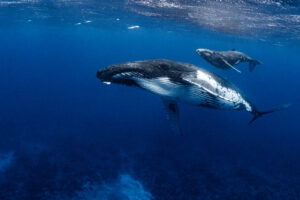

The Global Ocean Treaty – formally known as the Biodiversity Beyond National Jurisdiction agreement, or BBNJ – came into force in January, following almost two decades of negotiations. It covers the roughly two-thirds of the global ocean that lies outside any single country’s jurisdiction: vast, largely unexplored regions that hold extraordinary and still poorly understood levels of biodiversity.
Governments have committed to protecting 30% of the ocean by 2030, a target scientists describe as the absolute minimum needed for marine ecosystems to recover from decades of overexploitation.
But the threat to that ambition is not only political. A new study published in the journal npj Ocean Sustainability, led by Dr Claire Szostek of the University of Plymouth, warns that the treaty also faces significant scientific and technological challenges that must be urgently addressed.
Dr Szostek said: “The BBNJ agreement is a major global achievement that has great potential when it comes to protecting some of the most remote and pristine parts of our ocean. It has taken a long time and a lot of effort to reach this point, but until now focus has been on policy, with no clear and concise picture of how the agreement can be implemented from a scientific perspective.
“Our study delivers that, providing a solutions-focussed pathway to implementing the agreement and helping drive the realisation of equitable, sustainable and resilient management of the high seas.”
The researchers – drawn from Plymouth Marine Laboratory, The Nature Conservancy, and the Natural History Museum – reviewed the science available to support each of the treaty’s four pillars, identifying where existing technologies could be adapted, where emerging tools such as marine autonomous vessels and artificial intelligence could fill gaps, and where investment in data collection and capacity building in less developed nations is urgently needed.
Professor Matt Frost, Head of the International Office at Plymouth Marine Laboratory and a senior author on the study, said: “The BBNJ is an incredible opportunity, including in terms of how it will consolidate and achieve global marine protection goals. But making the rules is actually the easier part – ensuring delivery is where the real challenge lies.
“This unprecedented exercise in global diplomacy requires the strategic mobilisation and utilisation of the best available scientific data, expertise and technology. Furthermore, it will require major capacity-building in those geographic areas where resources have historically been limited or inaccessible.”
With just two days of preparatory talks in New York remaining, campaigners are urging governments to act on both fronts simultaneously – rejecting the RFMO power-grab while committing to the scientific investment the treaty demands.
Randles said: “We urgently need governments to reject these proposals before key ocean treaty talks end. If they don’t, they risk failing in their commitment to protect 30% of the ocean by 2030 with catastrophic consequences.”
Greenpeace is calling for a package of reforms ahead of the first Ocean COP in January 2027, including a mandatory 120-day time limit on RFMO reviews of sanctuary proposals to prevent deliberate stalling, rigorous monitoring of delegation composition to identify conflicts of interest, and mandatory disclosure of all delegation affiliations to ensure scientific recommendations remain free from corporate influence.
Meus said: “We now have the historic opportunity with the Global Ocean Treaty to cordon off big areas of the ocean to allow it to recover – we can’t let the effects of decades of lobbying interfere with this.”


"*" indicates required fields
