Basking sharks found diving 1,000m into twilight zone
These newly discovered deep‑sea dives by the endangered sharks expose critical gaps in our knowledge and underscores the urgent need to protect and study the twilight zone.
Endangered basking sharks forage some 1000metres below sea level in the ocean’s twilight zones during their 17,000km winter migration journey, highlighting the importance of this little-known ecosystem.
Researchers from the Woods Hole Oceanographic Institute analysed more than 8000 days of tracking data collected from 37 basking sharks tagged between 2004 and 2011 near Cape Cod. In that time, they observed basking sharks diving as far down as the lower boundary of the ocean twilight zone, which extends from 200 to 1,000 metres below the sea level.
“Reaching depths of 800 to 1,000 meters is physiologically demanding. It’s cold, dark, and low‑oxygen. Yet these sharks repeatedly dive into the secondary deep scattering layer, a resource that most large pelagic predators cannot exploit,” said Jaida Elcock, doctoral candidate in the MIT‑WHOI Joint Program and lead author of the paper.
This, they say, highlights the importance of the twilight, otherwise known as the mesopelagic zone. This area hosts more biomass than any other area of the water column, yet very little is understood about the lasting impacts of increased fishing or its role in the carbon cycle.
In June, an international commitment to protect one the twilight zone was launched by Fiji and Panama. The Mesopelagic Zone Conservation Challenge is a call to governments worldwide to take concrete action to safeguard this deep ocean stratum.
Despite this discovery, co-author Camrin Braun, an oceanographer and ecologist at WHOI pointed out that we still don’t know what these elusive and endangered sharks are feeding on when they are diving into this deep-ocean ecosystem.

In other news

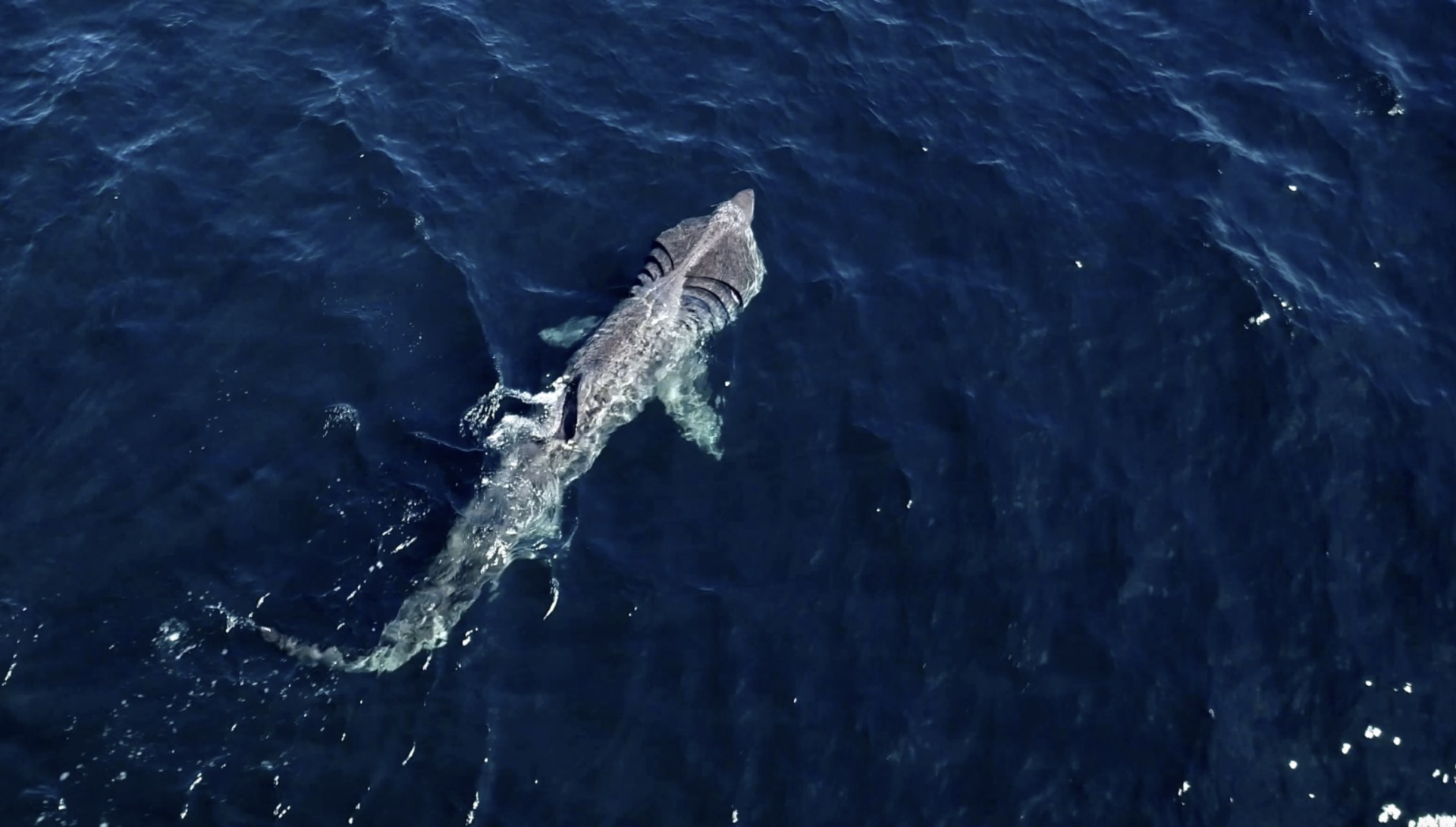
One theory is that basking sharks feed on the tiny fish and squid that live in this zone, which are too small for other predators to target.
“A key question is what would the impacts be if we started harvesting the tiny fish and squid that live in the twilight zone on an industrial scale? Would this negatively impact basking sharks and other top predators?” Camrin said.
Basking sharks were targeted for their oil-rich livers for centuries, and the species has not fully recovered, granting it a spot on the IUCN Red List as endangered. Their dwindling numbers create an increasing urgency to understand their migration and what future threats they may face.
Alongside their feeding habits on these gargantuan migration journeys, researchers also know very little about how they mate and reproduce.
“These long-distance migrations may be tied to mating behaviour happening far offshore and deep underwater, where we can’t observe it directly,” Elcock said.
“There have also been records of basking sharks moving from the Cape Cod region to the Northeast Atlantic, towards Scotland and Ireland, which raises questions about how much genetic exchange may be happening between seemingly distinct populations,” she added.


"*" indicates required fields
Printed editions
Current issue
Back issues




Enjoy so much more from Oceanographic Magazine by becoming a subscriber.
A range of subscription options are available.
