New shark deterrent could have 'dramatic impact' on bycatch
Researchers have found a 70% reduction in shark bycatch when using the device. They say the successes of trials in coastal shark species are promising, and could massively reduce shark bycatch worldwide.
Efforts to reduce the levels of shark bycatch in commercial fishing have taken a new turn with the development of a “cheap, yet effective” deterrent that produces an electrical current detectable only to sharks, better enabling fishers to catch only their target species.
Developed by researchers at Florida Atlantic University, it is hoped that the device can go some distance to reduce the risk posed to shark species by commercial fishing efforts, helping to reverse the decline of many endangered species.
It’s estimated that some 50 million sharks are caught as bycatch in global fisheries each year, with a significant portion resulting from industrial tuna longline and purse seine fishing. Sharks reproduce slowly, and have long lifespans, so these high bycatch rates can push populations toward dangerously low levels.
By pairing zinc and graphite in seawater, the device creates a small electrical field. Attaching this device to fishing hooks therefore repels the sharks away from the bait without affecting the targeted fish. It has also been touted as a cost-efficient method of deterring sharks. While the zinc anode would wear down over time, it is generally considered one of the cheapest and most abundant metals.
Researchers have already tested the effectiveness of the device on demersal shark – those that live and hunt primarily on the seafloor – in Florida and Massachusetts, as well as pelagic sharks – that which live and hunt in open water – in the Gulf of Mexico.

In other news



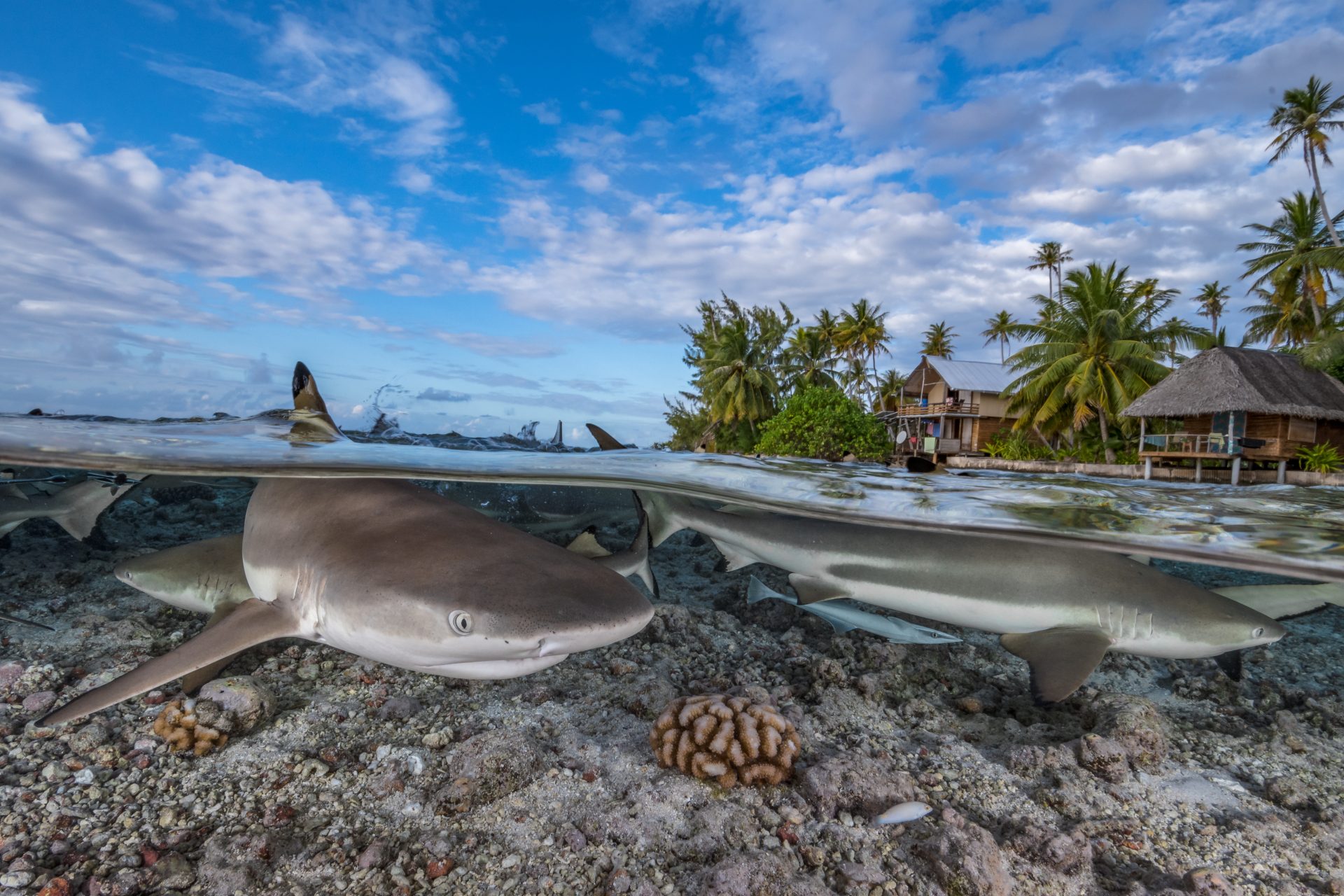
The demersal sharks were particularly responsive to the deterrent. Researchers found that the hooks treated with zinc/graphite reduced the number of sharks by between 62 to 70%. The effect was particularly strong for Atlantic sharpnose (Rhizoprionodon terraenovae) and blacktip sharks (Carcharhinus limbatus), two common coastal species.
Atlantic sharpnose and black tip sharks are both critical to marine ecosystems in the Western Atlantic and Gulf of Mexico. Both however are under considerable threat due to overfishing and bycatch; in the past three generations, blacktip sharks have declined by 30 to 49% globally.
Testing on pelagic sharks however was inconclusive. Researchers say large-scale testing of the zinc/graphite treatment in pelagic fisheries is needed to establish whether it is a viable option to reduce shark bycatch in commercial fisheries.
Importantly, researchers also found that while the device reduced shark bycatch, it did not lead to reduced catch rates for commercially important fish like swordfish and yellowfin tuna.
“Even a 60% to 70% reduction in shark bycatch, could have a dramatic impact on global shark populations,” he added.” said Stephen Kajiura, Ph.D., senior author, inventor and a professor in the FAU Department of Biological Science.
“What makes this approach so exciting is its practicality – zinc and graphite are inexpensive, widely available, and already familiar to fishers because zinc is commonly used to prevent corrosion on boats. This means it could be adopted quickly and cost-effectively, providing a real solution to reduce shark bycatch while supporting sustainable fisheries,” he added.


"*" indicates required fields
Printed editions
Current issue
Back issues




Enjoy so much more from Oceanographic Magazine by becoming a subscriber.
A range of subscription options are available.
