Older male humpbacks have the edge in the mating game
Their age allows them to refine their whale songs and competitive tactics, leading to greater success siring offspring
As humpback whale numbers have grown in the absence of commercial whaling, age-related mating competition intensified – and a new study shows that older male whales have the edge in the mating game.
Male humpback whales are famous for producing some of the most elaborate songs in the animal kingdom.
The researchers’ findings suggest that over the years, male humpback whales are able to better refine their singing and competitive tactics – giving them an advantage over their younger competitors.
As the population has grown, female whales have also become more selective it seems – leading to more success among males with the strongest performance
Researchers from the University of St Andrews studied nearly two decades of data from humpback whales breeding in New Caledonia in the South Pacific. The scientists examined changes in age structure, behaviour and paternity in male whales.
While initially the population was dominated by younger males. As numbers increased over time, the structure shifted to have a more even age distribution among older and younger males. Crucially, as older individuals became more common, they became more successful at siring compared to younger males.

In other news



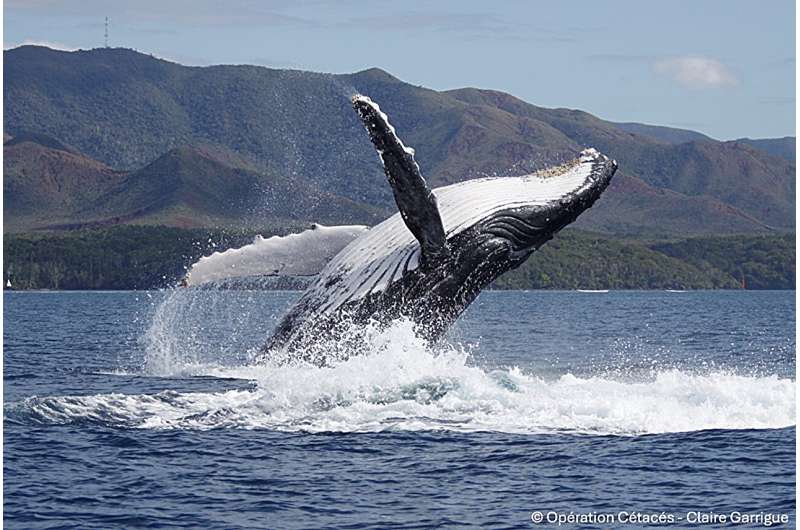
Humpback whales have never been observed mating in the wild and, until this study, it remained largely unknown which whale had fathered each calf.
But, using genetic analysis to identify paternity, and a newly developed method whereby age can be figured out via a small sample of whale skin, the international team of researchers were able to piece together a pattern of how these whales were mating.
Their powerful vocal displays can often be heard far across breeding grounds and are thought to play a role in mating. Males may also escort females or engage in intense physical competition with rival males.
Dr. Franca Eichenberger, lead author of the study from the Sea Mammal Research Unit at the University of St Andrews, said, “It is only now, as whale populations recover and new analytical tools become available, that we are beginning to understand how far-reaching the consequences of whaling truly are. The impacts extend beyond population size, they shape behaviour, competition, and reproduction.”
“Now is the time we can learn so much more about their behaviour and life history. We just need to keep looking,” she added.


"*" indicates required fields
Printed editions
Current issue
Back issues
Enjoy so much more from Oceanographic Magazine by becoming a subscriber.
A range of subscription options are available.
