Over 125 pilot whales killed in Faroe Islands' first grind of 2026
Sea Shepherd has documented the killing of more than 125 pilot whales and several Atlantic white-sided dolphins in the Faroe Islands' first grindadráp of 2026, raising questions over official transparency and the future of Faroese trade arrangements.
The Faroe Islands has conducted its first grindadráp – otherwise known as the grind – of 2026, just over 200 miles north of Scotland where participants have killed more than 125 pilot whales and several Atlantic white-sided dolphins near the village of Sándavágur on Vágar island.
It is here that just last week, on May 4th, pods were driven into shallow coastal waters by boats before being killed on the shore. The marine conservation organisation Sea Shepherd was present to document the hunt.
Observers reported significant difficulties recording events on the day – including, it has been alleged, being prevented from filming in public areas and moved on while attempting to document the killings. Those concerns have since been compounded by questions over the accuracy of the official death toll.
Sea Shepherd’s Campaign Director, Valentina Crast, was present at the event and has been unequivocal about what she witnessed: “Every pod killed in a grind contains pregnant females and young juveniles. In almost any other hunting community, these animals would be protected. Pregnant females, unborn young, newborns, and small juveniles would not be considered legitimate targets. But in the Faroese grind, they are driven and killed indiscriminately.”
It’s also alleged that the official toll does not include at least 15 foetuses and small juveniles reportedly removed from the kill site on the grounds that they were considered inedible.
Animal welfare groups argue that the killing of entire family pods – including juveniles and unborn animals – raises serious questions about the transparency of official statistics and the credibility of sustainability claims made in defence of the practice.

In other news
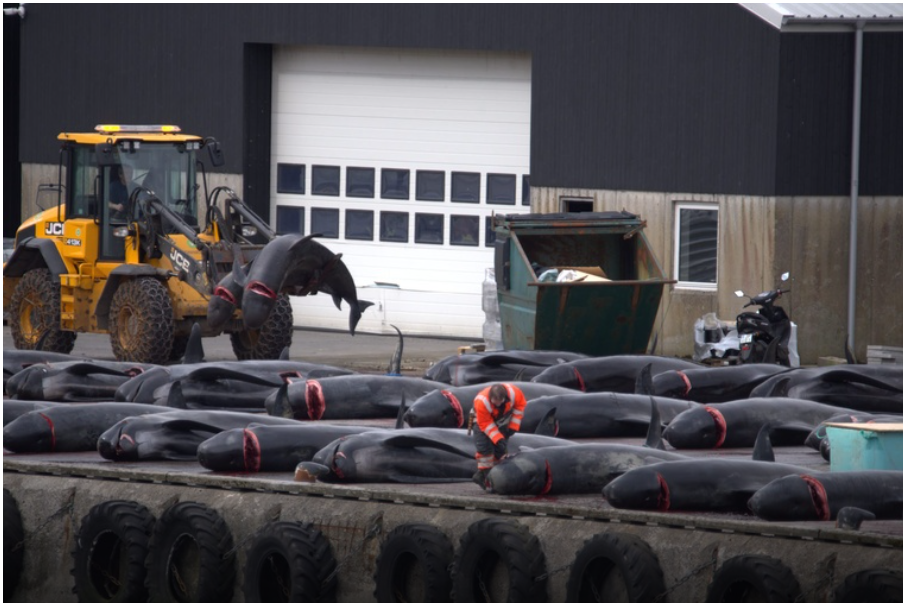
Sea Shepherd estimates that the hunt at Sándavágur has produced approximately 110,000 kilograms of whale meat and blubber – a figure that has intensified debate over whether the scale of the hunts has long outgrown local consumption needs.
Several whole pilot whales were also reportedly transported from the site to Klaksvík in the northern islands, despite local grind foremen having previously stated they would suspend participation in hunts pending the outcome of an ongoing legal case from 2025.
The grindadráp is a centuries-old Faroese practice in which pilot whales and dolphins are driven into bays and killed on beaches. Hundreds of cetaceans are taken each year across multiple hunts, with no fixed quota on numbers. But while the tradition is rooted in history, the Faroe Islands themselves are now a modern, high-income fishing nation with established export markets.
Faroese health authorities have previously issued advisories recommending limited consumption of whale meat due to concerns over pollutants including mercury.
The hunt comes amid growing international opposition. An Early Day Motion tabled in the UK Parliament and supported by 72 MPs across six parties has condemned the grindadráp and called for the issue to be addressed in future trade discussions.
The Faroe Islands’ trade arrangements are scheduled for review at the end of 2026, and campaigners are pressing for scrutiny of ongoing whaling practices to be central to those negotiations.
Campaigners are now calling on Faroese authorities to publish a full and transparent breakdown of all animals killed during the 4th May hunt – including the foetuses and juveniles not reflected in official figures.


"*" indicates required fields
Printed editions
Current issue
Back issues

Enjoy so much more from Oceanographic Magazine by becoming a subscriber.
A range of subscription options are available.
